On this page
The decision rule
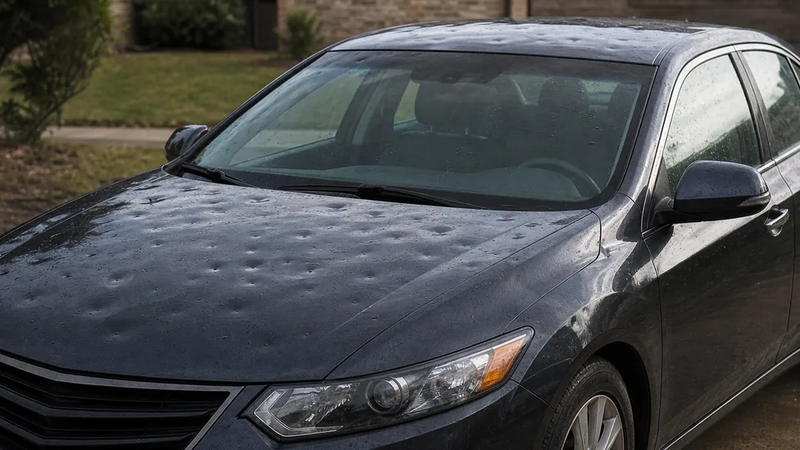
A hail-damaged car is generally totaled when the complete repair cost reaches the applicable economic threshold compared with the vehicle’s value immediately before the storm. The condition that changes the answer is the governing state rule and valuation method; there is no universal dent count or hailstone size that automatically totals every car.
The California Department of Insurance defines a total loss as damage that cannot be restored to its prior condition or would be cost-prohibitive to repair compared with the property’s pre-loss value. South Carolina provides a useful example of why location matters: its insurance department identifies a 75% actual-cash-value threshold under state law. That percentage is state-specific, not a nationwide rule.
“Totaled” describes economics, not appearance
Widespread shallow dents can total an older, lower-value car, while a newer, higher-value car with dramatic-looking damage may remain repairable. The comparison uses a documented repair scope and pre-storm value, not visual shock alone.
The numbers that control the answer
Three inputs need to be developed on the same vehicle and the same damage date:
- Pre-loss value: the vehicle’s value just before the hail event, considering its year, trim, mileage, options, condition, and local comparable vehicles.
- Complete repair estimate: the labor, materials, parts, refinishing, glass, calibration, and related operations needed to restore the documented hail damage.
- Applicable threshold: the formula required by the jurisdiction and used for the total-loss decision, including any additional costs the applicable rule permits.
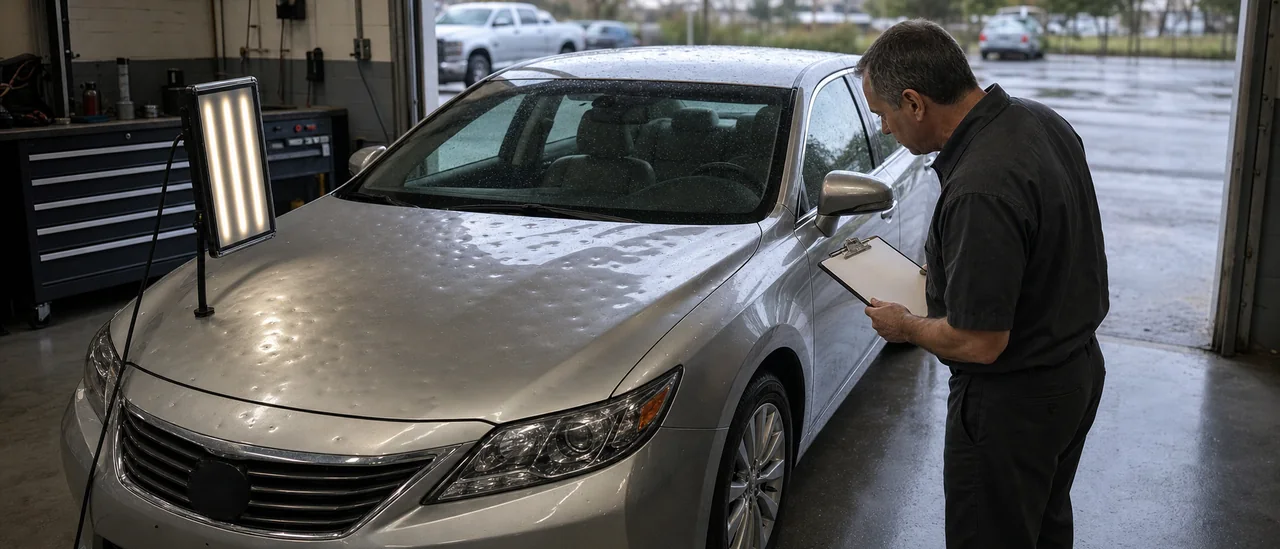
A low preliminary estimate is not conclusive if it covers only obvious hood and roof dents. The full scope may change after better lighting, cleaning, trim removal, or examination of glass and exterior components.
What makes the repair estimate rise
| Inspection finding | Why it changes the decision |
|---|---|
| Many panels are affected | More surface area and labor enter the repair scope. |
| Paint is cracked or panels cannot be restored by paintless dent repair | Conventional body repair, refinishing, or replacement may be needed. |
| Glass, lamps, trim, cameras, or sensors are damaged | Parts and required post-repair operations can add cost. |
| Earlier damage or heavy wear lowers the pre-storm value | The repair estimate reaches the economic threshold sooner. |
Hail damage can therefore cross the line without making a car undrivable. Conversely, a vehicle should not be called a total loss merely because its hood and roof look heavily dimpled. Repairability and total-loss status are related, but they are not the same question.
Weather evidence does not decide total-loss status
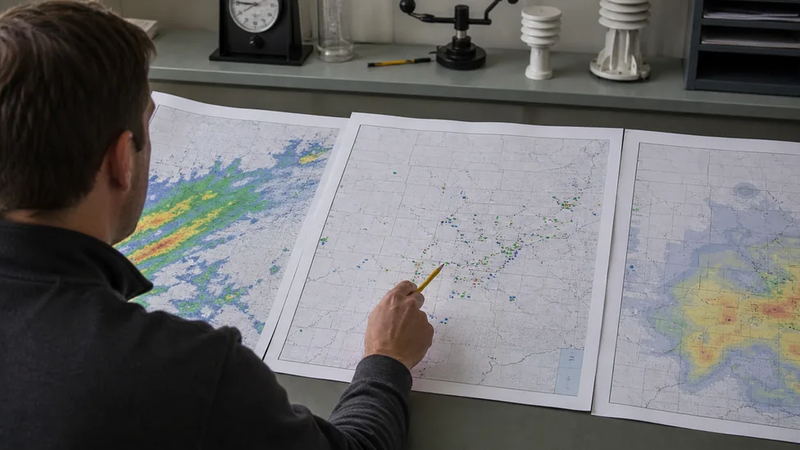
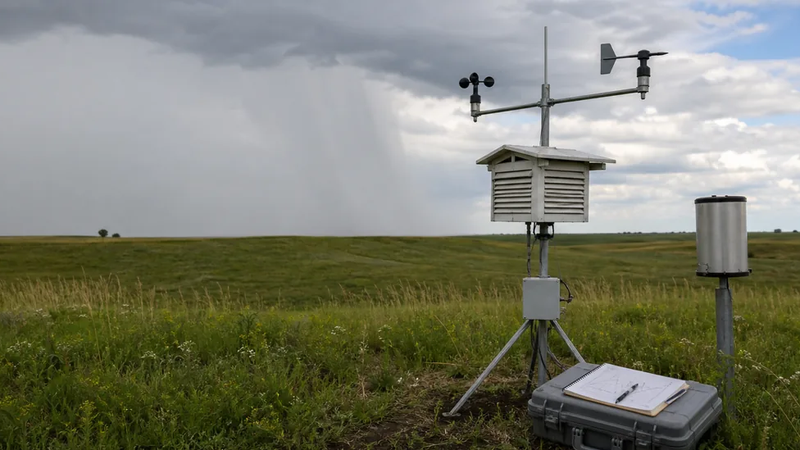
Radar, a hail observation, and confirmed vehicle damage answer different questions. NOAA’s Severe Weather Data Inventory warns that automatically derived radar data often represents probable conditions rather than a confirmed occurrence. A radar hail estimate can place a storm signal near a location; it does not prove hail struck a particular car.
An eyewitness report or measured hailstone establishes that hail was observed at a time and place. It still does not document which panels or components were damaged. Confirmed property damage comes from examining and recording the vehicle itself. Only that vehicle-specific scope belongs in the repair-versus-value comparison.
What to collect for a reliable decision
Obtain an itemized estimate from a qualified auto-body or paintless-dent-repair evaluator and a written vehicle valuation based on the correct trim, mileage, options, and pre-storm condition. Ask which total-loss formula applies and whether salvage value is part of it.
Then compare the documents line by line. If the estimate is preliminary, identifies inaccessible areas, or omits damaged glass or equipment, the answer remains provisional. A sound total-loss decision follows the complete inspection and the applicable threshold—not the weather map, the largest dent, or a quick parking-lot count.