On this page
Yes—especially when damage remains visible
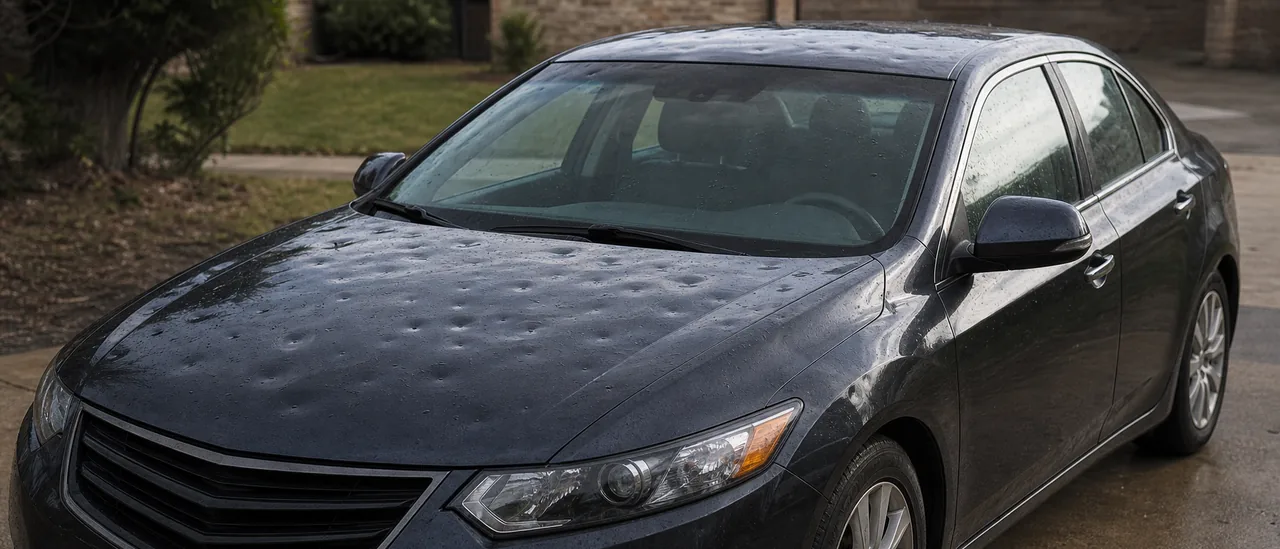
Yes, hail damage can reduce a car’s value, especially when dents, chipped paint, or broken glass remain unrepaired. The reduction is not a fixed percentage. It depends on the car, the damage, any repairs, and what a buyer will pay.
Here, “value” means the car’s likely resale or trade-in price compared with a similar car without that damage. The Federal Trade Commission notes that accidents, repairs, and other damage can further reduce a vehicle’s value.
Why hail damage changes an appraisal
Hail can leave cosmetic damage ranging from shallow dimples to deep dents and damaged glass. The National Weather Service notes that storms producing quarter-size or larger hail can dent cars and break windows. Actual damage still varies with the hail, the vehicle, and its exposure.
Visible damage lowers the vehicle’s condition and creates future reconditioning work. Kelley Blue Book says trade-in estimates depend partly on condition, age, mileage, equipment, and location. Its trade-in values also account for a dealer receiving the vehicle as-is, while reconditioning is part of the gap between trade-in and private-party values.
What determines how much value is lost
The most important variables are:
- Damage severity: A few subtle dimples are different from dozens of deep dents, cracked paint, or broken glass.
- Pre-damage value and condition: The same repair burden represents a larger share of an older, lower-value car.
- Repair completeness and quality: Smooth panels, intact paint, and consistent fit matter more than a receipt alone.
- Documented history: Serious damage, salvage status, or total-loss history can affect buyer confidence even after repairs.
- Local demand: Actual offers can differ by model, region, season, and sales method.
Repair can restore much or sometimes nearly all of the lost value when damage is minor and the result is difficult to distinguish from the prior condition. It does not guarantee that every buyer will value the car exactly like a never-damaged comparison vehicle. Federal NMVTIS guidance explains that undisclosed brand history can cause a buyer to pay more than a vehicle’s true value, and it recommends considering history information alongside an independent inspection.
A storm record is not a damage appraisal
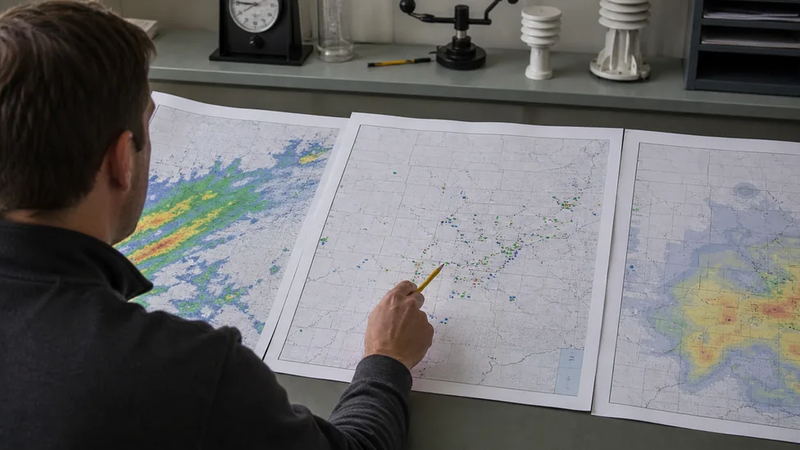
A radar hail estimate shows probable storm conditions. An observed hail report confirms hail at a reported place and time. Neither proves that a particular parked car was struck or damaged; that requires evidence from the vehicle itself.
Practical bottom line
Compare the car with similar local vehicles in equivalent condition, then obtain more than one real-world purchase or trade-in offer. Use the visible condition, repair records, and available vehicle history together. A weather map can provide context, but the vehicle’s actual condition is what establishes whether hail reduced its value.