On this page
Yes—visibility is the deciding limitation
Yes, a home inspector can miss aluminum branch wiring, especially when conductors are concealed or not readily identifiable during a visual inspection. A missed finding does not by itself show that the electrical system was ignored; the applicable standard, inspection agreement, access, and site conditions determine what should have been examined.
“Aluminum branch wiring” usually means solid aluminum conductors serving individual household circuits. It is not the same finding as larger aluminum service or feeder conductors. Inspection requirements vary: Maryland’s official standard, for example, requires a visual inspection of the accessible electrical system and, when applicable, a description of solid-conductor aluminum branch wiring.
Why it may not be identified
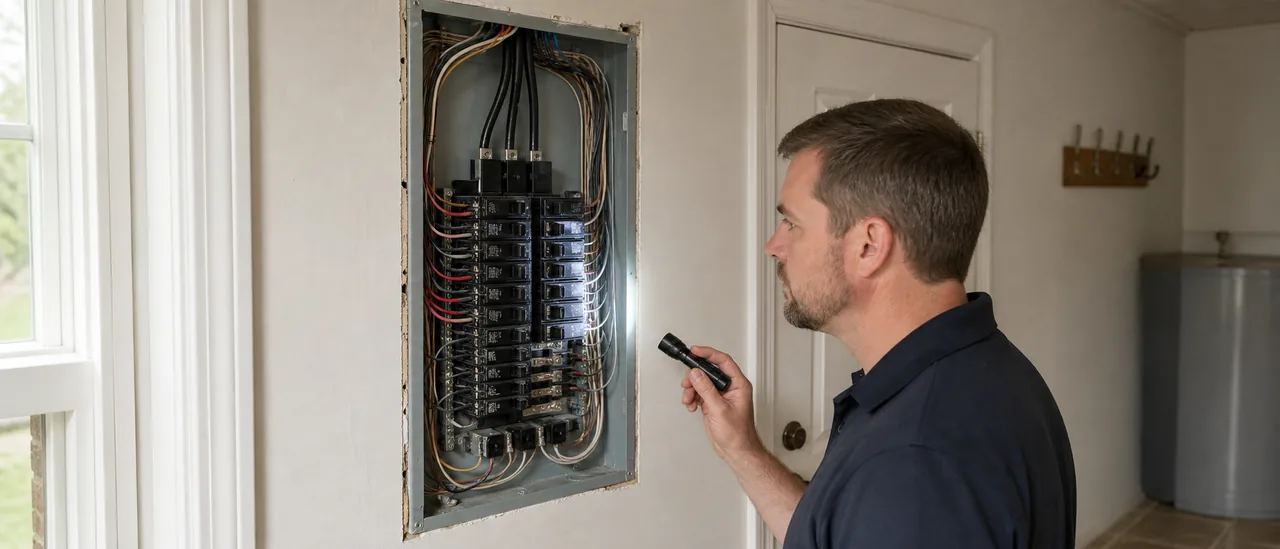
Most branch wiring runs behind finished walls and ceilings. Visible clues may appear at a panel or another accessible termination, but those locations do not necessarily expose every circuit or hidden connection.
ASHI defines a home inspection as a visual examination of readily accessible systems. Its standard requires describing the predominant branch-circuit wiring method, but it does not require dismantling systems, moving belongings, or determining conditions that are not readily accessible.
The result can also be incomplete when:
- a panel is blocked, unsafe, sealed, or otherwise inaccessible;
- visible conductors belong only to some circuits in a mixed-wiring home;
- renovations concealed or replaced portions of the original wiring; or
- the conductor material cannot be identified confidently from the exposed view.
What a visual finding can establish
A clearly visible solid aluminum branch conductor can establish its presence at that location. It cannot establish that every branch circuit uses aluminum, reveal concealed splices, or confirm the condition of connections hidden inside unopened boxes.
What the report should tell you
Read the electrical section and the inspection limitations together. Look for the wiring method described, panel access notes, areas not inspected, and any recommendation for further evaluation. The absence of an aluminum-wiring comment is not proof that no aluminum branch wiring exists.
Age can justify asking a question, but it is not visual confirmation. CPSC has documented aluminum conductors in household branch circuits and advises people who are uncertain about their home’s wiring to ask a knowledgeable electrician or another qualified person to determine it.
Practical bottom line
A standard home inspection can reveal readily visible aluminum branch wiring, but it cannot certify every concealed circuit. If the report is unclear, access was limited, or later work exposes suspected aluminum conductors, a qualified electrician can determine the wiring type and evaluate accessible connections without turning the homeowner into an electrical detective.