On this page
Baseboard heater repair costs in 2026
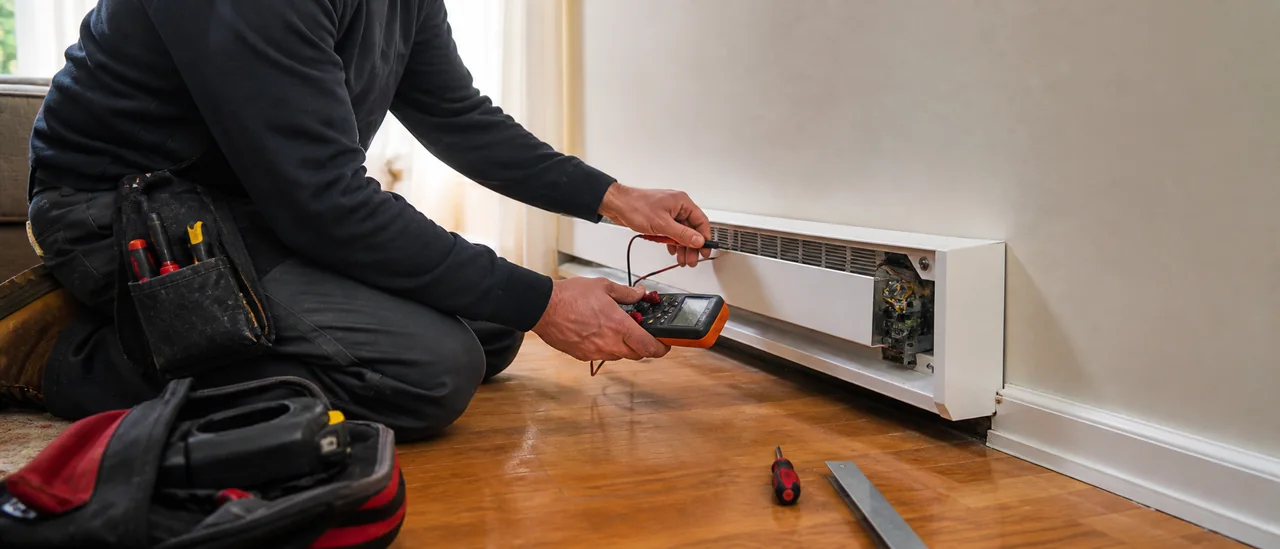
As of August 2026, plan on $139–$441 for a typical baseboard heater repair, with a reported national average of $286. That range generally represents one ordinary professional repair; heater type, the failed component, and access or local labor have the greatest effect on the final price.
Treat the range as a budgeting starting point, not a quote. Two current market guides—updated in June and July 2026—report the same $139–$441 range. However, a simple thermostat or breaker issue may cost less, while concealed wiring, a hydronic leak, or multiple failed units can push the project well above it.
Low, typical, and high repair scenarios
| Scenario | 2026 planning amount | Possible scope |
|---|---|---|
| Low | $100–$250 | A thermostat or circuit-breaker repair with straightforward access |
| Typical | $139–$441 | One common electric or hydronic baseboard repair during a standard service visit |
| High | $380–$1,000+ | A failed limiter or unit replacement; concealed piping, wall or floor work, and water damage can add more |
These bands can overlap because contractors price the diagnosed work, not the symptom. “The room is cold” could describe a control issue, an electric heating-element failure, or a boiler-side problem that affects several hydronic units.
What the price includes
A useful estimate should identify the system as electric baseboard or hydronic (hot-water) baseboard, state the diagnosed fault, and separate labor from parts. It should also say whether the service charge, testing after repair, cleanup, and applicable permit fees are included.
Current pricing data places thermostat work at $100–$250, heating-element replacement at $100–$300, and a failed limiter at $380–$1,000. Hydronic pipe repair is quoted differently in the same guide—$150–$275 per linear foot—so a leak estimate should state the accessible pipe length and whether opening and restoring finishes costs extra.
A home inspection is not a repair bid
A general inspection can operate accessible heating controls and report a system that does not run. It does not diagnose concealed components or establish the final repair scope, so the report finding and the trade estimate answer different questions.
What changes the estimate most
Heater type comes first. Electric units contain line-voltage controls and heating elements. Hydronic baseboards are part of a larger boiler-and-piping system, so the fault may be at the room unit, a valve or pipe, or elsewhere in the heating loop.
Access and extent come next. One accessible thermostat is a smaller job than tracing concealed wiring, locating a hidden pipe leak, or troubleshooting several cold rooms. Drywall, flooring, painting, water cleanup, and boiler work may be separate scopes.
Finally, location and timing matter. Labor prices, minimum service charges, permit rules, travel, and urgent after-hours availability vary by market. Ask for a local itemized estimate rather than applying a national average directly to a specific property.
When to obtain a specialist estimate
Obtain a qualified evaluation when the breaker repeatedly trips, the heater smells scorched, wiring appears damaged, a hydronic unit leaks, or the cause remains uncertain. Avoid repeatedly resetting a breaker or opening electrical or boiler components to chase a cheaper diagnosis.
An electrician is the natural fit for electric baseboard wiring, controls, and circuits. Hydronic leaks or boiler-side faults usually call for an HVAC or plumbing professional familiar with hot-water heating. Compare written estimates by diagnosis, included restoration, and number of units—not price alone.