On this page
The direct answer
Yes, a home inspector can miss cloth wiring when it is concealed, blocked, unsafe to access, or outside the inspection’s agreed scope. A standard home inspection is visual and non-invasive, not a complete tracing of every branch circuit.
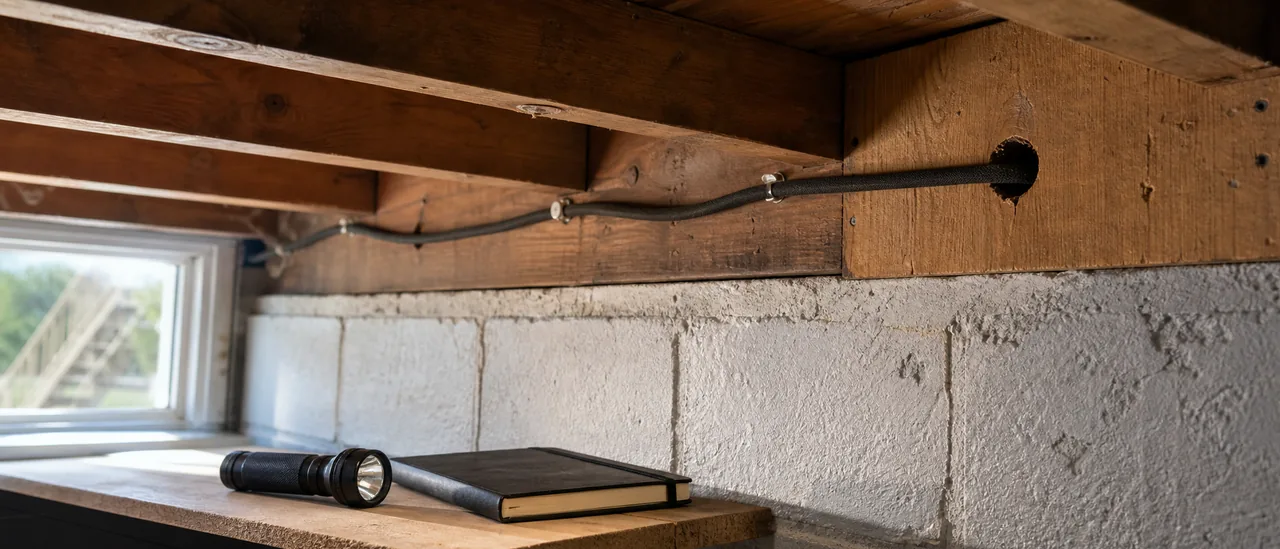
In this article, “cloth wiring” means visible fabric-covered conductors or cable. That description alone does not identify the complete wiring method, conductor material, grounding arrangement, or condition of wiring hidden behind finishes.
Why it may not be found
InterNACHI’s standard requires inspection of specified electrical components and a description of the wiring type observed. It also limits the inspection to accessible areas and excludes concealed defects. Under that standard, an inspector is not required to uncover systems, move obstructions, enter unsafe areas, or remove panelboard covers.
Texas provides a state-rule example. Its standards require inspectors to visually examine accessible systems, but exclude anything hidden or concealed. They also do not require removal of junction-box, fixture-box, receptacle-box, or switch-box covers unless the standards specifically say otherwise.
Cloth-covered wiring may therefore escape observation when:
- branch-circuit runs are enclosed by walls or ceilings;
- attic insulation or stored belongings block the view;
- an attic or crawlspace is unsafe or not readily accessible;
- only newer wiring is visible at the service panel or accessible junctions; or
- the inspection agreement follows a different state standard or adds exclusions.
The applicable contract and state rules matter. Association standards establish minimum scope only for inspections performed under those standards; they do not replace a state’s licensing requirements.
“Observed” is the key limitation
An inspector may accurately report the wiring visible at the panel, attic, basement, or crawlspace without confirming every concealed run. “No cloth wiring observed” is not the same as “no cloth wiring exists.” Read the report’s exact wording and listed access limitations.
What a visual inspection can confirm
An inspector can document fabric-covered wiring where it is plainly visible and describe accessible deterioration or other reportable conditions. Findings at one accessible location do not prove what is inside every wall.
Visual inspection cannot confirm the hidden wiring’s full route, insulation condition, splices, grounding, or whether all circuits use the same material. Receptacle testing covers accessible examples under the cited standards, not every outlet or the complete conductor behind it.
Practical bottom line
Review the electrical section, photographs, stated wiring method, and any areas marked inaccessible or not inspected. If the report is unclear, ask what was visible and what access limits applied.
When confirmation would affect a safety or repair decision, a qualified electrician can perform a more focused evaluation. That evaluation should be scoped to the unanswered question; it may require access or testing beyond a standard home inspection.