On this page
Yes, concealed wiring can be missed
Yes, a home inspector can miss knob-and-tube wiring when it is concealed, blocked, or outside the inspection’s agreed scope. A standard home inspection is visual, not a destructive search through walls and ceilings.
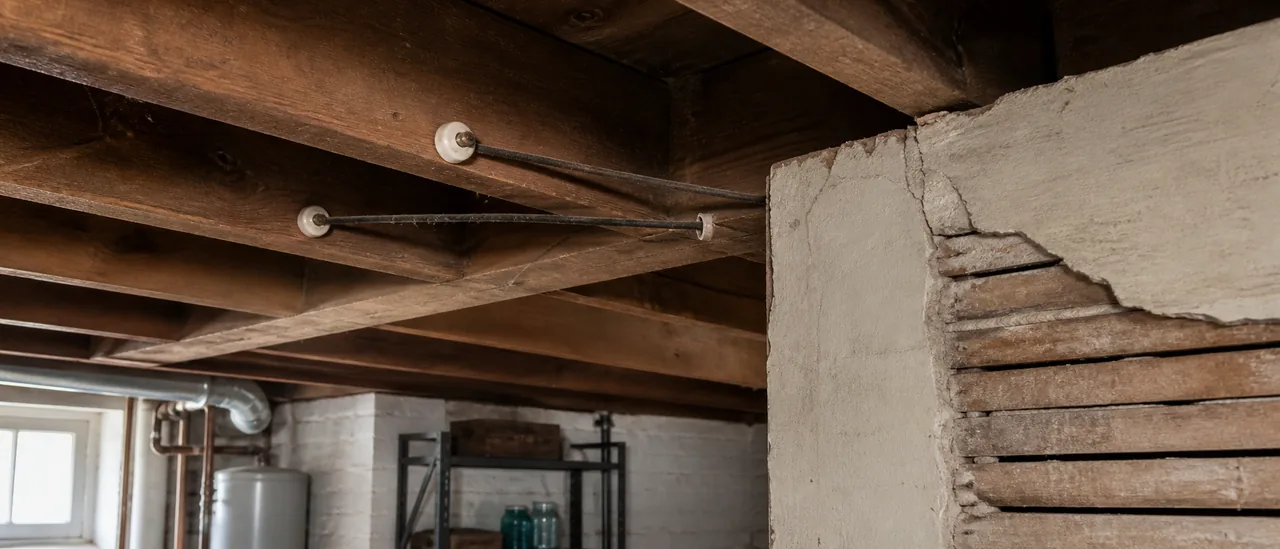
Knob-and-tube is an older wiring method with separate conductors supported on porcelain knobs. Porcelain tubes protect the conductors where they pass through wood framing. Those recognizable parts may be exposed in an unfinished attic or basement, but sections can also run inside wall or ceiling cavities.
Why a normal inspection has limits
InterNACHI’s current standard defines a home inspection as a non-invasive visual examination of accessible areas. Its electrical section covers panelboards and overcurrent devices and requires the inspector to describe the wiring type observed. However, the standard says an inspection will not identify concealed or latent defects.
That distinction matters. An inspector may accurately report the wiring visible in an accessible area while older conductors remain hidden elsewhere. A newer panel or modern cable near the panel does not, by itself, reveal every wiring method used farther along the branch circuits.
“Not observed” is not the same as “not present”
Read the report’s access notes and limitations. A statement that no knob-and-tube wiring was observed describes visible conditions; it is not proof that none exists behind finishes.
What affects whether an inspector sees it
Several site conditions can change the result:
- Finished surfaces: Drywall, plaster, flooring, and cabinetry can conceal conductors.
- Limited access: Stored belongings, low-clearance spaces, unsafe areas, locked rooms, or insulation may block a useful view.
- Partial rewiring: Visible modern cable can coexist with older wiring in concealed portions of a circuit.
- Visible evidence: Porcelain knobs, tubes, separate cloth-covered conductors, or abandoned remnants may justify reporting what was observed without establishing the system’s full extent.
The exact duty can also depend on state rules and the inspection agreement. A particular inspector may offer services beyond a minimum standard, but that expanded scope should be stated rather than assumed.
What a visual finding can—and cannot—confirm
Visible porcelain supports and separate conductors can support identification of the wiring method in that location. The inspector can also document accessible deterioration, alterations, or obstructions. Visual evidence alone cannot confirm whether concealed sections exist, whether every observed section is energized, or how much of the home remains connected to it.
The practical bottom line is to treat the report as a record of accessible conditions, not a guarantee about concealed wiring. If the home’s age, visible remnants, renovation history, or inspection limitations leave the wiring extent important but unresolved, a qualified electrician can perform targeted testing and circuit tracing beyond a standard visual inspection.