On this page
Yes—no leak is not an all-clear
Yes, an old roof can fail without leaking indoors, especially when its materials or attachments no longer resist expected weather. A visible leak is one possible result of failure, not the only test of roof condition.
For this question, “fail” means a roof component can no longer perform its intended role reliably. That might involve the covering shedding or lifting, flashing deteriorating, fasteners losing hold, or the roof structure deforming. It does not necessarily mean collapse, and age by itself does not prove any of these conditions.
Serviceable is different from dry today
A dry ceiling shows that water was not observed there under recent conditions. It does not measure remaining service life or predict performance in the next wind-driven rain.
Why deterioration can appear before leakage
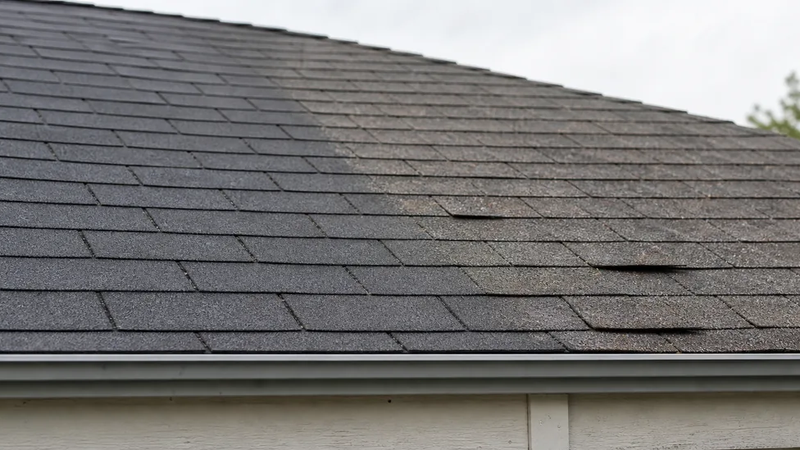
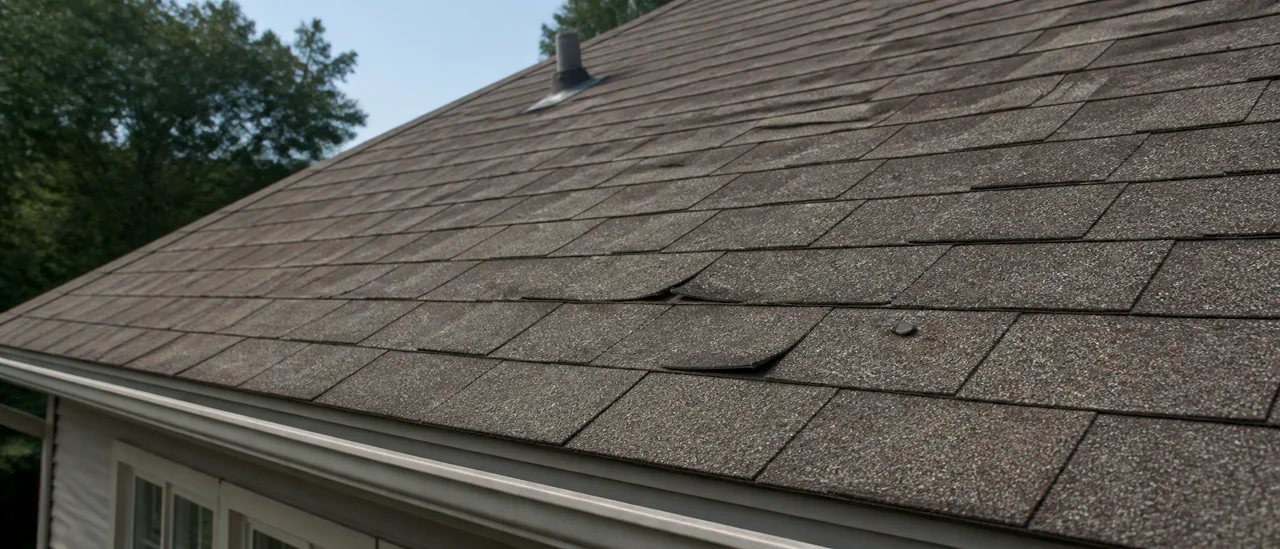
Roof coverings face sunlight, temperature changes, wind, and precipitation throughout their service. Independent outdoor-aging research has observed asphalt shingles losing granules, unsealing, curling, buckling, and developing exposed fasteners over time. Those conditions can reduce weather resistance even before water reaches a room.
A roof also works as an assembly. Covering materials, seams, flashings, penetrations, drainage, and the supporting deck or framing can develop different problems at different rates. A weak area may remain dry during mild weather yet be less able to handle a stronger event. Conversely, one repairable flashing defect can leak while the rest of the covering remains serviceable.
Condition matters more than the calendar
There is no single age at which every roof fails. IBHS has observed different asphalt shingles reacting differently even when exposed to the same weather. Roof type, installation, exposure, and present condition all matter, so age should prompt closer attention rather than function as a verdict.
Useful observations include:
- unusual or widespread granule loss and blistering;
- unsealed or curling shingle edges;
- buckling or backed-out fasteners; and
- sagging or other visible deformation in the deck or framing.
These signs do not all carry the same meaning. Their extent, location, cause, and effect on the specific roof require evaluation; appearance alone cannot establish a failure date.
Practical bottom line
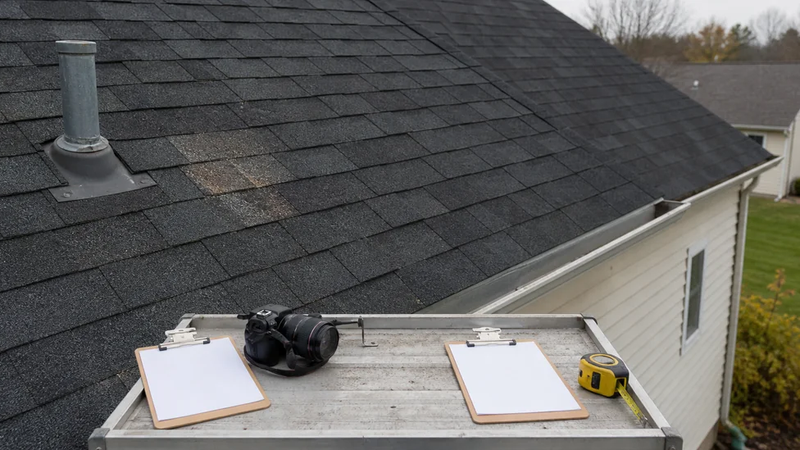
Do not use “it does not leak” as the only condition check. A sound evaluation considers the covering, flashings, penetrations, drainage, and accessible structure, along with documented age and maintenance history.
A standard visual inspection also has limits. InterNACHI’s residential standard separately calls for inspecting roof materials, flashing, penetrations, and accessible structure while reporting observed active leaks. It does not require a water test, a roof warranty, or a prediction of service life. The most accurate conclusion is therefore conditional: an old roof may still be serviceable, but a dry interior alone cannot prove it.