On this page
Yes, with two important conditions
Yes, you can usually give the roof report to another roofing company, provided the report’s terms permit sharing and the new company treats it as background—not as its own inspection.
A roof report records what its author observed, measured, photographed, or concluded within a stated scope. It does not automatically transfer the author’s responsibility, a contractor’s estimate, or any promise that conditions remain unchanged.
For this answer, “roof report” means a written record of an inspection or roof-specific assessment. The label itself is broad: one document might describe visible conditions, while another supplies measurements, repair recommendations, or observations made during construction. A report prepared for one purpose may not answer questions outside that purpose.
Check permission and scope first
Read the inspection agreement and the report’s limitation language before forwarding the file. Look for the named client, authorized recipients, restrictions on distribution or third-party reliance, the inspection date, excluded areas, and any expiration language.
These details are not mere fine print. For example, Ohio’s home-inspector rules require the written contract to identify the client and authorized report recipients. They also require the report to address the work performed and services or hazards excluded. Requirements vary by jurisdiction, so the actual agreement and applicable local rules control.
Use this quick handoff check:
- Confirm that you are the client or have the client’s permission to share it.
- Send the complete report, including photographs, attachments, and limitations.
- Tell the new roofer when the inspection occurred and whether anything changed afterward.
- Ask which findings the roofer can use and which areas require another look.
- Request a new written scope and price from the company that would perform the work.
What the second roofing company may do
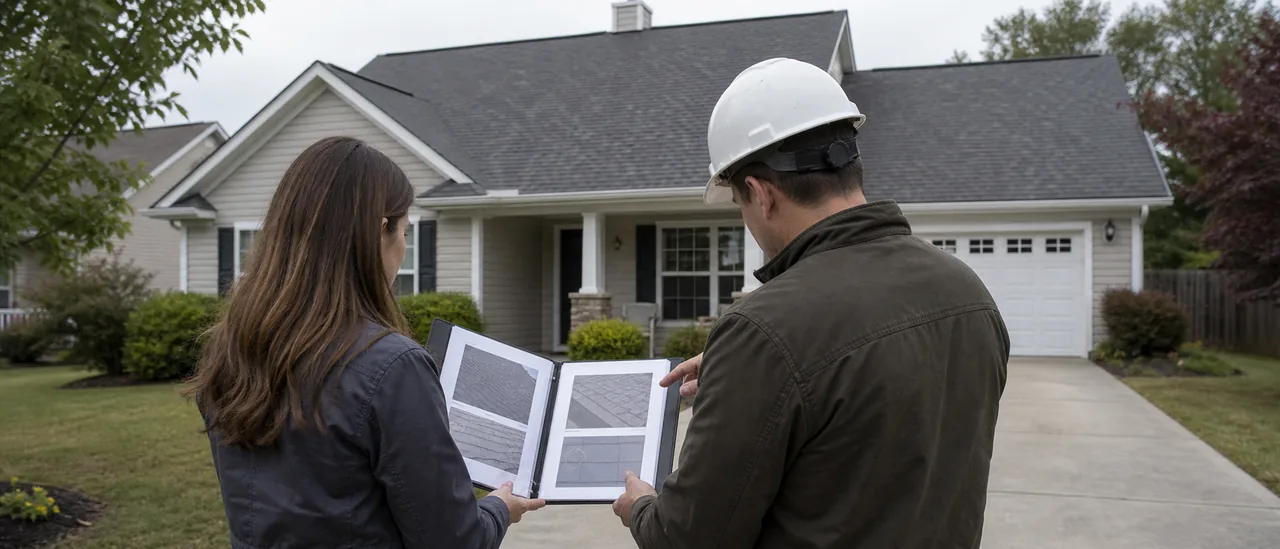
The second company may accept the report as a useful starting point. Clear photographs, roof-area identification, material descriptions, and specific observations can help its representative focus the follow-up.
However, that company may still inspect the roof before recommending work or providing a firm quote. It may use different access methods, define the repair scope differently, notice changed conditions, or decline to rely on another person’s conclusions. That is not necessarily a rejection of the first report; it separates prior observations from the new company’s own work.
If the report is old, incomplete, limited to remote imagery, or missing the area tied to the requested repair, expect a fresh evaluation. The practical bottom line is simple: share the report when permitted, but let the receiving roofer state in writing what it verified and what it proposes to do.
Related reading: What Should a Roof Inspection Agreement Include?