On this page
The conditions needed for nighttime hail
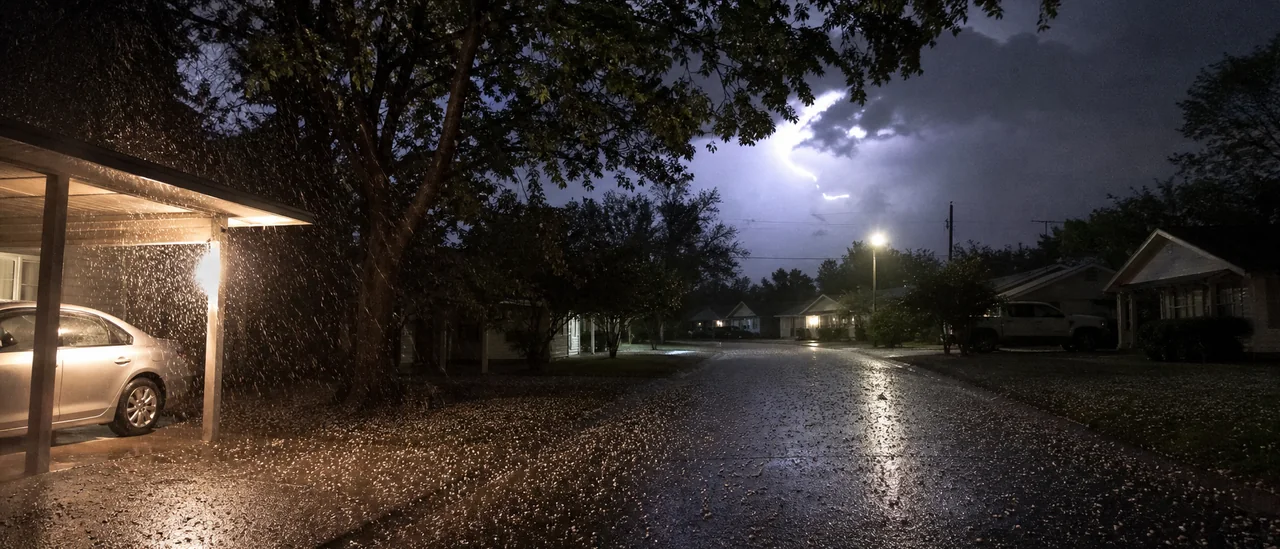
Yes. Hail can fall at night. Hail formation depends on a thunderstorm's updraft, supercooled liquid water, and cold air aloft—not on sunlight reaching the ground. If a strong storm continues or develops after dark, it can produce hail.
The sun often helps initiate daytime thunderstorms by heating the ground, but that is only one way air can rise. Fronts, drylines, terrain, and existing outflow boundaries can provide lift during the evening or overnight. A low-level jet can also transport warm, moist air toward developing storms.
How hail grows after dark
A hailstone begins as a small ice particle inside a thunderstorm. Strong rising air carries it through regions where liquid droplets remain unfrozen even though temperatures are below 32°F. Those supercooled droplets freeze onto the particle and add layers of ice.
NOAA's National Severe Storms Laboratory explains on its Hail Basics page that hail grows when liquid water freezes onto a hailstone as it moves through parts of a storm with different temperatures and liquid-water content. A sufficiently strong updraft keeps the growing stone aloft until it becomes too heavy or leaves the rising air.
Eventually, the stone falls when the updraft can no longer support it, when it moves out of the strongest rising air, or when storm structure changes. It may melt partly while passing through warmer air below the freezing level.
Why nighttime storms can remain strong
After sunset, surface temperatures usually fall and some afternoon storms weaken. The National Weather Service defines nocturnal thunderstorms as storms that develop after sunset and notes that they are often associated with a strengthening low-level jet, especially over the Plains. That wind maximum can transport warm, moist air above a cooler surface layer and help support additional storm development.
Overnight storms do not occur everywhere or every night, but they can remain organized when lift, moisture, instability, and wind structure persist after surface heating fades.
What changes after sunset
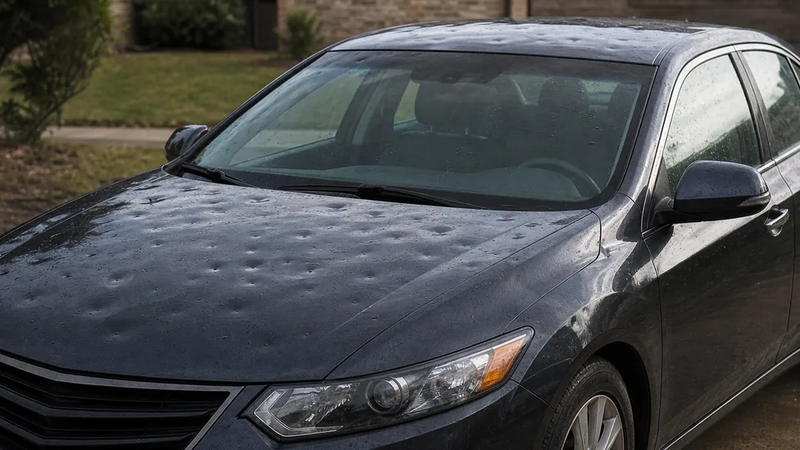
Darkness makes hail harder to see and storm effects harder to inspect safely. Hail size is also easy to misjudge from sound alone. Roofs, gutters, vehicles, and windows can amplify or distort hailfall, while rain and wind obscure what is falling.
The National Weather Service advises going to a secure location during a severe thunderstorm warning and staying away from windows when large hail or damaging wind is approaching. Wait for daylight and safe conditions before looking for exterior effects.