On this page
Yes—condition and temperature matter
Yes, old asphalt shingles can crack during repair, especially when weathering or cold has reduced their flexibility. Cracking is a risk, not a certainty, and the roof’s actual condition matters more than its age alone.
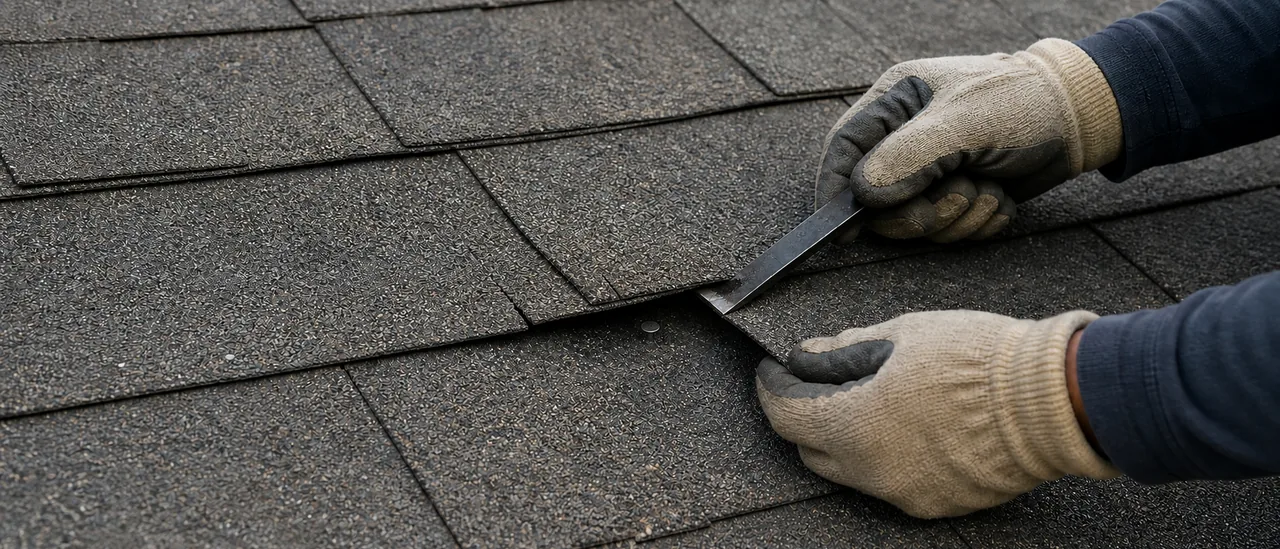
A localized replacement rarely involves only the visibly damaged piece. Asphalt shingles overlap, and their fasteners are concealed by the course above. Replacing one shingle can therefore require carefully separating adhesive bonds and lifting neighboring tabs to expose nails. That bending and prying can break a brittle shingle that remained intact while lying flat.
Research published in proceedings hosted by the National Roofing Contractors Association describes older roof coverings as more brittle and more easily broken during repair. It also treats repair difficulty as a condition-based judgment rather than a fixed age cutoff.
What raises the chance of cracking
Age is useful context, but it is not a pass-or-fail test. Two roofs installed in the same year can weather differently because of exposure, roof orientation, ventilation, product type, and maintenance history.
The practical risk rises when:
- tabs already feel stiff, curled, or fragile;
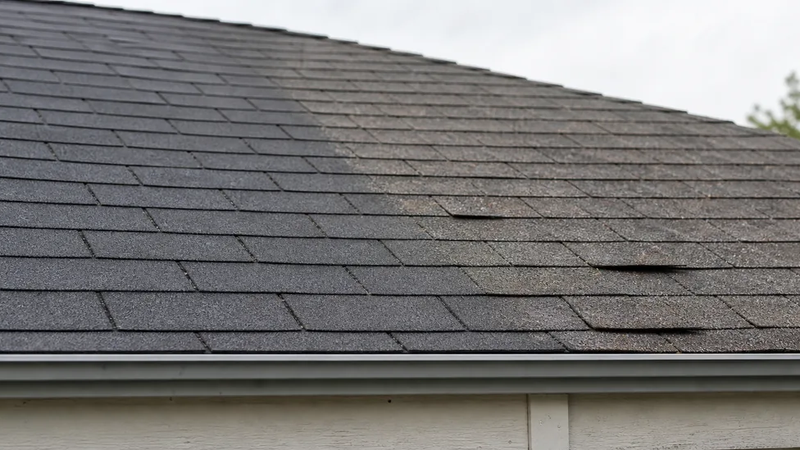
- granule loss or surface deterioration is widespread;
- several overlying shingles must be loosened to reach fasteners;
- prior repairs or sealant make the courses difficult to separate; or
- the shingles are very cold during handling.
Temperature matters at both extremes. NRCA notes that asphalt shingles become brittle in cold conditions. Manufacturer technical guidance likewise says very cold shingles may crack, break, or delaminate when bent. Very hot shingles can also be damaged by foot traffic or mishandling, even though they are not brittle in the same way.
No universal “too old to repair” number
Calendar age cannot determine repairability by itself. A hands-on assessment of flexibility, surface condition, bonding, and the access needed for the specific repair is more informative.
What this means for a repair decision
A careful repair can reduce avoidable stress by limiting how far surrounding tabs are lifted and by working under suitable conditions. It cannot restore flexibility that weathering has already taken away. Even proper technique may reveal that adjacent shingles will not tolerate the manipulation required for a neat replacement.
One cracked neighboring shingle does not automatically mean the whole roof must be replaced. The important question is whether the repair can be completed without causing a widening pattern of breakage. If tabs repeatedly split, delaminate, or refuse to lie flat after handling, the repair area may no longer be practically isolated.
The bottom line is straightforward: old shingles can crack during repair because access requires movement, and weathered material may not tolerate it. Repairability should be judged from the shingles’ present condition, the temperature, and how much surrounding material must be disturbed—not from roof age alone.