On this page
Yes—when the problem is limited
Yes, repairs can sometimes extend an old roof for a few years, but only when deterioration is localized and the roof still has a sound, dry base. A repair corrects defined defects; it does not reset the roof’s age or guarantee a particular remaining life.
This distinction matters because “old” describes time, not condition. The RICOWI/IBHS roof guide recommends evaluating current condition with age and weathering among the factors. It also notes that a proper evaluation may identify opportunities to repair damage instead of replacing the entire roof.
Conditions that favor a repair
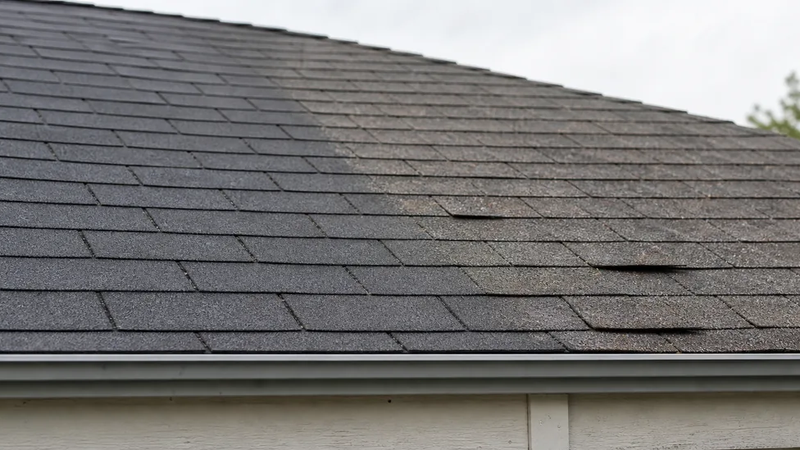
A short-term repair is more reasonable when an inspection finds a limited, traceable problem and serviceable materials around it. Examples include:
- a small number of missing or damaged shingles or tiles;
- one failed flashing detail or another isolated leak entry point;
- a localized puncture or damaged roof section; and
- drainage debris or a minor defect that can be corrected without disturbing a broad area.
NRCA notes that leaks can result from loose flashings or one damaged roof section. Its homeowner guidance also emphasizes inspection, maintenance, and repair for asphalt-shingle roofs. Together, those points support fixing specific defects promptly when the surrounding system can still perform.
A patch is not a life-extension certificate
“A few years” is a planning goal, not a predictable outcome. The repair should come with a written scope, the conditions observed around it, and any limits on what could be inspected.
Conditions that point toward replacement
Repairs are less likely to buy useful time when defects repeat across multiple slopes, materials are brittle or badly worn, leaks have several sources, or moisture has damaged the deck or insulation. Sagging, widespread soft decking, and recurring leaks after prior patches also suggest that another isolated repair may leave the underlying problem in place.
NRCA distinguishes repairable leak sources from complete roof-system failure, which it describes as generally irreversible. Local building rules and the roof-covering manufacturer’s instructions may also restrict what work is acceptable, especially when deteriorated materials cannot provide a reliable base.
Do not judge this from roof age or a ground-level photo alone. The useful question is whether the evaluator can identify a contained defect, confirm that adjacent materials can accept a durable repair, and find no evidence of broader moisture or structural damage.
Practical bottom line
Repair can be a sensible bridge when the defect is isolated and the rest of the assembly remains serviceable. If deterioration is widespread or the supporting materials are wet or unsound, repeated patching is unlikely to create a dependable extra few years. Recheck the repaired area after severe weather and during routine roof inspections, without walking a steep or fragile roof yourself.