On this page
Yes, but only under the right conditions
Yes—but only when the leak source is at the roof surface and the underlying roof remains sound. Coating an unidentified leak, wet insulation, or deteriorated decking can conceal the problem without correcting it.
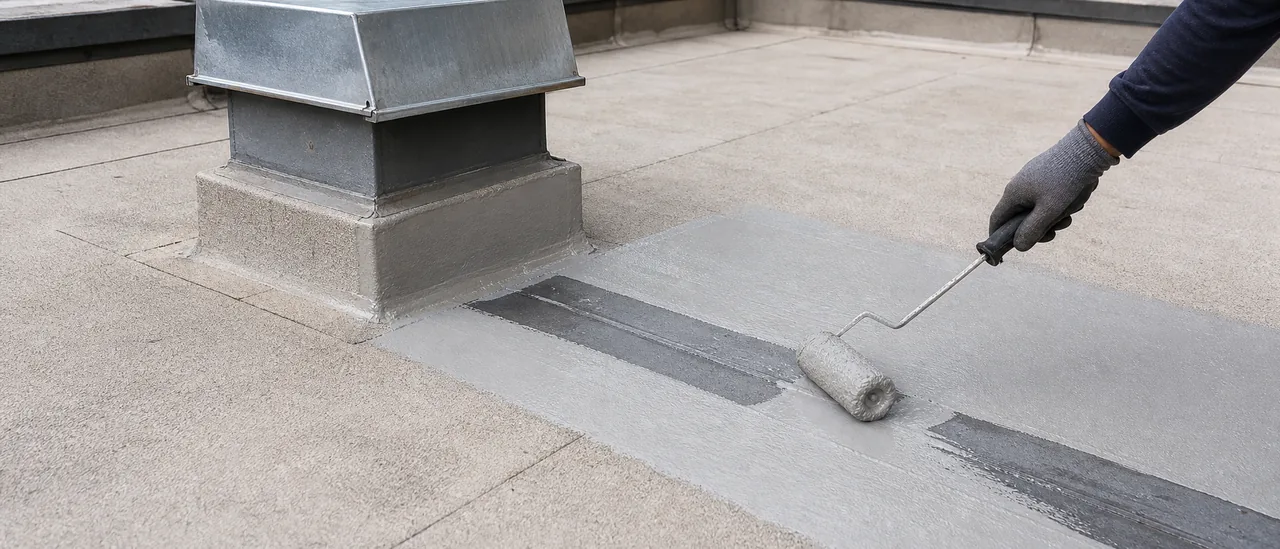
A roof coating is a liquid-applied layer that adheres to a roof surface. Depending on the roof assembly, it may serve as maintenance, part of a repair, or part of the roof covering. It is not automatically a complete leak repair.
Why coating alone may fail
Water can enter through an open seam, puncture, failed flashing, drain detail, or another defect. The correct repair depends on that entry point and on what happened beneath it.
Roofing-industry guidance places substrate evaluation, repairs, and surface preparation before coating. That order matters. If water reached the insulation or deck, damaged materials may need removal or repair before the surface is coated.
Coating may help complete a repair when the leak path is known, defects are corrected, and the remaining surface is dry, clean, stable, and compatible. On some built-up roofs, for example, technical guidance calls for membrane patching first and compatible surface coating afterward.
Coating is a surface treatment, not a leak detector
A broad coat over the suspected area does not prove the entry point was found. Confirm the defect, the condition below it, and the required detail repair before deciding whether coating belongs in the solution.
Conditions that change the answer
Coating is more likely to be appropriate when:
- the leak comes from a repairable surface defect;
- the roof membrane and deck are otherwise serviceable;
- wet or damaged materials have been removed or repaired;
- seams, penetrations, flashings, and drains receive their required detail work; and
- the coating is compatible with the existing roof and installed on a properly prepared surface.
It is unlikely to solve the problem when moisture is trapped below the surface, the deck is deteriorated, defects are widespread, drainage remains faulty, or movement keeps reopening a crack or seam. Adding another surface layer does not restore failed structural materials.
Practical bottom line
Roof coating can stop water at a limited, correctly repaired surface pathway and can protect the repaired roof afterward. It should not be treated as a one-step cure for every active leak.
First identify where water enters and inspect the affected assembly. Then repair damaged details and materials. Consider coating only if the roof is sound, dry, prepared, and suitable for that treatment.