On this page
The direct answer
Yes, potentially—but only on a serviceable asphalt-shingle roof with a compatible treatment. Current industry guidance does not establish that field-applied treatments reliably add a specific number of years to every roof.
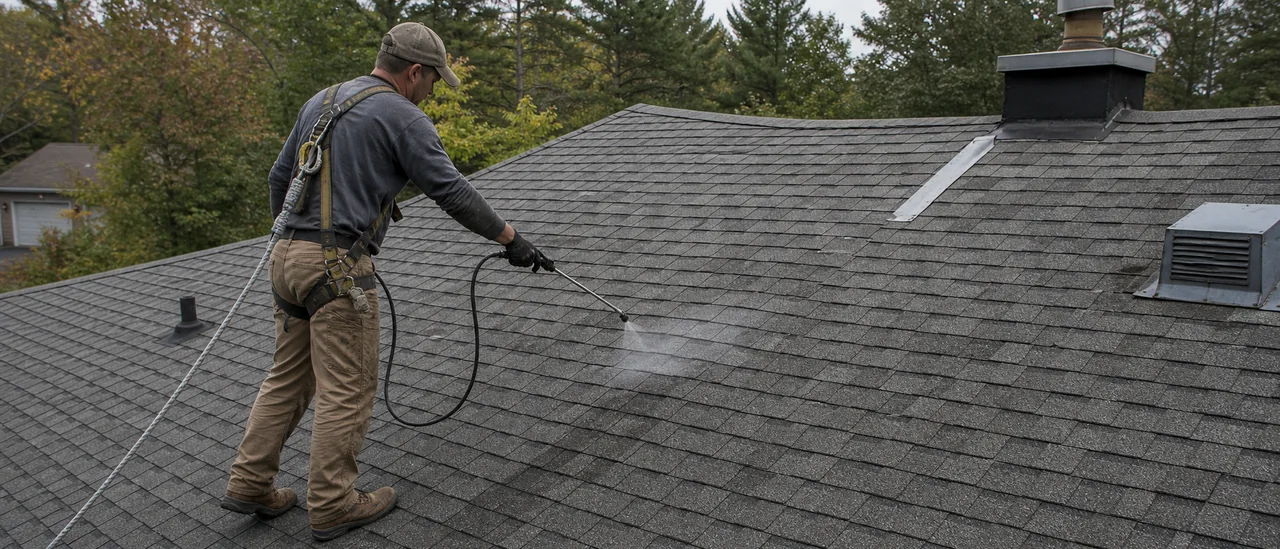
“Shingle rejuvenation” is commonly used for a liquid treatment applied over installed asphalt shingles. Treatments have different formulations, so a claim about one should not be generalized to all of them.
Extension is not restoration
A treatment may be intended to slow further aging. It does not replace missing shingles, correct failed flashing, rebuild worn-away material, or repair the roof deck beneath the shingles.
Why the answer is conditional
The Asphalt Roofing Manufacturers Association says documentation for claimed benefits—including longer roof life and remediation of small leaks—is limited. Its bulletin also reports that field-applied coatings may shrink, loosen surface granules, or contribute to trapped moisture by restricting vapor movement.
That means a short-term change in appearance or flexibility is not the same as proven additional service life. Useful life depends on whether the roof continues to shed water and perform as an assembly, not on a single surface characteristic.
Compatibility matters as much as condition. Roofing-industry guidance recommends checking with the shingle manufacturer before applying any coating. An application may impair performance, and state or local building rules may prohibit the work.
Conditions that matter most
Before treating rejuvenation as a way to delay replacement, verify:
- The covering is asphalt shingles, not another material sold under a similar-looking profile.
- The shingles remain largely intact, sealed, and capable of being repaired where necessary.
- Active leaks, damaged flashing, punctures, loose fasteners, and missing shingles are evaluated and repaired as needed first.
- The shingle manufacturer permits the exact treatment, and local rules allow its application.
- Any promised lifespan is backed by relevant field evidence and clear written limitations—not just a laboratory change in one material property.
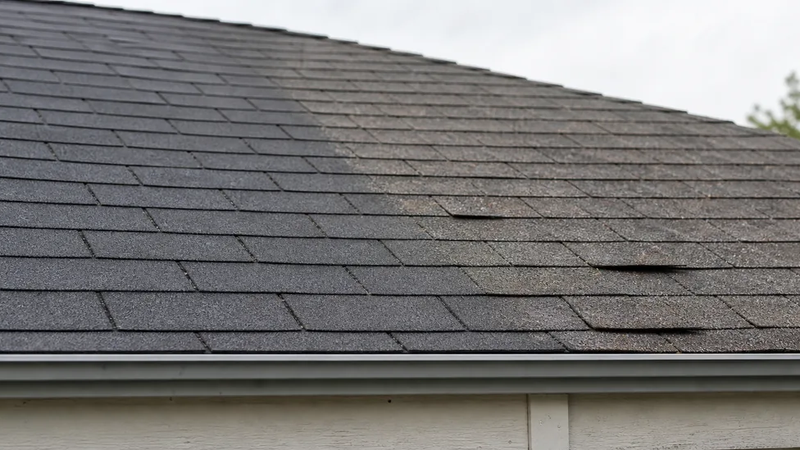
Widespread curling, exposed substrate, extensive granule loss, recurring leakage, or deteriorated decking changes the decision. A surface treatment cannot recreate components that are already gone or correct failures below the shingle surface.
Practical bottom line
Shingle rejuvenation may serve as a limited maintenance measure for some roofs that are still functional. It should not be treated as a reset button or a predictable substitute for repair or replacement.
Base the decision on present roof condition, manufacturer compatibility, local requirements, and the quality of evidence behind the specific lifespan claim. If those checks fail, added roof life remains an unsupported promise.