On this page
Yes—but only as supporting evidence
Yes, weather reports can support a roof-damage finding, but only when the reported event aligns with property-specific physical evidence. A report can establish useful context about the hazard, time, and general location. It cannot show by itself that one roof was struck or that a particular mark was storm-caused.
Here, a roof-damage finding means an evaluator’s conclusion about an observed roof condition and its likely cause. The weather record supplies one part of that reasoning; inspection observations supply the property-specific part.
What a weather report can show
A National Weather Service Local Storm Report may identify hail size, wind, an occurrence time, and a location. The NWS explains that these reports commonly relay information from spotters, officials, media, or the public. They remain preliminary until local and national certification places them in Storm Data.
That makes the report useful, but its type matters. An observed or measured report describes what someone recorded at a stated place. Radar-derived data describes conditions inferred over an area. NOAA says much of its automatically derived severe-weather data represents probable conditions rather than a confirmed occurrence.
Three questions make a weather record useful
Does the time match the suspected event? Is the reported location close enough to be relevant? Does the reported hazard fit the type and pattern of physical change documented on the roof? A weak match on any one point limits the report’s support.
Where the roof evidence fits
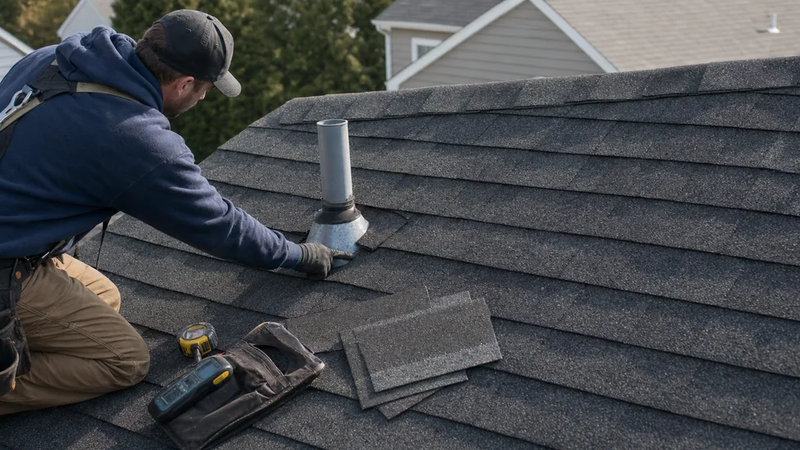
The inspection should document the actual condition, its location, distribution, and relevant surrounding surfaces. For example, a nearby hail report may be consistent with fresh impact-like changes found across exposed roof components. It does not establish that every scuff, crack, dent, or missing shingle came from that hail event.
The same principle applies to wind. A report of strong wind nearby can support the event history, while the roof evaluation must address what moved, lifted, fractured, detached, or remained unaffected. Age, installation, maintenance, foot traffic, and earlier weather may offer other explanations that the weather report cannot resolve.
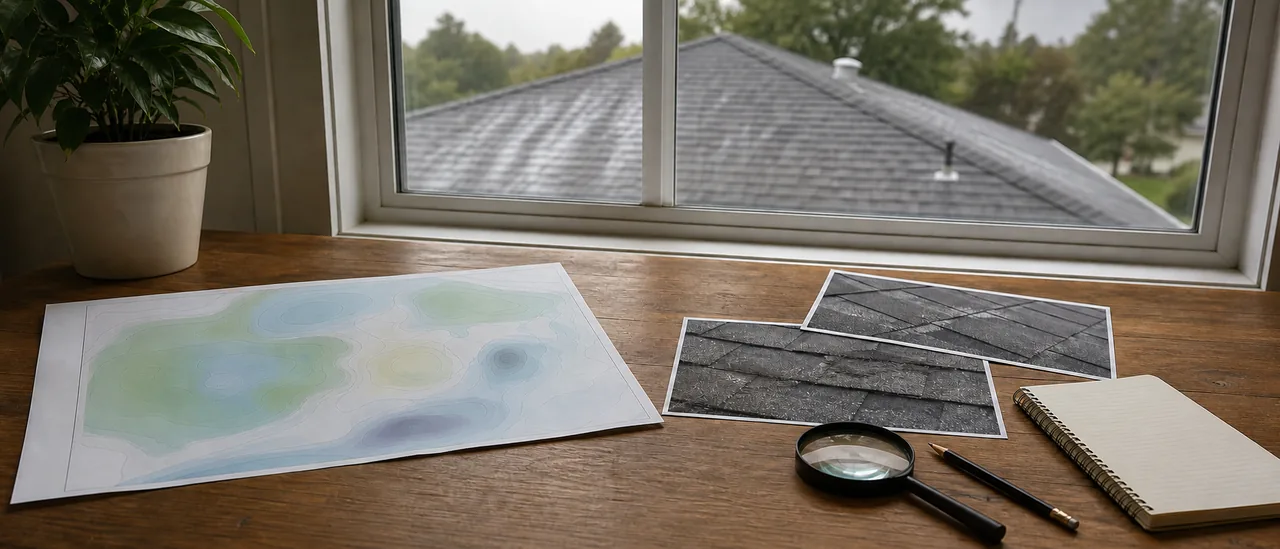
Location markers also need careful reading. NOAA notes that some Storm Data coordinates are entered directly, while others are calculated from a distance and direction relative to a known place. A plotted point identifies a reported event; it should not be treated as the exact boundary of storm effects.
Missing data is not proof that no storm occurred. NOAA specifically warns that severe-weather inventories may be incomplete for a location or period. Conversely, a nearby report does not prove damage occurred at an address.
Practical bottom line
Treat a weather report as corroboration, not a stand-alone verdict. The strongest finding connects a relevant, well-understood weather record with clearly documented physical observations and considers reasonable alternative causes. If those pieces do not align, the report may show possible exposure without supporting a specific roof-damage conclusion.
Related reading: How do you check a house for hail damage?