On this page
The direct answer
No—you should avoid flushing a toilet during a thunderstorm when you can hear thunder. A flush requires contact with a plumbing fixture, and official lightning-safety guidance says to avoid toilets and other plumbing until the threat has passed.
That does not mean every flush will cause an injury. It means a lightning strike can send current through a building’s plumbing, creating an avoidable path for contact.
Wait until the lightning threat has passed
Leave the toilet alone while thunder is audible. Wait at least 30 minutes after the last sound of thunder before using plumbing again.
Why toilets are included in lightning guidance
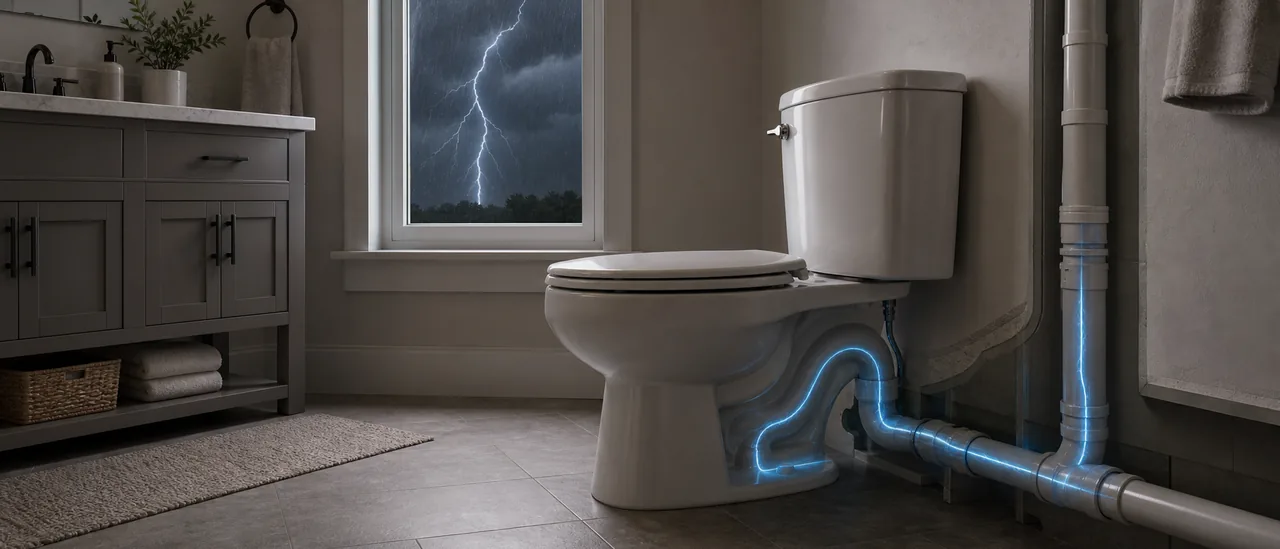
A toilet is connected to the same broad plumbing system as sinks, showers, and tubs. The National Weather Service specifically advises waiting to use “plumbing—sinks, showers, tubs, and toilets” because plumbing can conduct electricity from a lightning strike outside.
Water and conductive parts can provide routes for electrical current. The Centers for Disease Control and Prevention says lightning can travel through a building’s plumbing and recommends avoiding contact with both plumbing and running water during a thunderstorm.
Being indoors is still much safer than remaining outside. The precaution is about what you touch once you are inside a substantial building, not about leaving shelter to find a different restroom.
Do plastic pipes make flushing safe?
Plastic piping may reduce the risk compared with metal piping, according to the CDC. However, the agency still recommends avoiding all plumbing and running water during a lightning storm.
Homes can contain a mixture of plastic pipe, metal fittings, fixtures, water, and other conductive connections. Most people cannot verify every part of that path from the bathroom, so pipe material is not a practical reason to ignore the guidance.
What if using the toilet cannot wait?
The safest general choice is to wait. If there is an urgent medical, accessibility, or sanitation need, handle the immediate need rather than delaying essential care, while minimizing contact with the flush handle, faucet, and other plumbing fixtures.
For ordinary situations, postpone flushing and other plumbing use. The same pause applies to showering, bathing, washing dishes, and using sinks.
The practical bottom line
If thunder is close enough to hear, lightning is close enough to treat plumbing as a potential conductor. Stay inside, avoid the toilet and other fixtures, and restart normal plumbing use 30 minutes after the last thunder.