On this page
Yes—usually, when the association is responsible
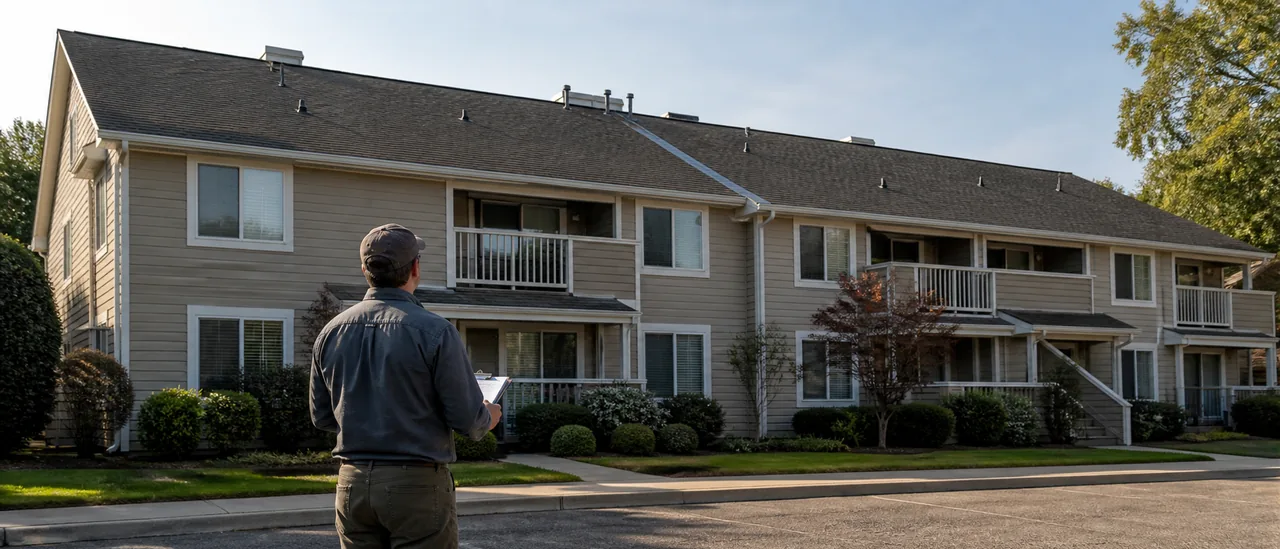
Yes, a condo association usually arranges roof inspections when it is responsible for maintaining the roof. The declaration and local law matter most: some roofs are common elements, while certain documents assign limited components or maintenance duties to individual owners.
The board or property manager may hire a roof professional, engineer, architect, or reserve specialist. It may also receive a visual maintenance report rather than a stand-alone “roof inspection.” The label matters less than the scope, date, inspected areas, and stated limitations.
Why roof responsibility controls the answer
Start with the condominium declaration, not an assumption about who lives below the roof. The document should identify unit boundaries, common elements, limited common elements, and maintenance obligations.
State law can supply a default rule, but those rules vary. Washington law, for example, generally makes the association responsible for common elements, including limited common elements, while owners handle their units. The declaration and specific statutory exceptions can change that allocation.
That responsibility makes association-arranged inspections practical, but it does not prove every association follows the same schedule.
When an association may inspect
An association may evaluate the roof during routine maintenance, reserve planning, leak investigation, or after severe weather. The National Roofing Contractors Association recommends that homeowners or building managers inspect roof systems at least twice yearly and suggests additional inspections after severe weather. That is industry guidance, not a universal condo-law deadline.
Some jurisdictions impose specific planning requirements. Washington law requires nonexempt associations to update reserve studies annually and have a reserve professional conduct a visual site inspection at least every third year. Whether a particular roof appears in that study depends on the association’s responsibility and the reserve-component list.
An association inspection has limits
A visual inspection documents accessible conditions on a particular date. It does not guarantee concealed areas are sound, predict exactly when replacement will occur, or establish responsibility beyond the governing documents and applicable law.
The practical bottom line
Ask the association or manager four focused questions:
- Is the association responsible for the roof covering, deck, flashing, and drainage?
- When was the roof last inspected, and who performed the work?
- Can residents review the report, reserve-study roof entry, and recent maintenance records?
- Which surfaces were inaccessible or outside the inspection scope?
If responsibility belongs to the association, it will commonly coordinate the inspection. If the documents assign responsibility elsewhere, the owner may need to arrange it. For a closer look at long-term roof planning, see Should a Condo Buyer Review Roof Reserve Studies?.