On this page
The direct answer
Yes—during a general condition inspection, visible roof seams and coating condition are usually included as part of the accessible roof covering, but testing every seam or the coating is not standard. The inspection agreement, governing standard, roof type, visibility, and safe access determine how complete that review can be.
Here, “manufactured-home inspection” means a condition inspection of an installed home. It does not mean the separate factory-production or installation-compliance inspections used for new manufactured housing.
Why seams and coatings fit the roof scope
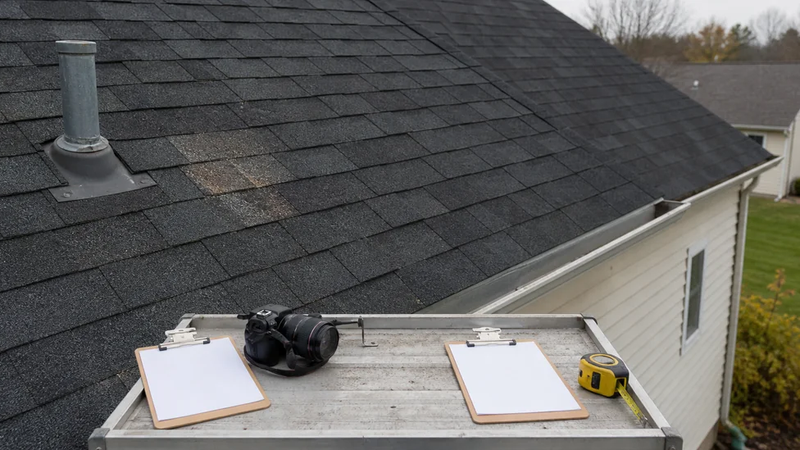
Home-inspection standards commonly address the roof covering rather than list every roof material or detail. Maryland’s minimum standard, for example, calls for visual inspection of the accessible roof covering, drainage components, flashings, skylights, chimneys, and penetrations.
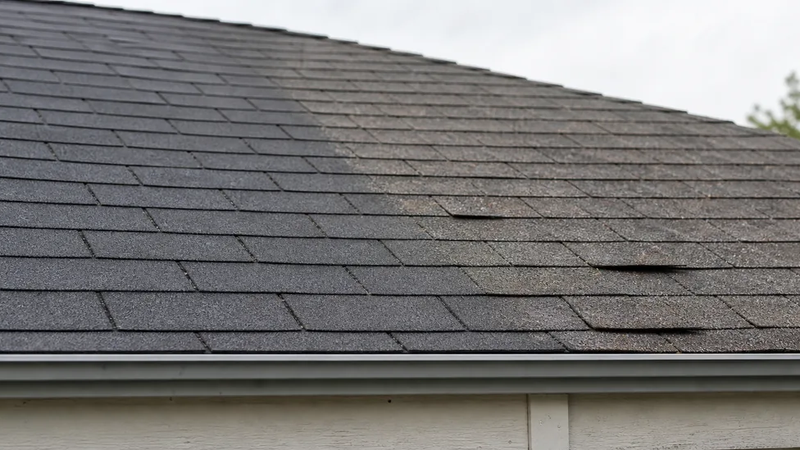
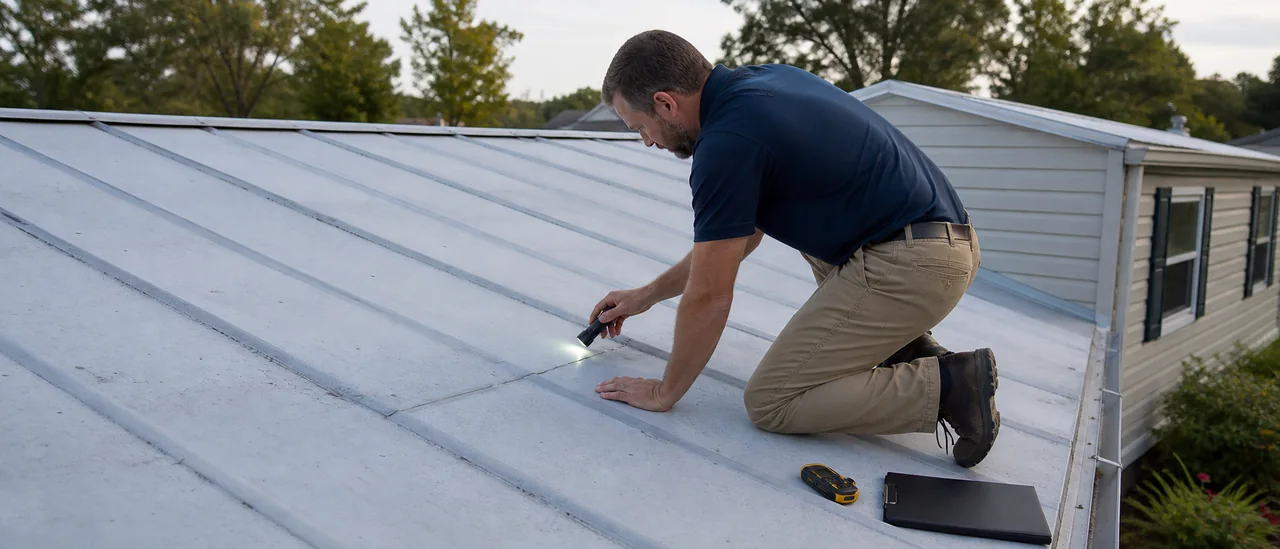
For a metal, membrane, or coated roof, the covering’s visible condition can include seams, laps, fasteners, sealant, patches, and the exposed coating surface. The National Roofing Contractors Association notes that inspection can uncover loose seams, deteriorated flashings, and other visible signs of problems.
An inspector may therefore report observations such as:
- an open, lifted, separated, or heavily patched seam;
- cracked or missing sealant around a lap, fastener, or penetration;
- visible coating cracks, peeling, blisters, thin-looking areas, or exposed substrate; and
- rust, ponding, staining, or interior moisture evidence near the roof area.
These are condition observations—not proof of the cause, depth, or repair needed.
What a visual inspection cannot confirm
A standard inspection is visual and limited to readily accessible areas. It normally does not include destructive seam probing, test cuts, pull-off adhesion testing, dry-film thickness measurements, flood testing, or moisture scanning unless the agreement adds those services.
The inspector also may not walk a roof that could be damaged or is unsafe. Snow, debris, height, slope, fragile coating, roof geometry, and limited attic access can leave sections unseen. A dry surface on inspection day does not prove every seam is watertight, and an intact-looking coating does not establish its thickness, bond, or remaining service life.
Check the stated inspection method
The report should identify whether the roof was walked, viewed from a ladder or ground, observed by camera, or limited by access. That method explains how much confidence to place in a “no visible defect” finding.
Practical bottom line
Confirm before the inspection that the roof covering, accessible seams, coating surface, penetrations, and interior leak evidence are within scope. HUD notes that manufactured homes come with homeowner manuals covering maintenance and repair, so those roof instructions can help identify material-specific details worth checking.
If visible seam failure, widespread coating deterioration, moisture evidence, or major access limits appear in the report, a qualified roof evaluation may be needed to define any testing or repair scope.