On this page
Purple can mean hail, but it does not prove hail
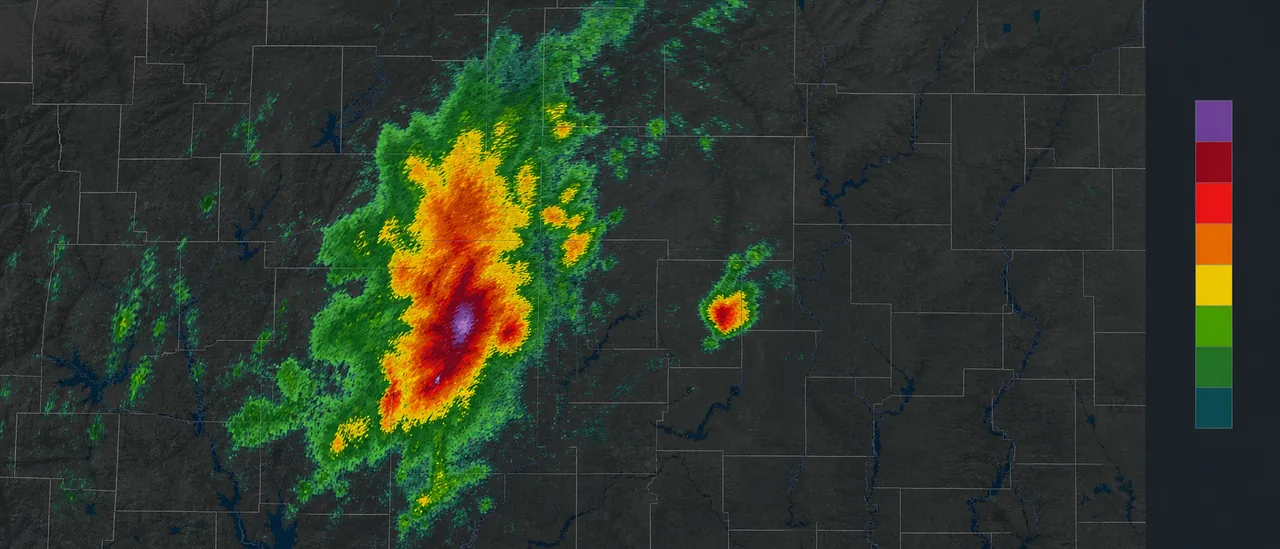
Yes, purple on a reflectivity radar image can indicate hail, but only the map’s product and legend define that color. Purple often marks a very strong return, which may come from hail, heavy rain, or a mixture of both.
Radar colors are display choices rather than universal weather labels. One app may use purple for high reflectivity, while another may assign it to a different value or even a different radar product. Check the legend, units, and product name before interpreting the shade.
Color is not a confirmation
Purple on reflectivity usually describes echo intensity. On products such as velocity or correlation coefficient, the same color can represent an entirely different measurement.
Why purple may appear in a hailstorm
Reflectivity measures the strength of energy returned to radar and is commonly expressed in dBZ. Larger particles and greater concentrations of particles can produce stronger echoes. Hail therefore often resembles extremely heavy rainfall on conventional Doppler radar.
An NWS case study showed pink and purple within a supercell’s high-reflectivity core. However, the agency noted that reflectivity alone only suggested large hail; it could not confirm hail because particle sizes, types, and concentrations can create similar strong returns.
Meteorologists strengthen the diagnosis with dual-polarization data. Correlation coefficient helps show whether sampled particles are similar or mixed, while differential reflectivity adds information about their shape. Those measurements, storm structure, freezing-level context, and reports from the ground provide more evidence than one display color.
Estimate, observation, and damage are different
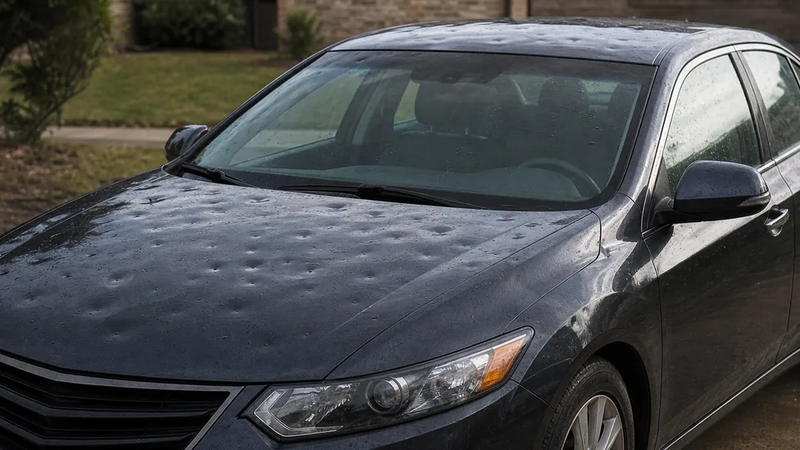
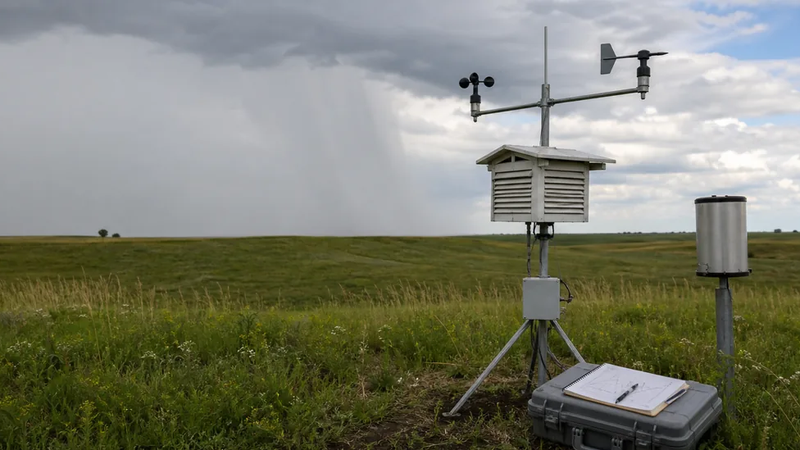
A radar signature is a remote estimate of what is in part of a storm. An observed hail report documents hail reaching the ground at a reported place and time. Neither one, by itself, confirms that hail struck or damaged a particular property.
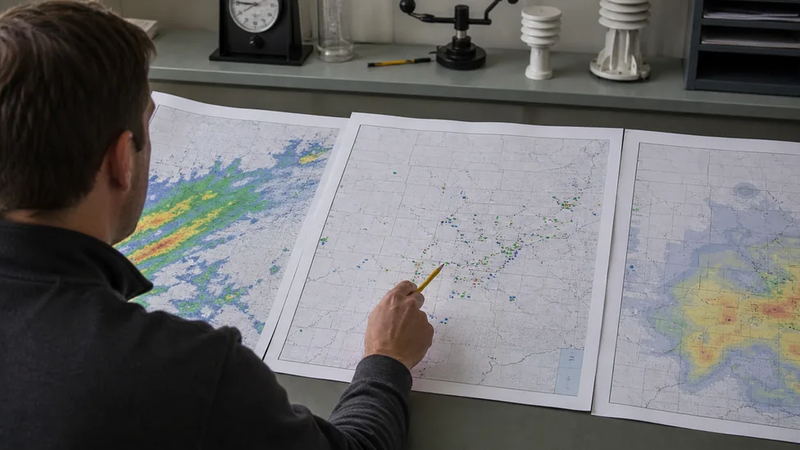
Radar-based products can go further than a basic color display. NOAA’s Maximum Estimated Size of Hail, or MESH, combines radar information into a hail-size estimate and can help with warnings and later event verification. It remains an estimate, not a measurement of every hailstone or proof of property damage.
Practical bottom line
Treat purple on reflectivity as a reason to look more closely, not as a yes-or-no hail detector. Verify the product and legend, review official warnings or storm information, and look for supporting dual-polarization or hail-estimate data. Confirmation requires observations; confirmation of damage requires separate evidence from the specific location.