On this page
Start with hazards, not the report's order
First, scan the finding, photo, and location for an immediate threat to people or the interior. Keep everyone away from a sagging ceiling, falling material, visible structural movement, or water reaching electrical equipment. If collapse, fire, or electric shock appears possible, leave the affected area and contact emergency help.
Do not investigate from the roof
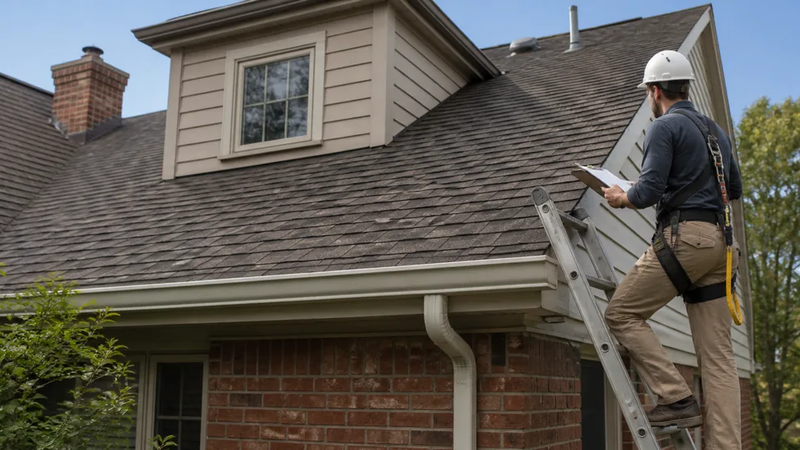
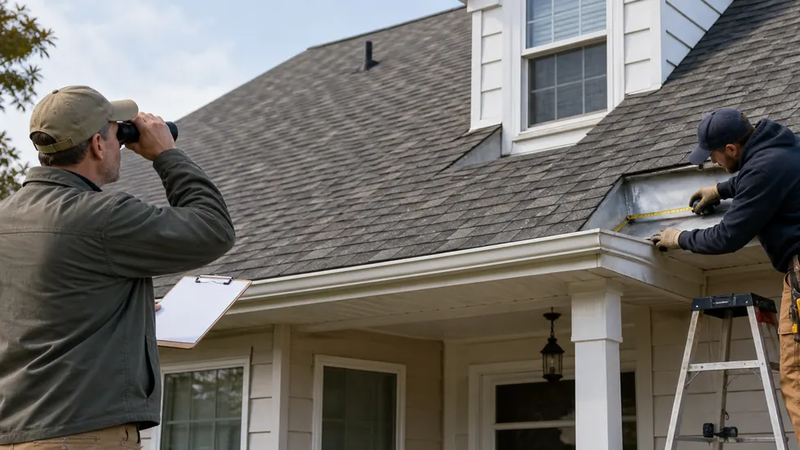
Review the roof from the ground or a safe interior location. Wet surfaces and ladders add fall risk, and a standard inspection may legitimately omit walking on an unsafe or damage-prone roof.
Sort each finding into one of three timeframes
Use the condition and its consequence—not words such as “major” or “minor” alone—to choose a timeframe.
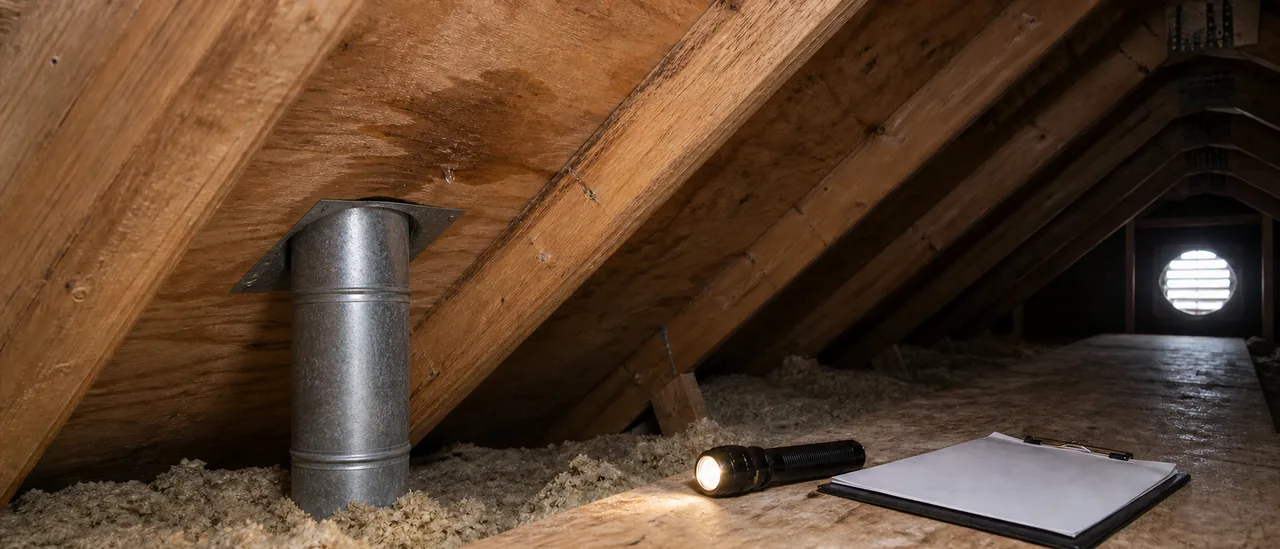
- Act now: Active dripping, a ceiling that is bulging or sagging, displaced framing, a roof opening, or loose material over an occupied area needs immediate control of the hazard. Do not touch wet electrical equipment. Move people and belongings only when doing so is safe, then arrange qualified evaluation.
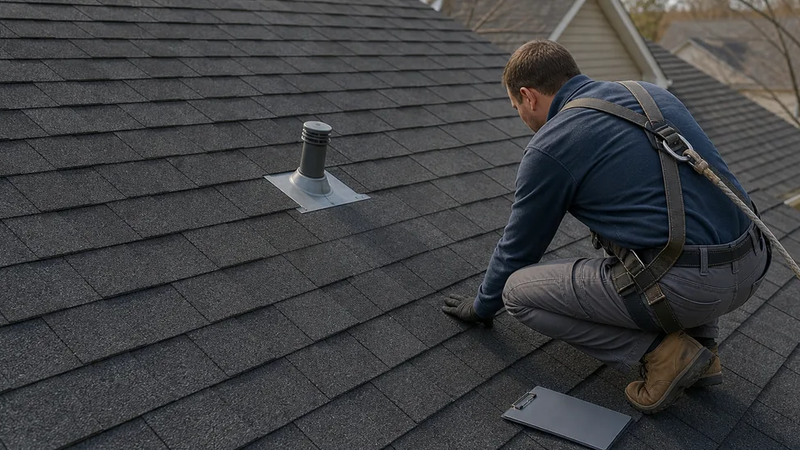
- Arrange prompt correction: Missing or displaced roof covering, open flashing, punctures, failed details around penetrations, or blocked drainage can compromise weather protection even when no interior water is visible. Schedule evaluation promptly, especially before more rain or wind.
- Plan or monitor: An old patch, surface wear, staining that is documented as dry, or a maintenance observation may allow planned follow-up. Monitoring is reasonable only when the report identifies no active entry, unsafe condition, or exposed weather barrier.
This is triage, not a diagnosis. The same-looking stain may be inactive, newly wet, or caused by something other than the roof.
Read the evidence and limitations together
Check whether the inspector observed active moisture, merely recorded past staining, or recommended further evaluation because the cause was not visible. Note the exact location, weather during the inspection, attic access, and whether the roof surface was walked.
Requirements vary by jurisdiction. Washington's standard, for example, covers roofing materials, drainage, flashing, and penetrations. It allows an inspector not to traverse an unsafe or damage-prone roof, but requires reporting the alternate method used instead. A visual inspection describes conditions at that time; it cannot guarantee that a roof will not leak later.
Ask the inspector to clarify ambiguous wording: What consequence makes the item important? Was moisture active? Is temporary protection needed? Which qualified discipline should evaluate it, and how soon?
When professional help is needed
Seek prompt roof evaluation when a finding involves active entry, missing weatherproofing, uncertain structural support, or an area the inspector could not safely access. Structural movement calls for an appropriately qualified structural professional; water at wiring or fixtures calls for electrical expertise.
Related reading: What Is a Home Inspection Report and What Does It Include?