On this page
Check official alerts before watching the sky
Check your local National Weather Service forecast, turn on warning notifications, and follow any approaching thunderstorm on radar. If a severe thunderstorm warning includes your location, move inside a sturdy building and away from windows. Do not wait to see hail first.
Hail is ice falling from a cumulonimbus cloud. The signs you can observe usually reveal that a thunderstorm is nearby, not whether hail will reach your exact location.
Use this short process
- Start with the forecast. Check for severe-thunderstorm potential before outdoor plans, then keep a reliable alert method available.
- Treat a watch as preparation time. A severe thunderstorm watch means severe storms are possible across a broad area. Conditions may still look calm.
- Treat a warning as an instruction to act. A warning means severe weather has been reported or indicated by radar in a smaller area. Read the warning text for the threatened locations and hazards.
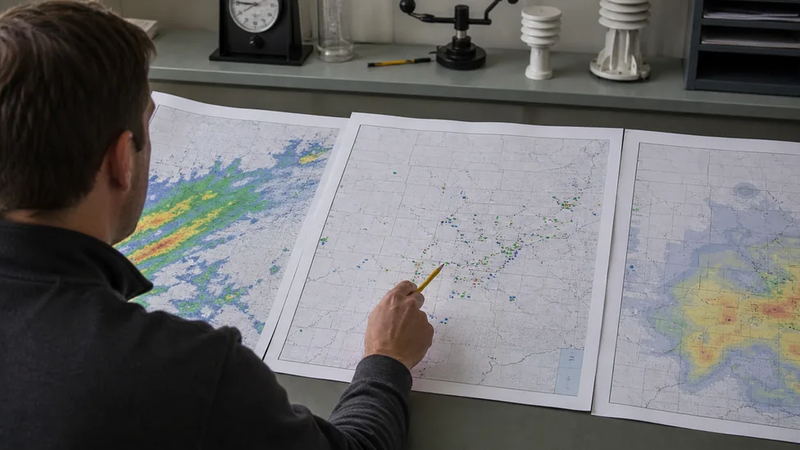
- Use radar for direction and timing. Watch the storm’s movement, but remember that a hail layer or size marker is an estimate. Radar samples the atmosphere and does not prove what reached every point on the ground.
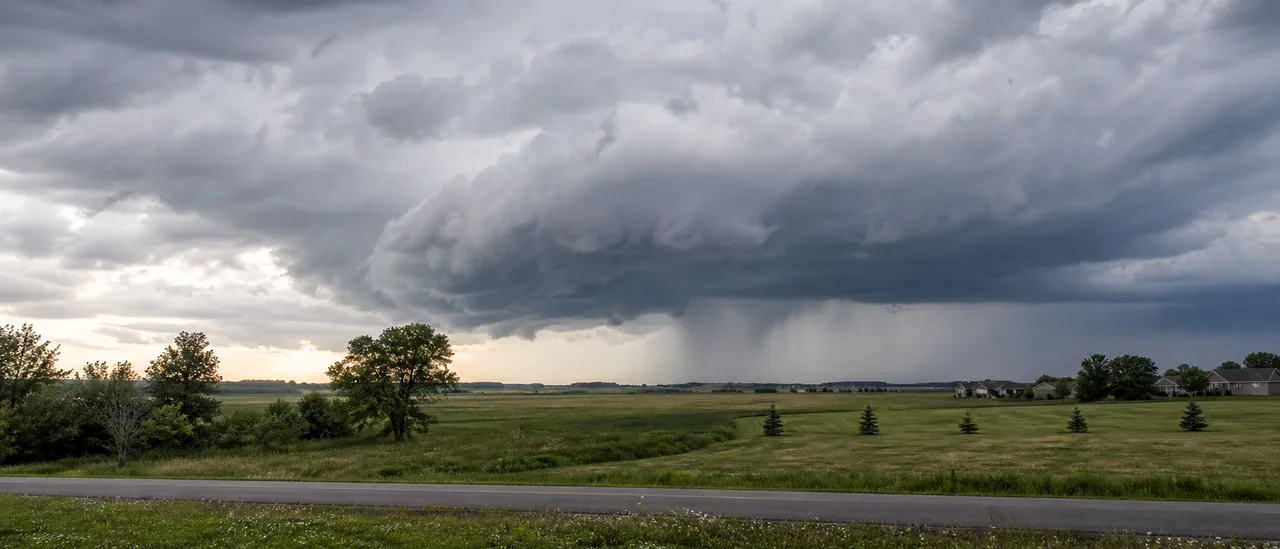
- Use visual clues only as a final prompt to shelter. A rapidly darkening sky, thunder, strong gusts, or an abrupt burst of heavy rain can accompany a strong thunderstorm. None identifies hail with certainty.
Three different kinds of evidence
A radar estimate indicates probable conditions inside a storm. An observed hail report records what a spotter or member of the public saw at a place and time. Neither one, by itself, confirms that hail damaged a particular property.
Let safety outrank certainty
Every thunderstorm produces lightning, whether or not hail develops. If you hear thunder or threatening weather approaches, go inside rather than standing outdoors to study the clouds.
During a severe thunderstorm warning, use a sturdy building and stay away from windows. A hard-topped vehicle is safer than remaining outside, but reach secure shelter first when time permits. Continue monitoring official updates because storm paths and hazards can change.
Know what the evidence cannot tell you
Even afterward, archived radar and storm-report databases have gaps. NOAA notes that automatically derived radar records represent probable conditions, not confirmed occurrences, and missing data do not prove that severe weather was absent.
For a disputed historical time or location, a meteorologist or weather-data specialist can compare warning text, radar scans, and nearby ground reports. That analysis may clarify the storm’s path and confidence level, but it still cannot confirm property damage without separate site-specific evidence.