On this page
Measure the widest point
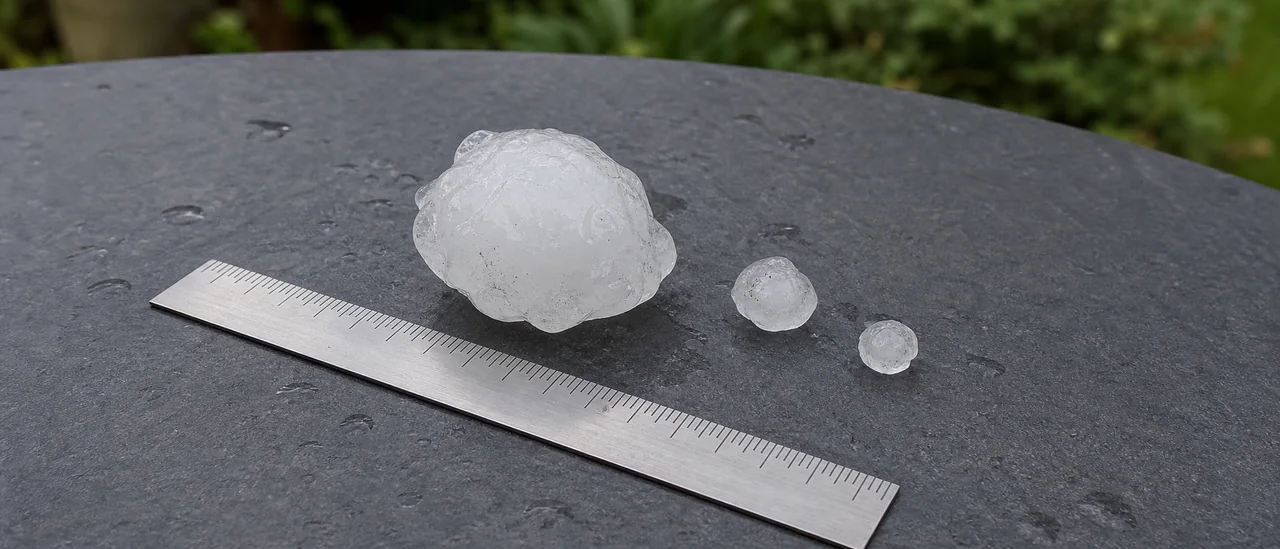
Wait until the thunderstorm has safely passed. Then place a hailstone beside a ruler on a flat surface and measure straight across its widest point. That measurement is its maximum diameter, which is the standard meaning of hail size.
If several stones are available, measure more than one and report the largest observed. Hail within one storm can vary in size. Use inches or centimeters, and say whether the number was measured or estimated.
Do not go outside while thunder is nearby
Stay in a substantial building or hard-topped vehicle until at least 30 minutes after the last thunder. A photograph or measurement is never worth exposure to lightning or falling hail.
A simple measuring process
- Choose the largest intact stone you can safely retrieve.
- Set it on a flat surface beside a ruler or tape measure.
- Turn the stone until you find the greatest edge-to-edge distance.
- Read the diameter without including gaps beyond the ice.
- Photograph the stone and the ruler together, with the scale readable.
- Note the time, precise location, largest size, and whether it was measured.
For an irregular stone, calipers give a cleaner maximum-diameter measurement. With only a ruler, viewing directly from above reduces perspective error. Work promptly because melting can reduce a stone’s dimensions. If no measuring tool is available, compare the stone with an object of known size; a measured number is still better than a comparison.
What the result does—and does not—show
An eyewitness measurement documents hail found at a particular place and time. An object comparison is an estimate, even when it is useful. A clear photograph preserves context, but it does not replace the measurement.
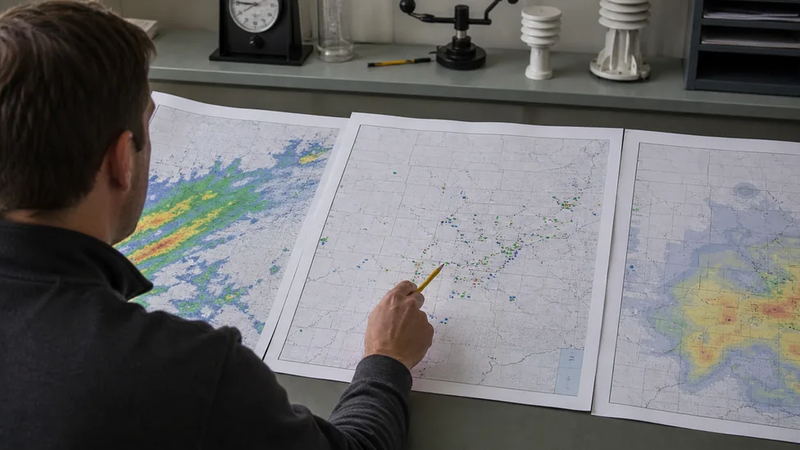
Radar is different. Dual-polarization radar can detect hail and support size estimates within a storm. NOAA’s Maximum Estimated Size of Hail product is an algorithmic estimate, not a ruler measurement of a stone at one address.
Three different questions
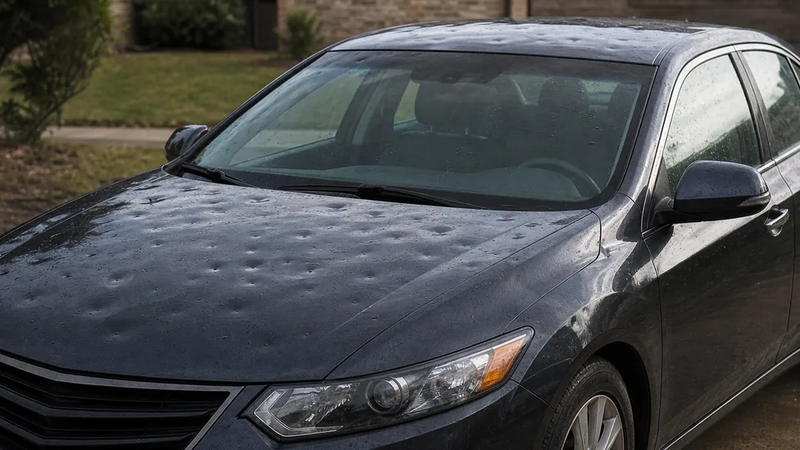
Observed hail describes what someone saw or measured. A radar estimate describes what instruments and algorithms indicate within a storm. Confirmed property damage requires separate physical evidence; neither a radar estimate nor a hailstone photograph proves damage to a specific property.
Reporting the observation
Send the measured size, time, and location to the appropriate local weather-reporting channel. The National Weather Service asks for hail size measured with a ruler or compared with a common object, along with when and where the event occurred. If stones of several sizes fell, report the largest and mention the range only if you actually observed it.
Specialists use more controlled methods for possible record stones, including calipers, weight, circumference, careful storage, and formal verification. For an ordinary report, a safe maximum-diameter measurement, a readable photograph, and accurate time and location provide the essential details.