On this page
Expect roughly 44 miles per hour—but not one fixed speed
A 2-inch hailstone falls at roughly 44 mph (71 km/h) as a practical estimate. NOAA’s National Severe Storms Laboratory places hailstones from 2 to 4 inches in a broader expected range of 44 to 72 mph. Because 2 inches sits at the lower edge of that size band, 44 mph is a useful shorthand, not a guaranteed speed.
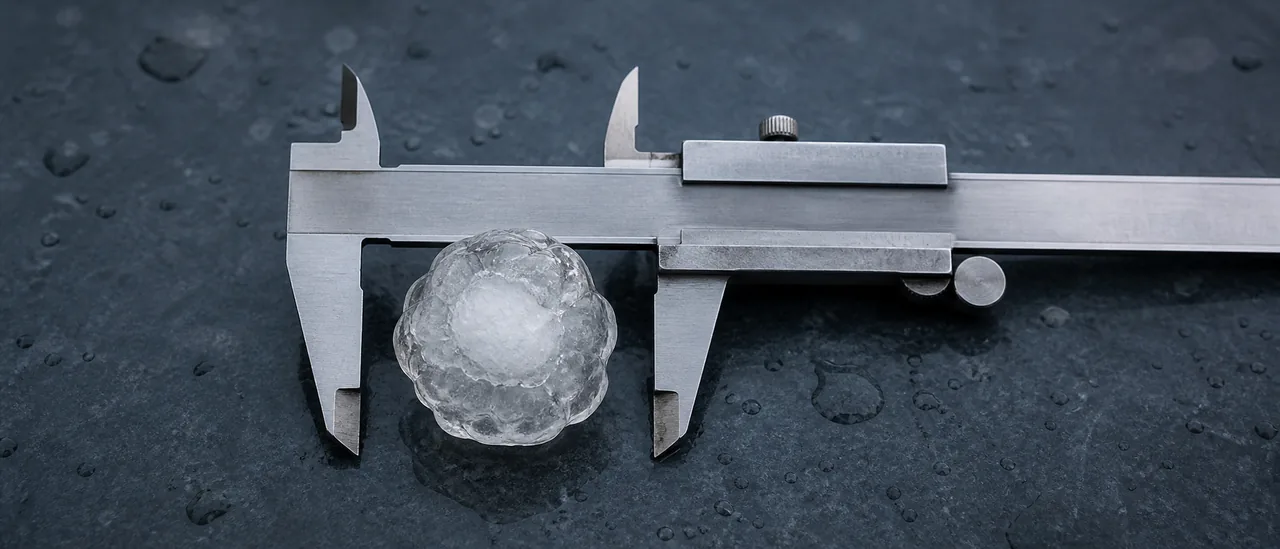
“Two-inch hail” describes the stone’s diameter, not its circumference. The National Weather Service’s standard comparison is a hen’s egg, although a ruler or calipers gives a clearer observation than an object comparison.
Why the answer is an estimate
Gravity accelerates a falling hailstone until air resistance limits further acceleration. That resulting terminal speed depends on more than diameter. Natural hailstones are irregular, may tumble, and do not behave exactly like smooth, solid ice spheres.
NSSL identifies four main influences on fall speed:
- Size: Larger stones generally fall faster because their weight increases quickly with diameter.
- Air friction: Resistance from the surrounding air limits a stone’s fall speed.
- Melting: A stone can shrink or change shape while crossing warmer air.
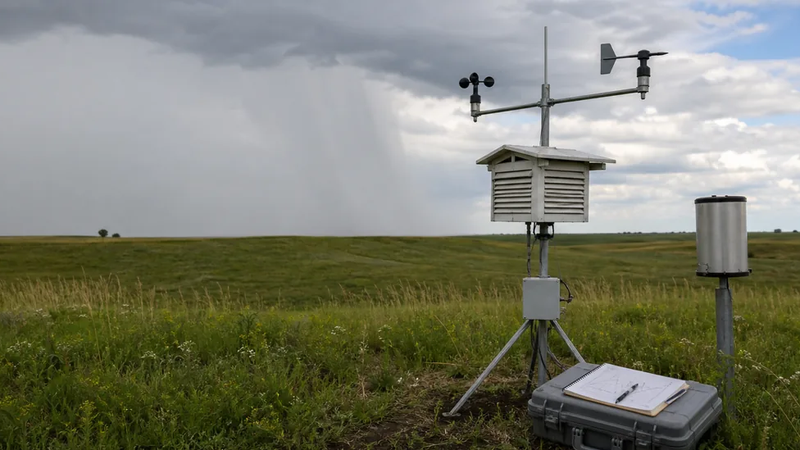
- Wind: Vertical and horizontal air movement can change speed and direction relative to the ground.
That is why two stones measuring 2 inches across can reach the surface at different speeds. NSSL also notes that direct natural free-fall measurements of large hail remain an active research need, so published figures should be read as estimates.
Radar estimate, observed hail, and damage are different evidence
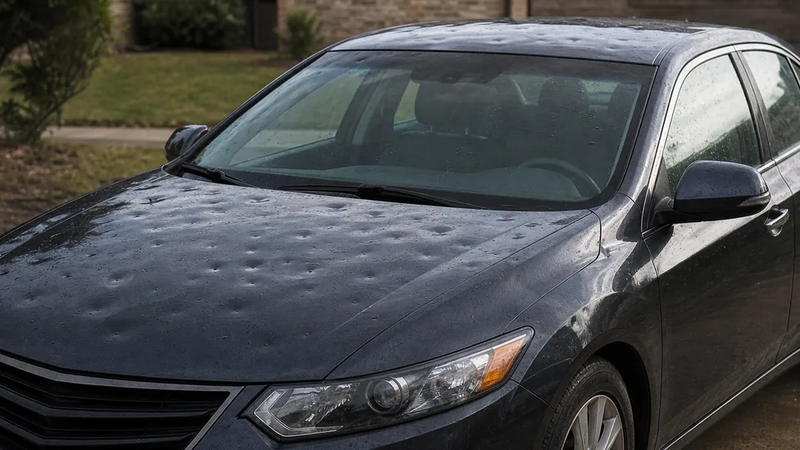
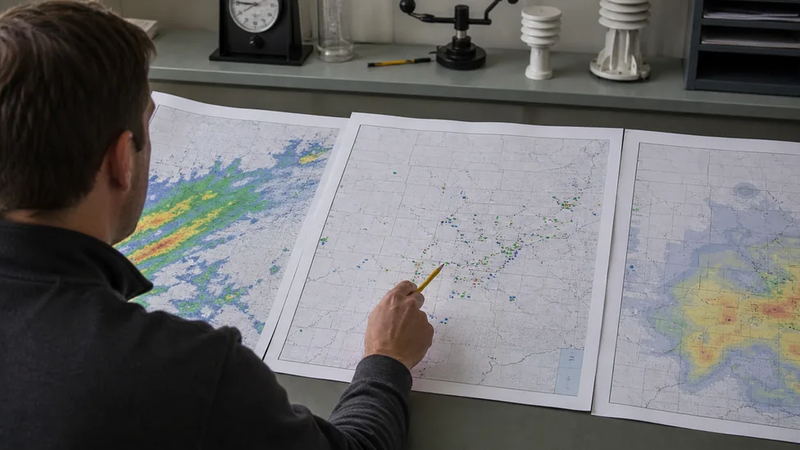
Radar products such as MESH estimate maximum hail size within a storm. A measured or reliably reported stone is a surface observation. Neither one, by itself, confirms that hail struck a specific property or caused damage there; damage requires separate physical evidence.
What the number means in practice
The 44 mph figure describes a plausible downward fall speed, not necessarily the stone’s full motion. Strong winds can drive hail diagonally, while vertical air currents can slow or accelerate its progress relative to the ground. The impact angle and speed can therefore differ from the calm-air shorthand.
The practical bottom line is about 44 mph, with 44 to 72 mph providing the more honest published range for the 2-to-4-inch class. For any individual 2-inch stone, shape, melting, orientation, and the surrounding wind keep the answer from being universal.