On this page
About 44 to 72 mph is the best supported range
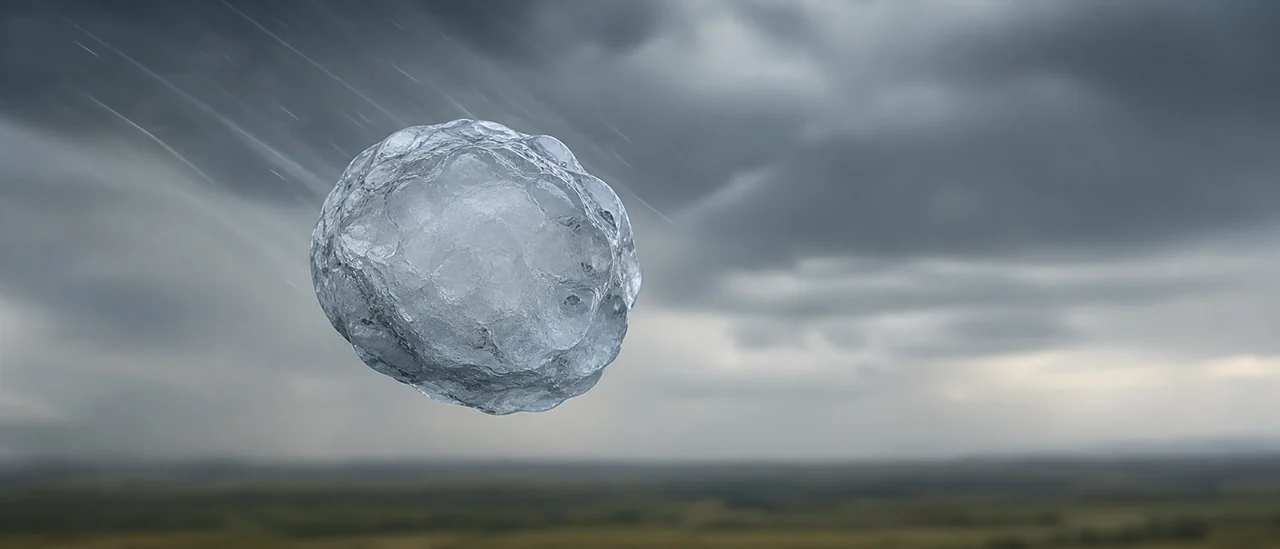
A 3-inch hailstone generally fits NOAA’s 44 to 72 mph expected fall-speed range for hail 2 to 4 inches wide. That is a category estimate, not a measured speed for every 3-inch stone.
“Three-inch” refers to the stone’s diameter. The National Weather Service comparison chart calls that roughly teacup size, slightly larger than its 2.75-inch baseball reference.
Treat 44–72 mph as an air-relative fall-speed estimate—not a radar reading, a ground-relative impact speed, or proof of property damage.
Why the answer is a range
Terminal velocity is the steady downward speed reached when aerodynamic drag balances the stone’s effective weight. Larger hail generally falls faster because its mass grows more quickly than its frontal area.
Natural hail is not a tidy sphere, however. NOAA says shape, melting, fall orientation, and environmental conditions all add uncertainty to hail fall-speed estimates.
Idealized models cannot make any single value the guaranteed speed of natural 3-inch hail.
Wind changes motion over the ground
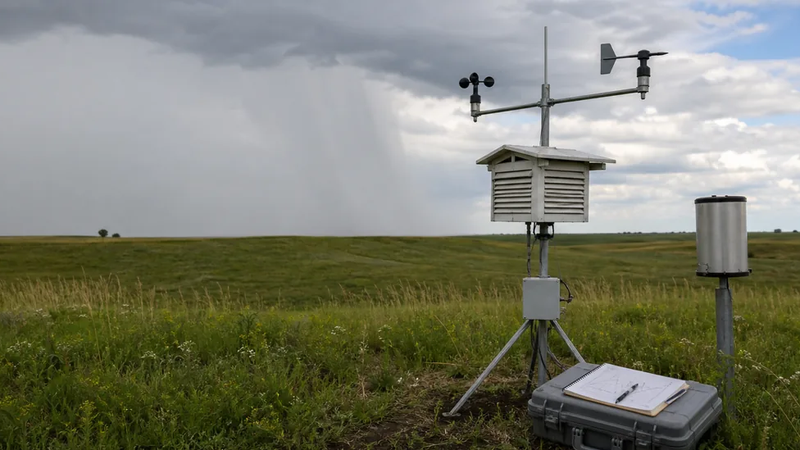
Terminal fall speed is measured relative to the air. A downdraft can add to the stone’s downward motion relative to the ground, while an updraft can reduce it. Horizontal wind also gives the stone sideways velocity, so its full ground-relative speed and impact angle need not match its still-air vertical speed.
Melting can shrink a hailstone and alter its surface during descent. A stone measured at three inches on the ground may therefore have followed a different speed history than an idealized three-inch sphere held constant throughout its fall.
Radar, observations, and damage are different evidence
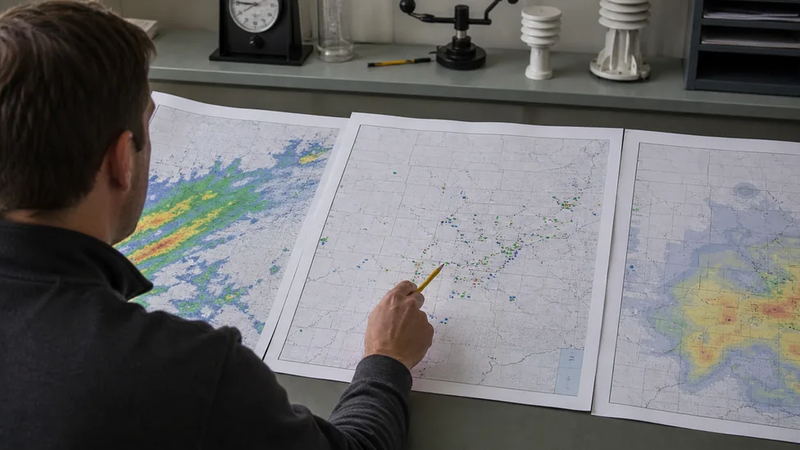
Radar can indicate hail and help distinguish broader size categories, but the National Weather Service says dual-polarization radar cannot determine exact hail sizes. NOAA researchers compare radar detections with public reports precisely because surface observations provide separate evidence.
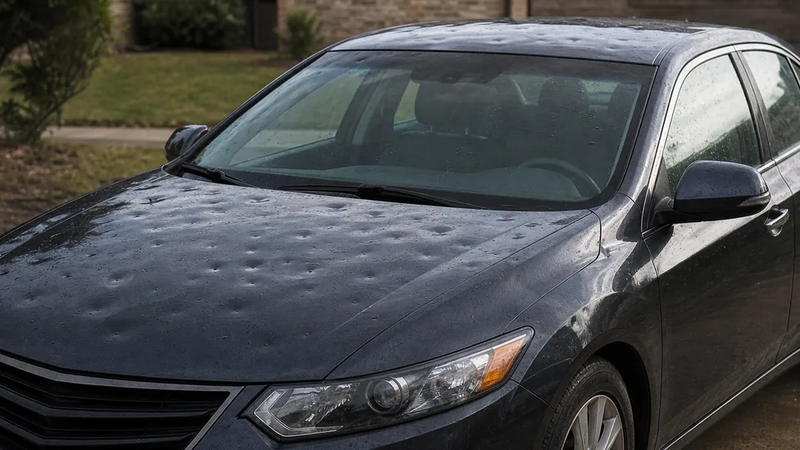
An observed or measured 3-inch stone confirms hail size at a place and time. It does not directly measure fall speed unless suitable instruments did so. Neither a radar estimate nor a hail report, by itself, confirms damage to any particular property.
The practical bottom line: 44–72 mph is the authoritative expected range that contains 3-inch hail, not a guaranteed impact speed.