On this page
The direct answer
A composite roof is inspected through a systematic visual examination of the covering, roof details, drainage, and accessible structure. Here, “composite” means asphalt composition shingles: reinforcing material coated with asphalt and surfaced with mineral granules. Identifying the material first matters because inspection criteria differ for other coverings.
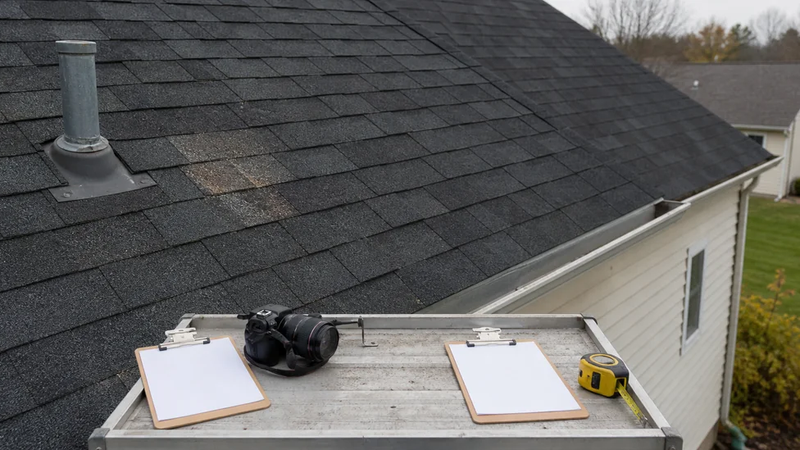
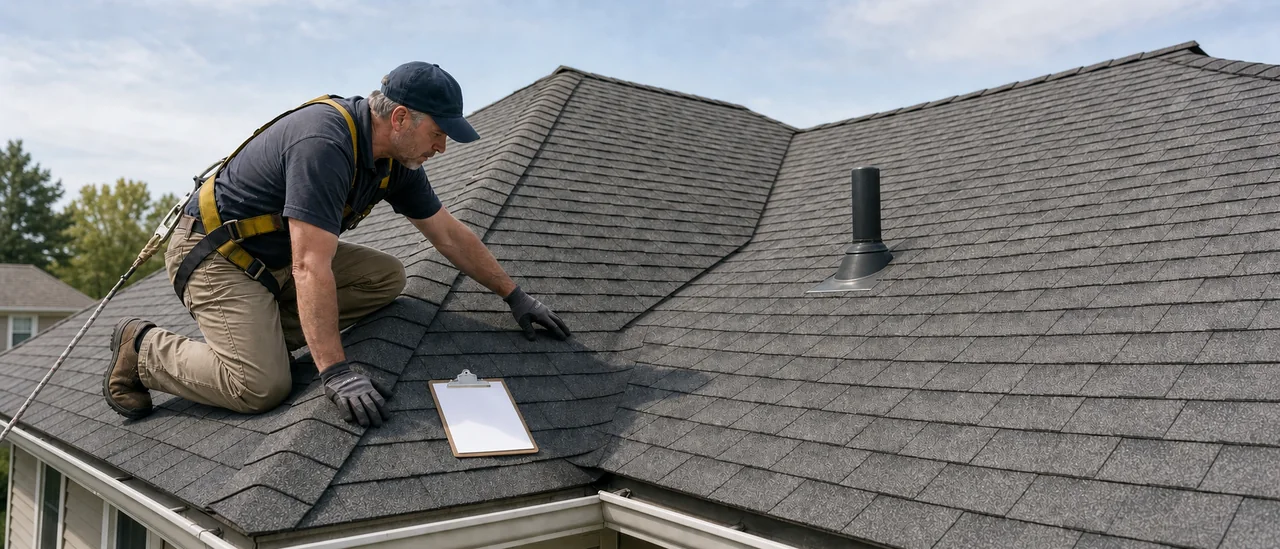
The inspector records the viewing method, then examines each visible roof slope. A roof walk is not automatic. Steepness, weather, fragile materials, or unsafe access may limit the examination to the ground, eaves, ladder edge, or other safe vantage points.
What the inspector examines
The review moves from the broad roof planes to places where materials meet or water concentrates:
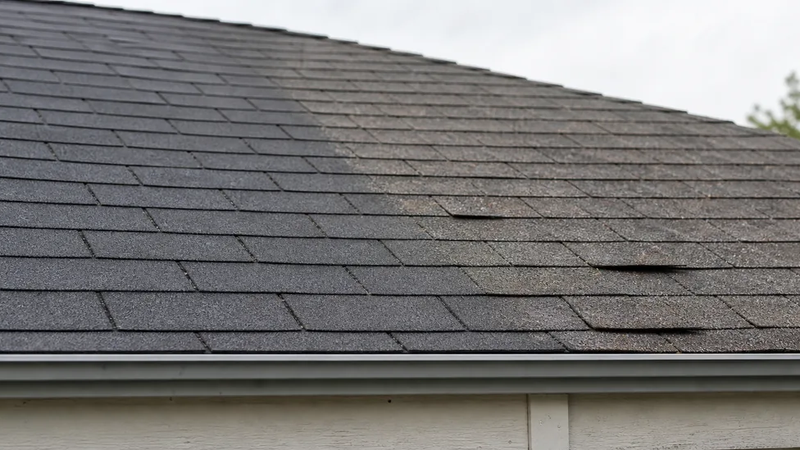
- Shingle field: missing, displaced, lifted, cracked, split, curled, blistered, or heavily worn shingles; exposed fasteners; and localized or uneven granule loss.
- Edges and intersections: eaves, rakes, ridges, hips, and valleys for displacement, open joints, deterioration, or interrupted water-shedding paths.
- Roof details: flashing at walls, vents, chimneys, skylights, and other penetrations for gaps, corrosion, damage, or improper exposure.
- Drainage and structure: gutters and downspouts for blockage or shingle debris, plus visible sagging and accessible interior signs of leakage.
Patterns matter as much as individual defects. Uniform granule loss can reflect weathering, while concentrated loss may warrant closer examination. The inspector compares conditions across slopes and around transitions, photographs relevant areas, and notes their locations rather than treating every surface mark as the same problem.
What a visual inspection cannot establish
Visibility sets the limit
A completed roof conceals much of its underlayment, decking, and fastening. A non-invasive inspection reports observable conditions; it does not prove that every hidden component was installed correctly.
Snow, debris, height, steep slope, and restricted attic access can leave areas unobserved. Standard inspection practice also does not require lifting shingles, performing a water test, confirming every fastener, or predicting an exact remaining service life.
Visible staining can indicate past or active moisture, but its source may require further evaluation. Likewise, an apparently sound surface is not a guarantee against a future leak. The report should distinguish observed defects from suspected causes and clearly list excluded or inaccessible areas.
Practical bottom line
A useful composite-roof inspection report identifies the covering, states how and from where it was viewed, locates visible concerns, and explains access limitations. Its value is a documented condition snapshot—not a certification of hidden construction or future performance.