On this page
The inspection covers four roof planes
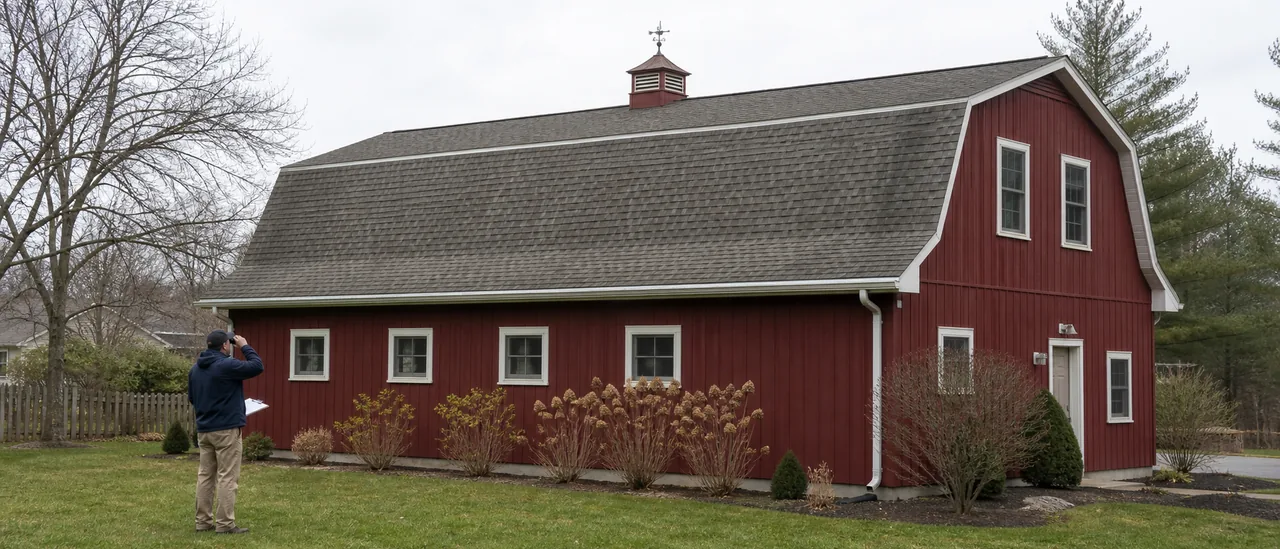
A gambrel roof is inspected by examining both the upper and lower slope on each side, then checking the two horizontal slope transitions as distinct details. A gambrel is a symmetrical roof with two slopes per side. Those planes meet at pitch changes, so access and visibility may differ sharply around the roof.
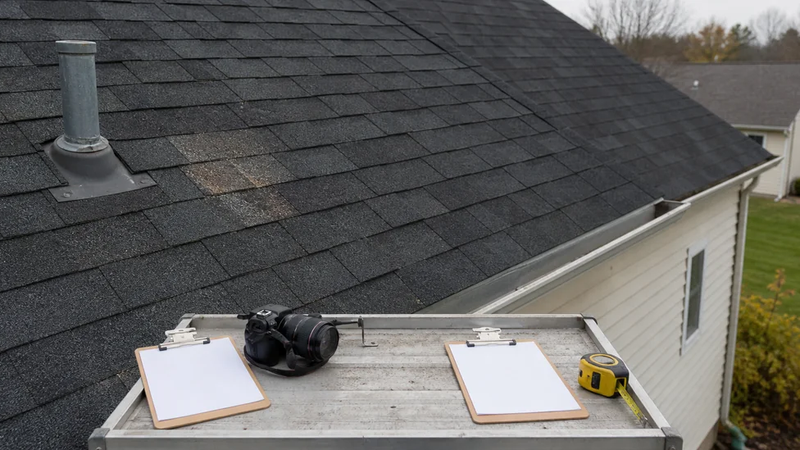
The inspection method depends on height, pitch, surface condition, weather, and roofing material. An inspector may use views from the ground, eaves, windows, or other safe vantage points. Walking every plane is not automatically required. The report should identify the method used and any areas that could not be seen.
What the exterior inspection checks
The inspector first identifies the roof covering and traces each visible plane from ridge to eave. The review normally includes:
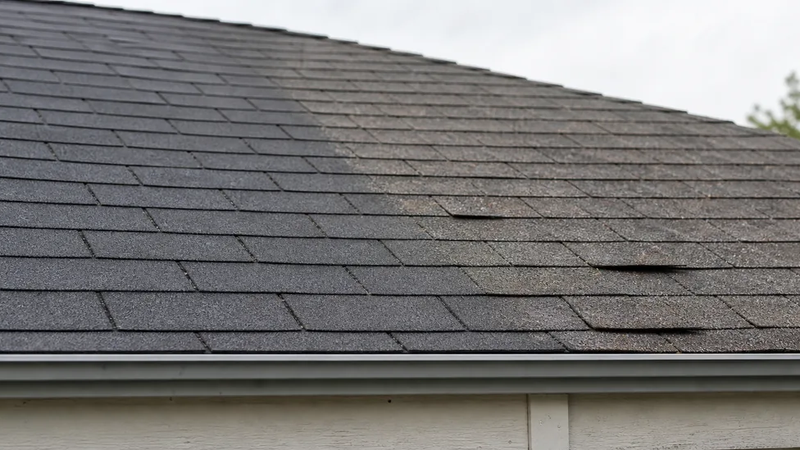
- displaced, cracked, missing, worn, or corroded covering materials;
- ridge details, eaves, rake edges, gutters, and downspouts;
- flashing at dormers, chimneys, vents, skylights, and other penetrations;
- open seams, distortion, or repairs along each change in pitch; and
- localized sagging or irregular roof lines that may justify closer evaluation.
The slope breaks deserve deliberate attention. For example, Minnesota's residential rule calls for flashing wherever roof slope or direction changes. Local codes may differ, and that rule does not prove a particular roof complies. It does explain why an inspector looks closely for intact transition flashing and a clear drainage path.
A visual inspection cannot expose every layer
Underlayment, fasteners, flashing laps, and roof decking may be concealed by the installed covering. If staining or a defective transition suggests hidden trouble, limited removal or another specialized evaluation may be needed to determine the cause and extent.
What is checked from inside
Where an attic or roof-framing area is readily accessible, the inspector examines the visible structure beneath the gambrel. Relevant observations include water staining, damp materials, deteriorated sheathing, displaced framing, unusual deflection, and daylight at openings. Ventilation openings and the areas below penetrations or pitch changes may also provide context.
Interior evidence is not a leak-location shortcut. Water can travel along framing or underlayment before appearing, and dry conditions during one visit do not rule out intermittent entry. Insulation, finishes, stored belongings, and inaccessible cavities can also limit the view.
Practical bottom line
A sound gambrel-roof inspection is a documented visual evaluation of all accessible exterior planes, transitions, drainage components, penetrations, and interior structure. Its distinguishing feature is not a special test; it is the need to account for four planes and both changes in pitch. The final report should separate observed defects from inaccessible areas and recommendations for further evaluation.