On this page
A roof over a porch is inspected as both a roof assembly and part of the attached exterior. The inspector examines visible roofing, edges, drainage, flashing, and penetrations, then looks below at the porch ceiling and accessible supports. The report should identify observed defects, the inspection method, and any areas that could not be seen safely.
Why the inspection has two parts
The upper surface manages weather. The framing and connections below carry the roof and transfer its loads. Looking at only one side can miss important context.
ASHI’s current Standard of Practice separately calls for inspection of roofing materials, roof drainage, flashing, chimneys, skylights, and penetrations. It also includes attached porches and structural framing within its broader inspection scope. This is a professional standard for inspectors who subscribe to it, not a universal law.
A systematic porch-roof inspection commonly covers:
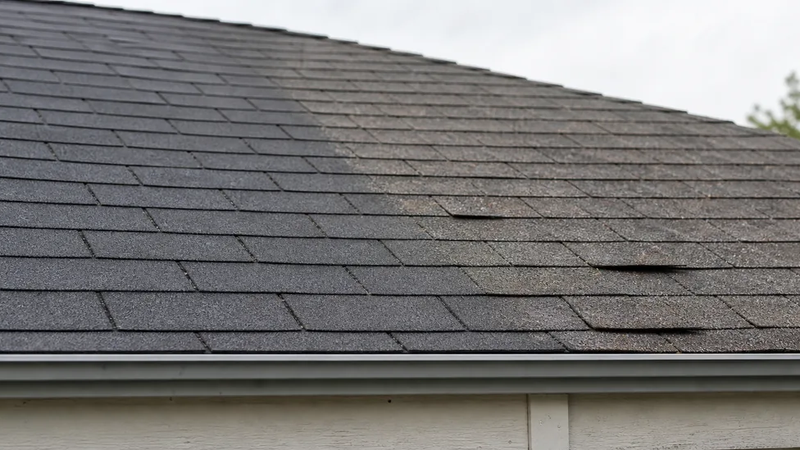
- the roof covering for visible displacement, cracking, corrosion, wear, or open seams;
- the connection to the house, especially wall flashing and changes in slope or material;
- eaves, fascia, gutters, downspouts, and the path water takes off the roof;
- the porch ceiling or exposed roof deck for staining, deterioration, openings, or movement; and
- visible posts, beams, brackets, and attachment points for damage or displacement.
These observations are considered together. A stain below may justify closer examination above, but a visual inspection alone may not establish where water entered or whether hidden framing is damaged.
Access determines the method
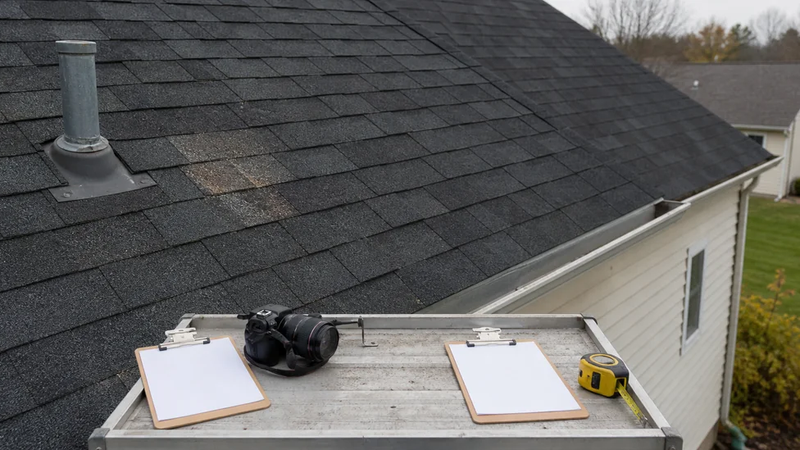
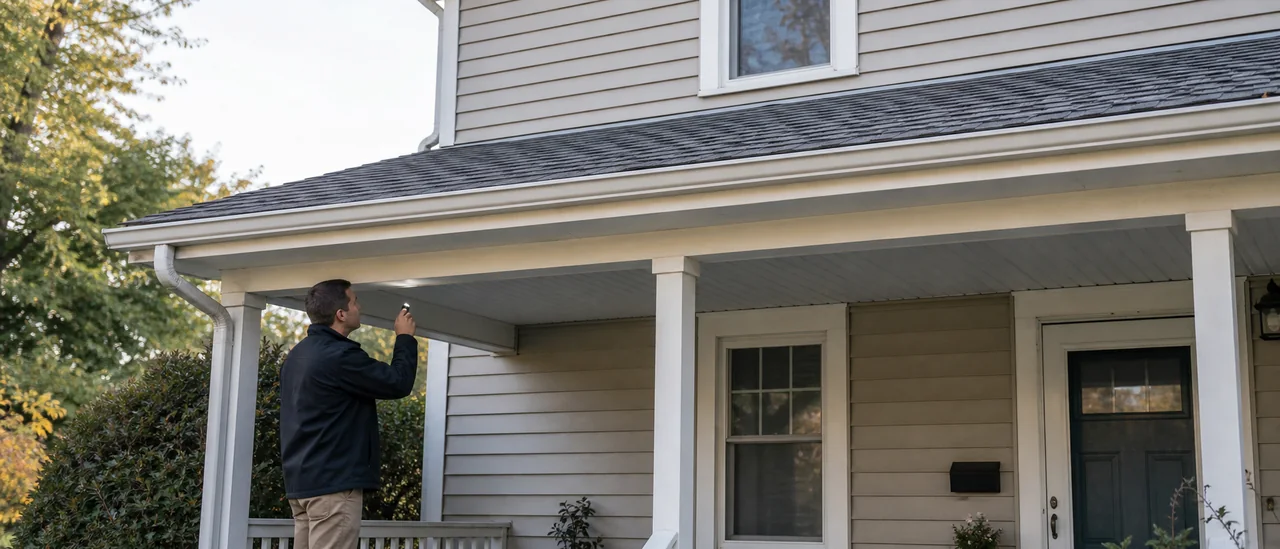
The inspector may view the roof from the ground, a ladder at the edge, an upper window, or the roof surface when conditions permit. A camera pole or drone can improve coverage, but it cannot reveal conditions hidden beneath roofing or flashing.
Walking the porch roof is not automatic. Height, pitch, moisture, ice, fragile materials, structural concerns, and the risk of property damage can make direct access inappropriate. NRCA guidance describes residential roof maintenance inspection as a thorough visual review and notes that steep-slope roofs can typically be examined from the ground or a ladder at the edge.
If an important area is blocked by a finished ceiling, low clearance, vegetation, snow, or another obstruction, the limitation belongs in the report. ASHI’s standard requires reporting designated components that were present but not inspected and explaining why.
Practical bottom line
A sound porch-roof inspection connects conditions on top with evidence underneath and at the house connection. It is still a visual, non-destructive evaluation of accessible areas—not a guarantee about concealed materials. When visible evidence suggests a leak or structural problem but its extent remains unknown, the appropriate conclusion is that focused further evaluation is needed.