On this page
The inspection follows the whole opening
A roof with skylights is inspected from both sides of the assembly, where access allows. The inspector examines the glazing and frame, the flashing that directs water around the opening, the adjacent roof covering, and visible interior finishes below.
This matters because a stain near a skylight does not identify its cause by itself. Water may enter at flashing or nearby roofing, while interior moisture can also result from condensation. The evidence has to be considered together.
What is checked outside
The exterior review begins with the skylight type and its position on the roof. Inspectors then look for:
- cracked, broken, clouded, or displaced glazing;
- distorted frames, open joints, loose components, or failed visible seals;
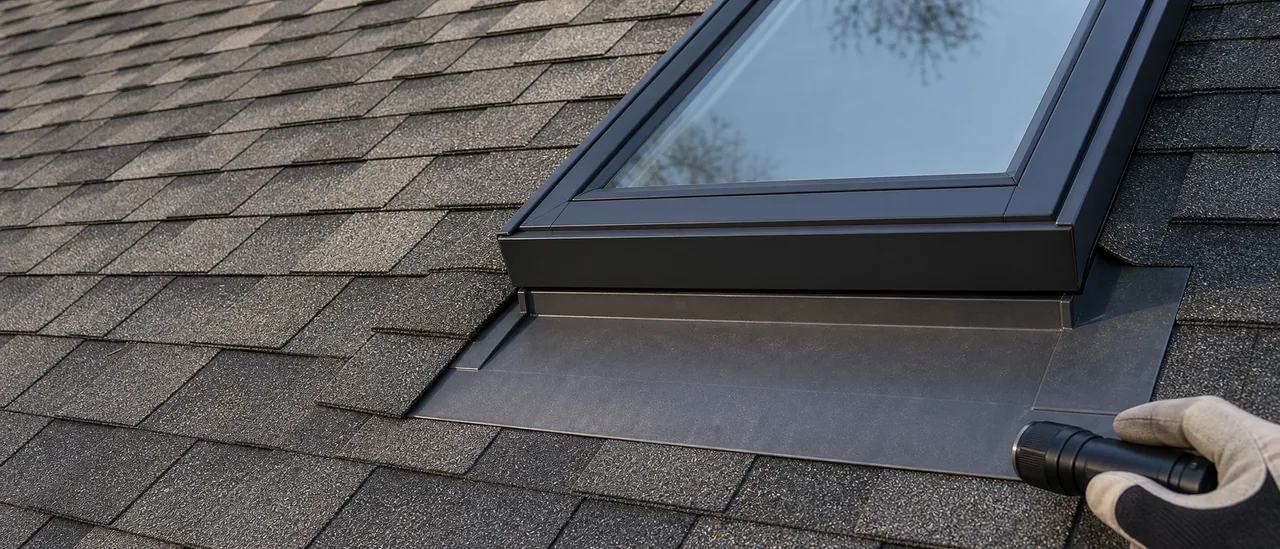
- missing, lifted, corroded, patched, or poorly lapped flashing;
- damaged or badly arranged shingles, tiles, or panels around the opening; and
- debris or roof geometry that may obstruct drainage above the skylight.
The American Society of Home Inspectors’ standard places roofing materials, flashing, skylights, and other penetrations within a roof inspection. It also requires the report to identify the method used to inspect the roof.
Flashing details vary with roof covering, slope, skylight design, and whether the unit sits on a raised curb. The inspection therefore looks for a continuous water-shedding path rather than assuming every skylight should have identical metalwork.
Sealant is not the whole flashing system
Surface caulk or roofing cement may show that someone addressed a leak, but it does not reveal whether concealed flashing is correctly integrated with the roof covering. Heavy patching is a reason to examine the surrounding assembly closely.
What is checked inside
From the room or an accessible attic, the inspector checks the skylight well, ceiling, framing, and nearby insulation for staining, softened finishes, peeling paint, deterioration, or visible dampness. Operable skylights may also be opened and closed when normal controls are accessible and conditions permit.
A moisture meter can help test a suspicious area, but one dry reading cannot prove that no intermittent leak exists. Weather, season, and recent rainfall affect what is visible. Condensation clues—such as moisture concentrated on the glazing or frame—are documented separately from confirmed water entry.
Access determines the limits
An inspection is normally visual and limited to readily accessible areas. A steep, wet, fragile, snow-covered, or otherwise unsafe roof may be viewed from the ground, eaves, a ladder, windows, or another suitable vantage point instead of being walked.
Professional standards do not require destructive removal, a water test, or certification of hidden fastening and installation details. The report should state the inspection method, areas that could not be seen, observed defects, and whether further evaluation is warranted.
The practical bottom line: a sound inspection connects exterior drainage details with interior evidence and clearly states what remained concealed. It can identify visible concerns and limitations, but it cannot guarantee that a skylight will never leak.