On this page
Start with the roof surface
A spray foam roof is inspected by surveying its coated surface and details, documenting defects, checking suspected wet areas, and using targeted cuts or core samples when surface evidence is insufficient. The goal is to determine whether the protective coating remains continuous and whether the foam beneath is dry, sound, and bonded.
“Spray foam roof” usually means a roof system made from spray-applied polyurethane foam covered by a waterproof protective coating. That distinction matters: the exposed coating is the first weather barrier, while the foam below provides the shaped, insulated substrate.
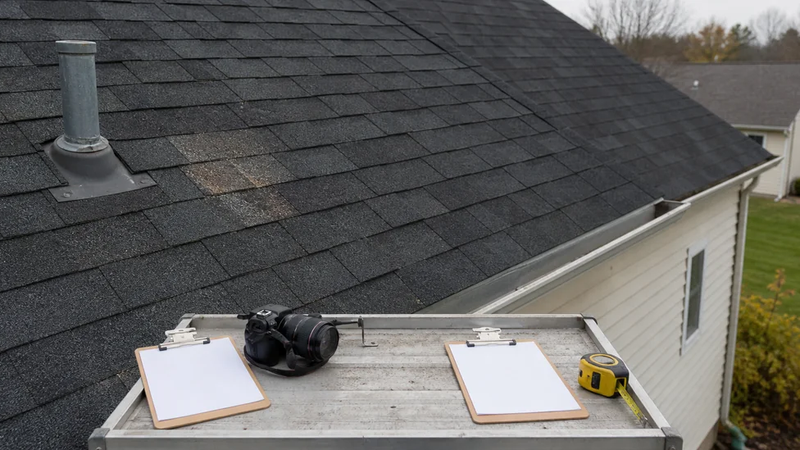
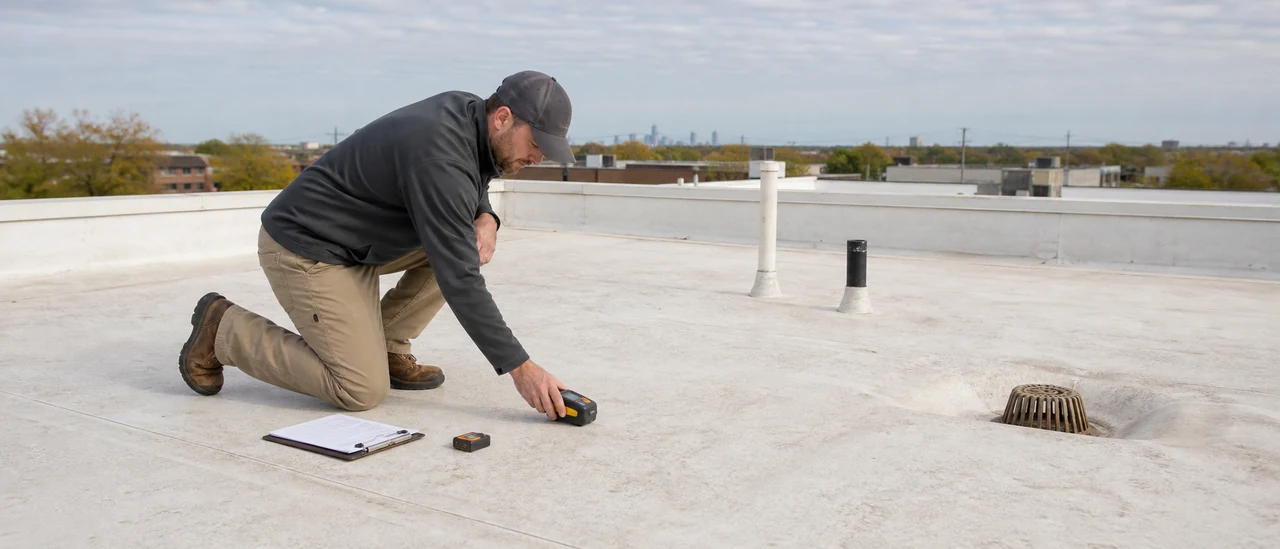
The inspector first records the roof layout, drainage points, penetrations, repairs, and areas exposed to foot traffic. The visual walkover then looks for:
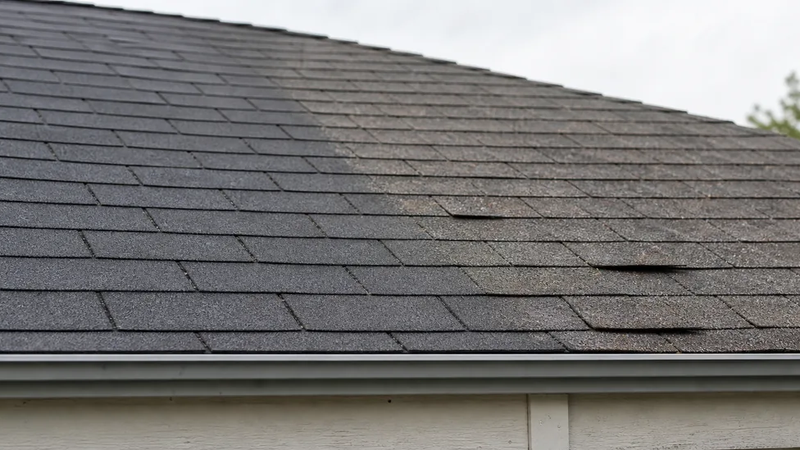
- cracks, splits, blisters, punctures, or worn coating;
- exposed, soft, brittle, or visibly deteriorated foam;
- separation around flashings, curbs, pipes, edges, and drains;
- ponding, blocked drainage, debris, and low areas; and
- previous patches, leak locations, or impact marks needing closer examination.
These observations are mapped and photographed. A defect's location and pattern often matter more than its appearance in one close-up.
Add tests where the evidence points
A visual inspection cannot prove that every concealed layer is dry. When moisture is suspected, a nondestructive scan may be used to locate anomalous areas for closer evaluation. Federal roofing guidance identifies infrared, nuclear, and capacitance methods for finding areas of entrapped moisture. The appropriate method depends on the assembly, weather, roof surface, and inspection purpose.
A moisture scan is a screening tool
A scan identifies areas that differ from their surroundings; it does not automatically identify the moisture source or define every affected layer. Findings should be correlated with roof construction, visible conditions, and selective verification.
Targeted slit samples can measure the dry-film thickness of the coating. Core samples go deeper. They can reveal foam thickness, lift thickness, cell formation, adhesion, voids, blistering, delamination, brittleness, or a spongy condition. Because cutting opens the roof system, sample locations must be documented and restored to a watertight condition.
Match the inspection to the question
An installation-quality inspection is more detailed than a routine condition survey. During new work, records may include application weather, coating-thickness readings, sample locations, and observations for each day's work. An existing-roof inspection usually begins with condition mapping and escalates to scanning or sampling only where justified.
The practical bottom line is a written report that separates observed defects from suspected concealed conditions. It should identify the methods used, map affected areas, state testing limits, and recommend further sampling only when needed. A photograph alone cannot establish adhesion, coating thickness, or hidden moisture throughout a spray foam roof.