On this page
Inspection starts with an access decision
A steep-pitch roof is generally a roof rising more than 4 inches for every 12 inches of horizontal run. It is inspected by choosing the safest useful viewpoints, then documenting visible conditions across the covering, edges, drainage, flashing, and penetrations. Pitch matters because it can limit direct access—and therefore how closely some areas can be seen.
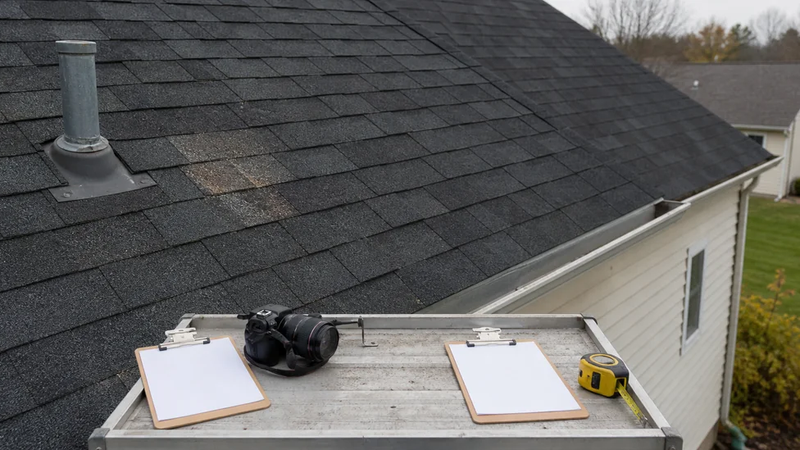
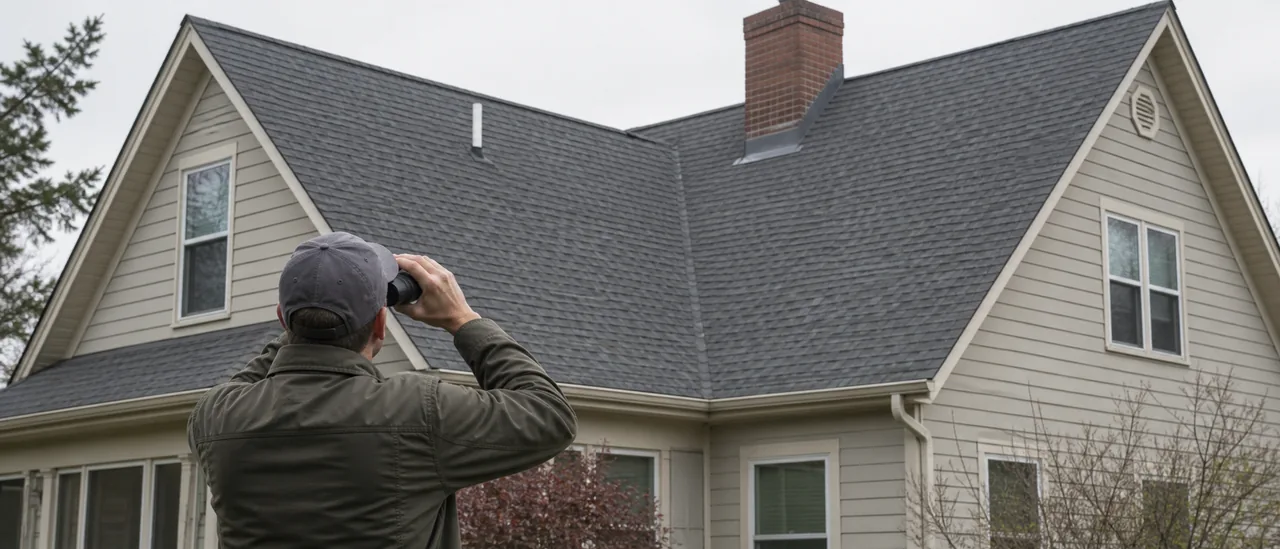
An inspector may combine observations from the ground, a ladder at the eaves, upper windows, binoculars, pole cameras, or a drone. Walking the roof is not automatic. Surface material, height, weather, moisture, ice, fragility, and available fall protection all affect the decision.
A steep roof is a fall hazard
Direct roof access should not be improvised. OSHA’s construction rule requires specified fall protection for covered employees on steep roofs with unprotected sides or edges at least 6 feet above a lower level. That rule does not make a roof walk necessary for every inspection.
What the inspector looks for
The exterior review should cover each visible roof plane and the details most likely to admit or redirect water. A systematic pass typically includes:
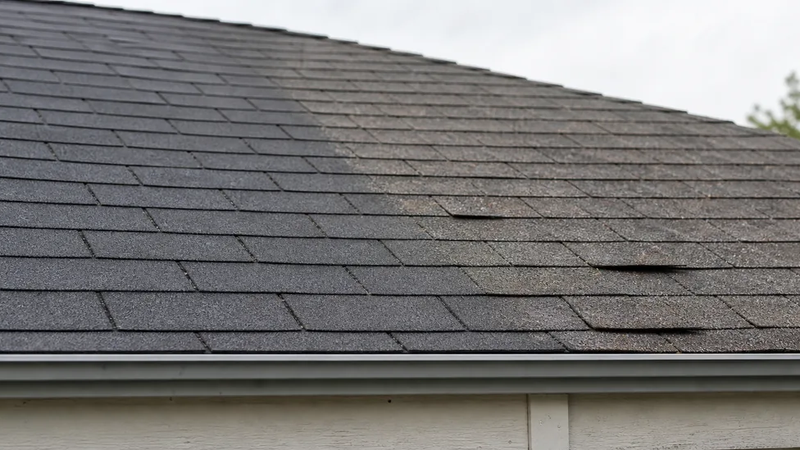
- roofing materials for missing, displaced, cracked, curled, corroded, or otherwise deteriorated areas;
- valleys, eaves, rakes, ridges, and transitions between different slopes or materials;
- flashing around walls, chimneys, skylights, vents, and other penetrations; and
- gutters, downspouts, and roof-drainage paths for damage, blockage, or poor alignment.
Close views help, but they do not turn a visual inspection into destructive testing. The inspector normally does not lift intact materials, open concealed assemblies, or assume an obscured area is sound. If an attic is readily accessible, observations of roof framing and the underside of the deck can add evidence of staining, daylight, decay, or movement without proving the exact source of a leak.
When the roof is not walked
ASHI’s roof-inspection guidance treats walking as appropriate when a roof is readily accessible and walking is the only way to see all required exterior surfaces. It also recognizes that excessive height, steepness, slipperiness, or fragility can make a roof not readily accessible. NRCA guidance similarly notes that steep-slope maintenance inspections can typically be performed from the ground or from a ladder at the roof edge.
The report should identify the method used and state which surfaces were not inspected, along with the reason. A drone image may improve coverage, for example, but tree cover, shadow, snow, tight valleys, or resolution can still conceal detail.
Practical bottom line
A credible steep-roof inspection is not defined by whether someone walked every plane. It is defined by deliberate coverage, suitable safety controls, close attention to vulnerable details, and an honest account of visibility limits. Where an important area remains unseen or a concealed defect is suspected, the report should recommend a properly scoped follow-up rather than present uncertainty as a finding.