On this page
What the inspection covers
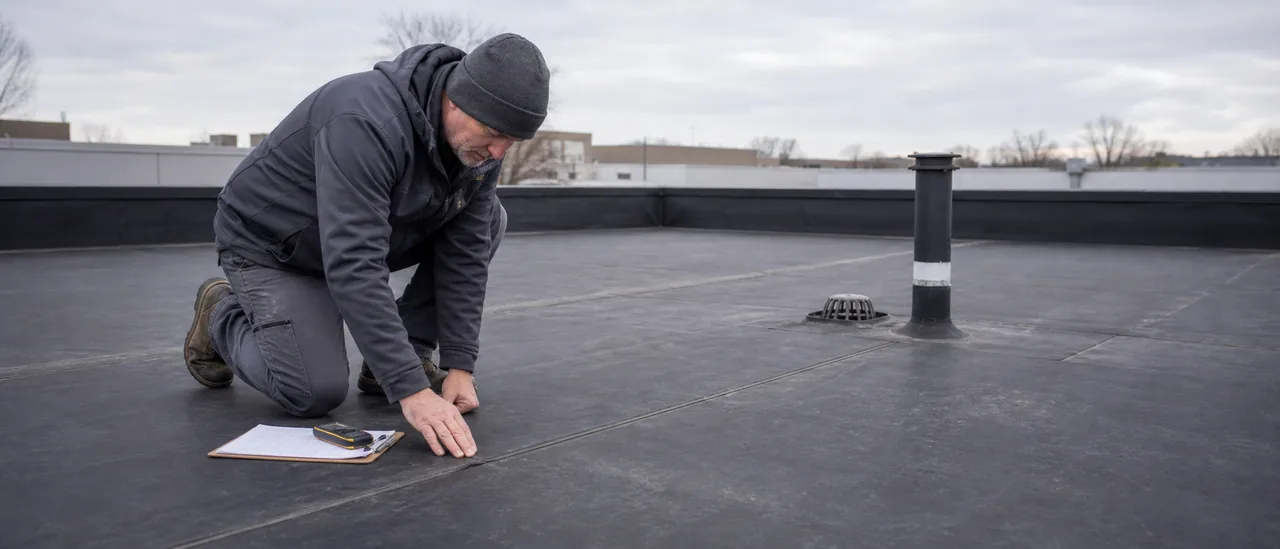
An EPDM rubber roof is inspected through a systematic visual survey of the sheet membrane and every place where it joins, changes direction, terminates, or drains. EPDM means ethylene-propylene-diene terpolymer, an elastomeric—or rubberlike—sheet used for low-slope roofing.
The goal is to record visible defects, water-entry clues, and areas needing closer evaluation. It is not simply a search for one obvious hole. A sound inspection connects interior observations with roof-surface conditions and clearly identifies anything that could not be seen.
A practical inspection sequence
- Review the roof history. The inspector checks drawings, earlier reports, repairs, leaks, and available installation information. Interior ceilings, walls, and the underside of the deck are checked for stains, rust, dampness, or deterioration before roof findings are compared with them.
- Survey the field membrane. The exposed sheet is examined methodically for cuts, punctures, open seams, shrinkage, backed-out fasteners, wrinkles, bubbles, buckling, soft areas, displaced ballast, debris, and previous patches.
- Trace vulnerable details. Seams, roof edges, termination bars, wall flashings, curbs, pipes, hatches, and equipment penetrations receive close attention. The inspector looks for lifted laps, loose attachments, exposed edges, cracked sealant, movement, and physical damage.
- Follow the drainage path. Drains, scuppers, gutters, and downspouts are checked for blockage or deterioration. Ponding evidence and low areas are mapped rather than attributed automatically to a membrane defect.
- Document the result. Conditions are located on a roof plan and supported with photographs and notes. The report should distinguish active defects from items to monitor and should state access, weather, ballast, or visibility limitations.
When a visual survey is not enough
Visual inspection cannot show all moisture trapped beneath the membrane or prove the source of every interior stain. If concealed moisture is suspected, an inspector may recommend a compatible moisture survey or limited openings based on the roof assembly and the question being investigated.
Test methods have material limits
Infrared scanning identifies temperature patterns that may indicate wet materials; it does not locate a leak by itself. Some electrical breach-detection methods also cannot be used reliably on conductive black EPDM. The assembly and membrane must be identified before selecting a test.
Practical bottom line
A useful EPDM inspection is orderly, component-by-component, and documented. It examines the membrane in context with seams, flashings, penetrations, edges, drainage, interior evidence, and roof history. Its conclusion should explain what was observed, what remains concealed, and whether targeted testing is needed—not promise that a surface walk found every hidden condition.