On this page
The direct answer
Hail is reported as a time-and-place observation, usually with the largest stone’s diameter and the observer’s source. A useful report may also describe duration, whether the size was measured or estimated, and any damage actually seen.
These details matter because a report describes conditions at one location. It does not automatically show what happened across an entire neighborhood—or at a particular property nearby.
What a useful hail report contains
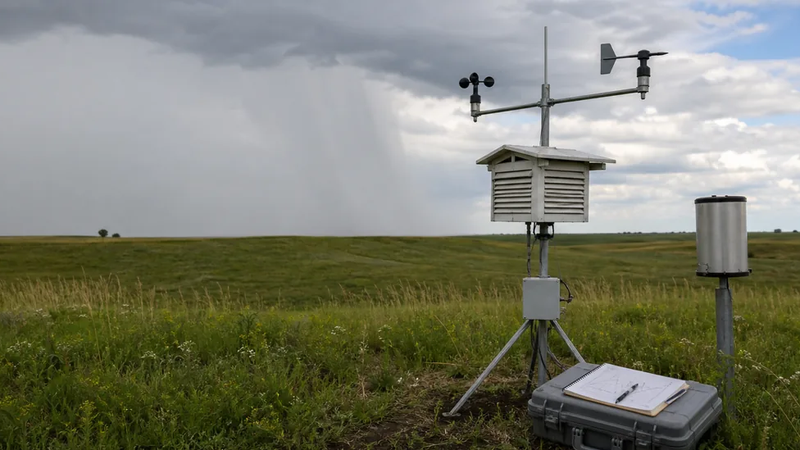
National Weather Service spotter guidance centers on three questions: what happened, where it happened, and when it happened. For hail, the largest stone is the key measurement.
A concise report normally includes:
- the event date and time, not merely the time the report was sent;
- a precise location, such as an address, intersection, coordinates, or distance from a town;
- the largest stone’s diameter and whether it was measured or estimated;
- the observer type, such as a trained spotter, emergency manager, or member of the public; and
- separately described damage, if any was directly observed.
NOAA’s National Severe Storms Laboratory says a ruler, calipers, or tape measure is best. Comparing hail with a familiar object can provide an estimate, but objects are less precise. Hailstorms also produce mixed sizes, so reports focus on the largest stone rather than an average.
Where the report goes
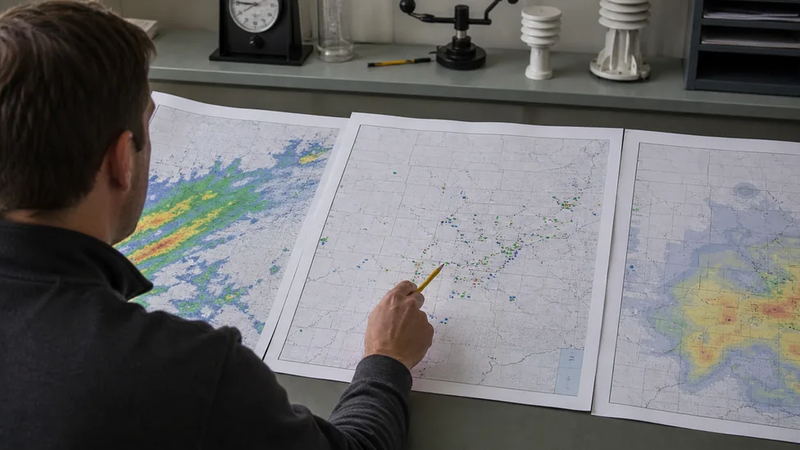
Reports can reach a local NWS forecast office through office-specific phone, online, or other reporting channels. NOAA’s mPING project also collects public reports through a mobile app. NWS forecasters combine ground reports with radar and other information, and quality-controlled observations may appear in a preliminary Local Storm Report.
NOAA archives also hold longer-term severe-weather records. Those archives are valuable, but their coverage varies by place and time. A blank area on a report map does not establish that no hail fell there.
Three records, three different meanings
A radar estimate indicates probable hail conditions over an area. An observed hail report records what someone measured or estimated at a stated place and time. Confirmed property damage means damage was actually documented at that property; radar or a nearby hail report does not supply that confirmation.
The practical bottom line
Read a hail report as a specific observation, not a property-level verdict. Check the location, event time, measurement method, largest reported diameter, source, and damage remarks. Those fields show what is known—and, just as importantly, what remains an estimate.