On this page
Inspection follows the sheets and every water-entry detail
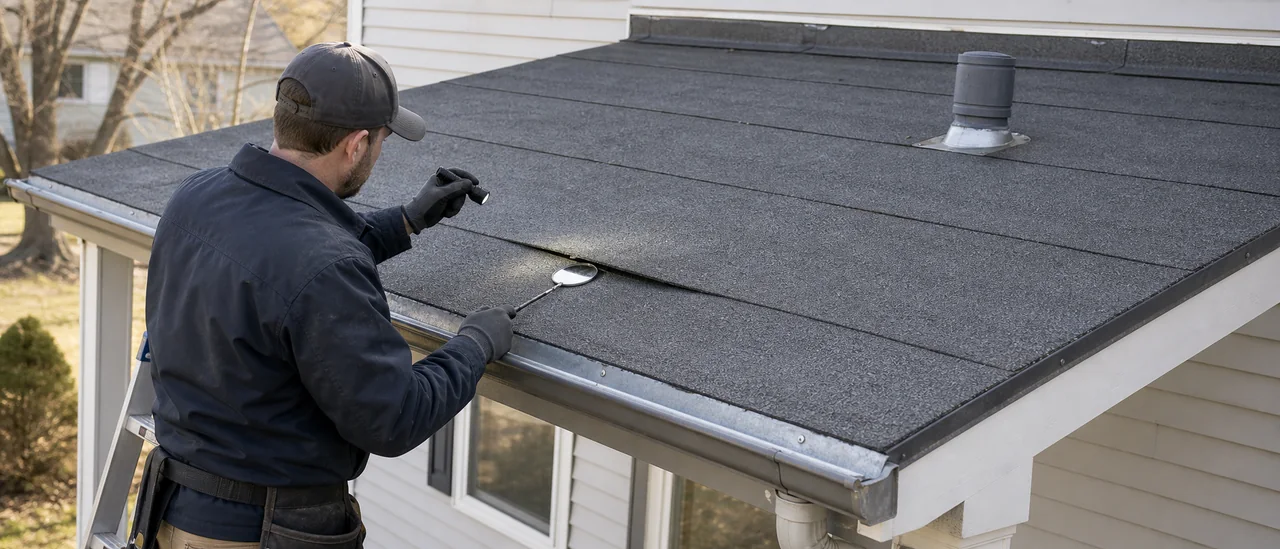
Roll roofing is inspected visually as a sheet roof covering. The inspector identifies the material and installation pattern, then examines accessible surfaces, laps, edges, flashing, penetrations, and drainage. The general roof structure is viewed through readily accessible openings.
Here, “roll roofing” means mineral-surfaced sheets installed in overlapping courses. Manufacturer instructions describe both course overlaps and end laps, making those joints central inspection points.
What the inspector checks
The inspection begins with an overall view from a safe location. Roof slope, drainage paths, debris, and any standing-water patterns help direct closer examination. The inspector then follows each course and transition rather than sampling only the middle of the roof.
Typical observations include:
- open or poorly sealed laps;
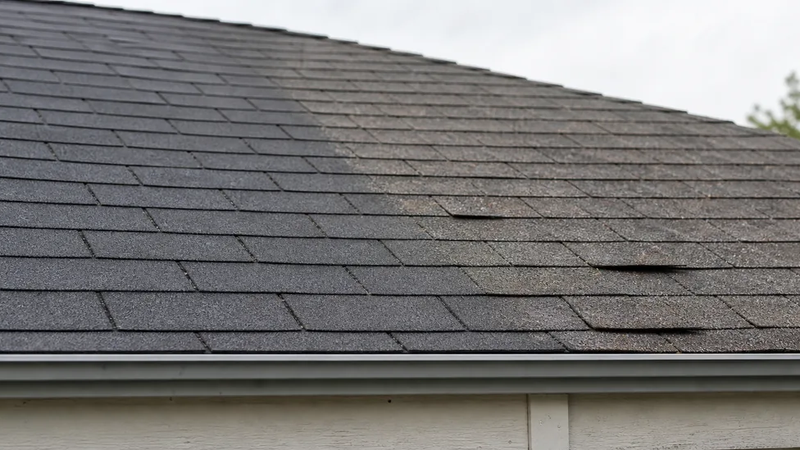
- wrinkling, buckling, bubbling, cracking, or blistering in the sheets;
- loose seams, deteriorated flashing, and excessive surfacing granules in gutters or downspouts;
- visible fasteners or edge details that differ from the material’s installation instructions; and
- staining or other visible evidence that water has not drained as intended.
The findings are then considered as a pattern. For example, an altered surface near a seam carries different practical meaning when flashing deterioration or leakage evidence appears in the same drainage path.
Visible details may be compared with the applicable installation instructions. Those instructions establish the intended slope, lap arrangement, flashing details, and attachment pattern for the specific material.
A visual inspection has firm limits
It cannot prove the condition of concealed underlayment, decking, fasteners, or bond strength. A report should state which areas were inaccessible and whether moisture testing, selective openings, or another specialist evaluation is recommended.
Conditions change the inspection method
A roof walk is not automatic. InterNACHI’s standard does not require an inspector to walk on any roof surface. The inspector chooses a safe vantage point and records any areas that could not be observed closely.
Drainage still deserves attention because the inspection scope includes roof-drainage components. Conditions observed at the covering, gutters, and downspouts should be considered together rather than as isolated clues.
Practical bottom line
A useful inspection connects surface defects with seams, flashing, drainage, and evidence from below. It reports what was visible, what could not be verified, and which findings need targeted follow-up. Age alone does not establish failure, and a surface photograph cannot rule out concealed moisture or deck damage.