On this page
Most inspections take about one to two hours
Plan on roughly one to two hours for a professional termite inspection of a typical house. That is a practical scheduling range, not a time requirement: a small, open, slab-on-grade home may take less time, while a large house with a crawl space, attic, additions, or obstructed areas may take longer.
The appointment may also include time to document findings and explain them. Ask whether the quoted window covers only the on-site examination or also the written report.
Time is not the inspection standard
No single duration proves that an inspection was complete. The better test is whether the report identifies the structures examined, visible evidence, and areas that could not be accessed.
Why the range varies
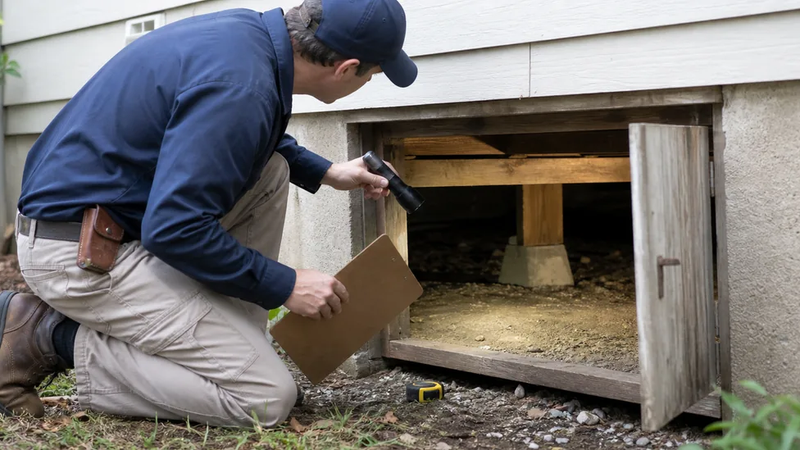
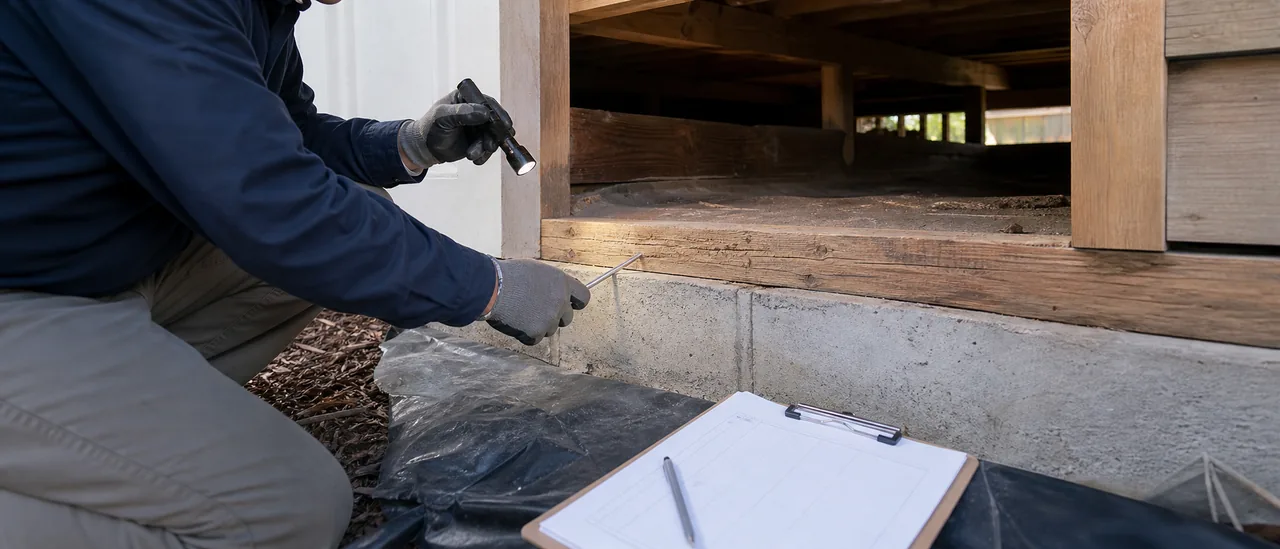
A wood-destroying insect inspection is a careful visual examination of readily accessible areas. Depending on the property and local requirements, that can mean tracing the exterior foundation, interior rooms, garage, basement, crawl space, and accessible attic. Unobstructed wood may also be probed or sounded.
Four conditions commonly change the on-site time:
- Size and layout: More floors, rooms, attached structures, and foundation perimeter require more coverage.
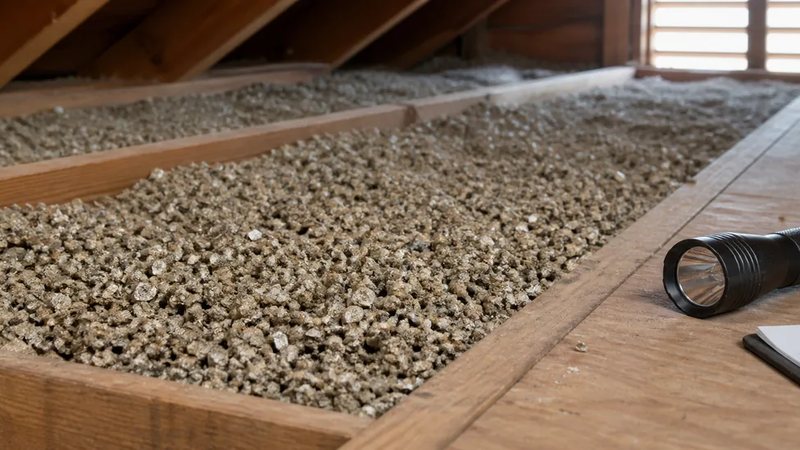
- Access: Stored belongings, insulation, low crawl spaces, locked rooms, and finished surfaces can slow the route or leave areas uninspected.
- Construction: Crawl-space foundations expose different inspection areas than slabs; additions and decks add transitions and wood-to-soil details.
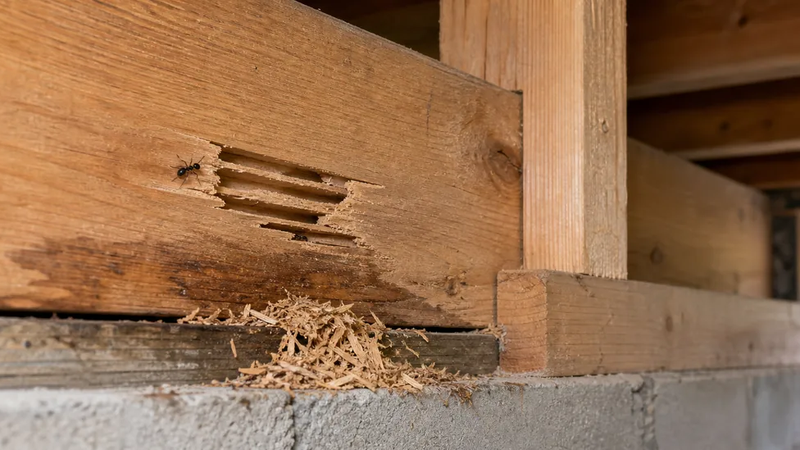
- Visible clues: Mud tubes, frass, damaged wood, moisture conditions, or signs of earlier treatment require closer examination and documentation.
Preparation can reduce avoidable delays. Clear access to crawl-space and attic openings, move stored items away from perimeter walls where practical, unlock rooms, and identify detached structures you want included. Do not remove finishes or disturb suspected insect evidence unless the inspector directs you.
What the inspection can confirm
The resulting report describes evidence visible in accessible areas on the inspection date. It may document live or dead wood-destroying insects, shelter tubes, exit holes, frass, staining, visible damage, and conditions relevant to infestation.
It cannot establish that every concealed wall, covered floor, or obstructed cavity is termite-free. State consumer guidance likewise warns that a wood-destroying insect report is not a warranty. It describes visible evidence at the inspection time, so hidden or obstructed areas remain a stated limitation rather than an all-clear.
A short appointment is not automatically inadequate, and a long one is not automatically thorough. For planning, reserve two hours and keep access open. Then judge the inspection by its stated scope, findings, exclusions, and inaccessible areas—not the stopwatch alone.