On this page
The most likely meaning
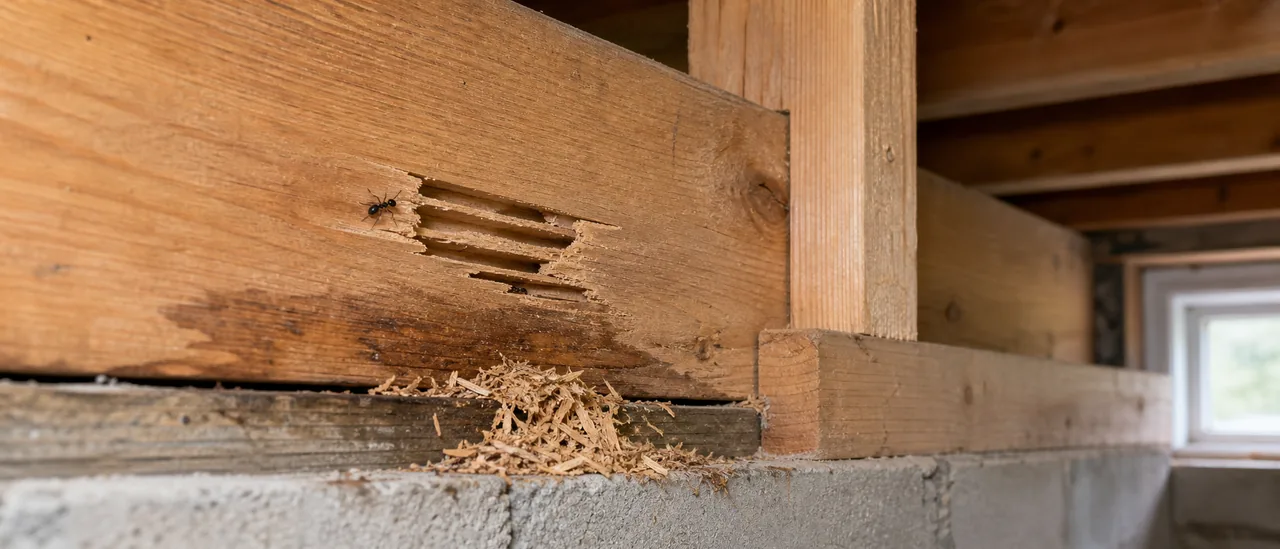
Carpenter ant damage on a home inspection usually means the inspector found wood or debris consistent with ants excavating nesting galleries. Carpenter ants remove wood rather than eat it. Their galleries tend to look clean, smooth, and sanded.
The finding deserves attention, but it does not automatically mean major structural damage. Damage varies with the colony’s location and how long it has occupied the wood. Severe excavation can weaken framing, while limited signs may involve localized, nonstructural material.
What else the signs may indicate
Carpenter ants commonly establish parent nests in moist or decayed wood. A report may therefore point to two related questions: whether ants are active and whether a leak, condensation, decay, or poor airflow has kept the wood damp.
Carpenter ants may also travel indoors from a nest elsewhere on the property, so moisture and an ant sighting are clues rather than proof of an indoor nest. Coarse wood shavings suggest a nest is nearby.
Damage is not the same as active infestation
Old galleries may remain after a colony is gone. Conversely, ants can occupy concealed wall or ceiling voids before visible damage reveals the nest’s location or extent.
What a home inspection can confirm
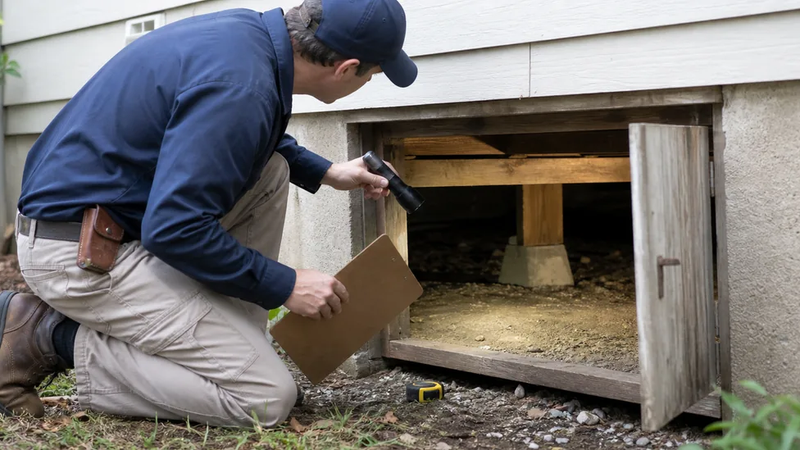
A standard home inspection is visual and limited to readily accessible components under the American Society of Home Inspectors standard. It can document visible galleries, wood debris, moisture staining, softened wood, or observed ants. The report should also identify relevant areas that were not inspected.
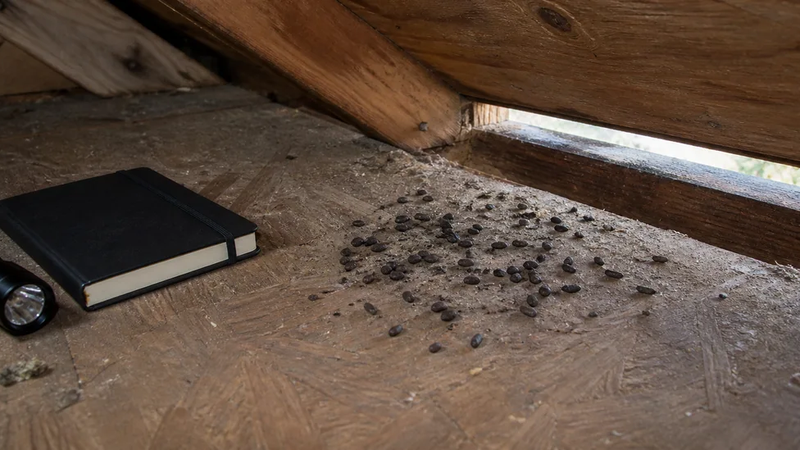
It generally cannot expose finished cavities, map every gallery, identify a hidden nest, or determine the full structural effect from surface evidence alone. It also should not treat sawdust by itself as conclusive. Other insects and ordinary drilling or woodworking can leave debris, while termite galleries typically contain soil-like material rather than the clean surfaces associated with carpenter ants.
Urgency and the practical next step
Read the exact location and wording in the report. Visible damage in a decorative board is different from soft, extensively tunneled joists, beams, or other load-bearing members.
Prompt evaluation is sensible when ants appear active, moisture is ongoing, damage affects structural wood, or concealed conditions leave the extent uncertain. A qualified pest professional can identify activity and locate nests; a qualified building professional may be needed when significant structural damage is suspected. Correcting the moisture source and replacing damaged or decayed wood are part of resolving the condition, not merely removing visible ants.