On this page
They usually suggest bats have used the building
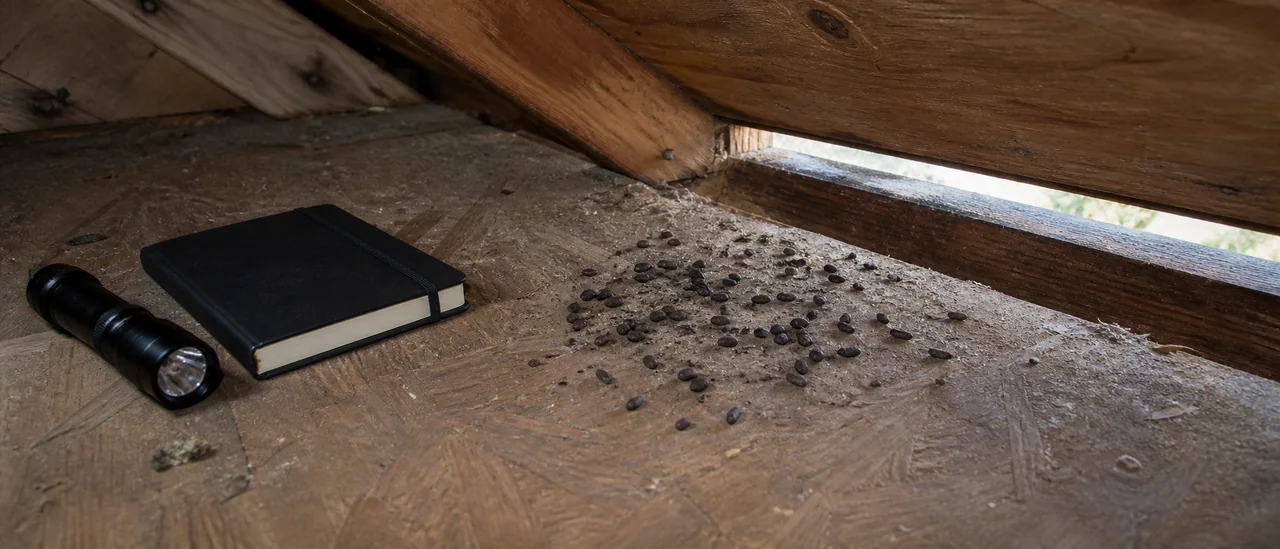
Droppings that appear to be bat guano usually mean bats have roosted above or near that location. A cluster below rafters, an eave gap, or another sheltered opening is more suggestive than one isolated pellet. The finding does not, by itself, establish that bats are present today.
Guano is bat feces. UC Integrated Pest Management describes it as easily crushed, with shiny fragments of undigested insects. Mouse droppings can have a similar size and shape, while bird droppings are more likely to look white or chalky.
Appearance is evidence, not final identification
Pellet shape, clustering, insect fragments, staining, odor, and location can support an identification. None of those clues alone proves the animal species, the colony size, or whether a roost is active.
Other explanations remain possible
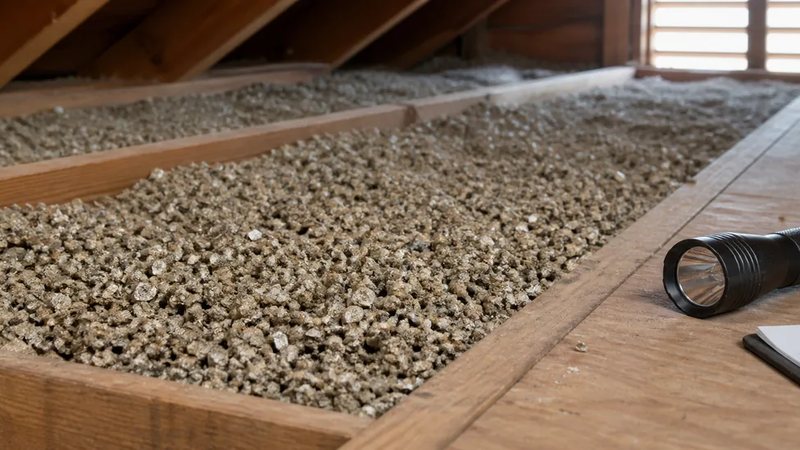
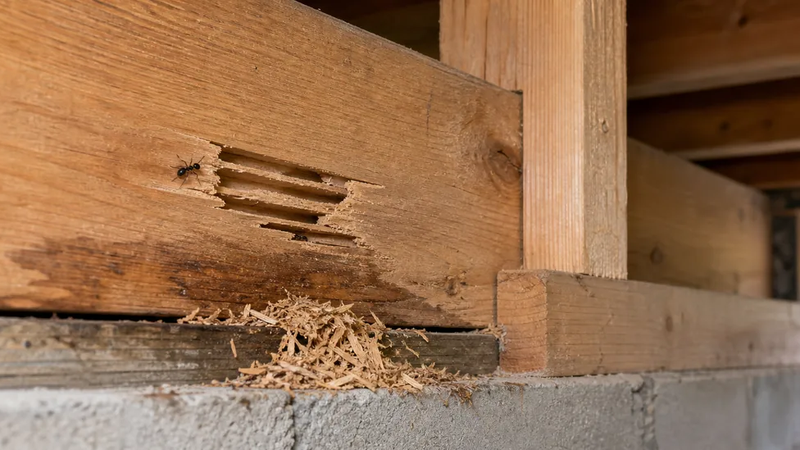
Rodent droppings are the main look-alike in attics and wall spaces. Old guano may also remain long after bats have left or an opening was repaired. Material that resembles droppings could instead be insect debris or deteriorated building material.
The pattern provides useful context. Guano often accumulates beneath a roost or entry point; rodent pellets may be more scattered. Greasy staining near an opening and bats seen emerging at dusk strengthen the case for an active bat entry, but neither reveals the full extent of a concealed roost.
What a home inspection can confirm
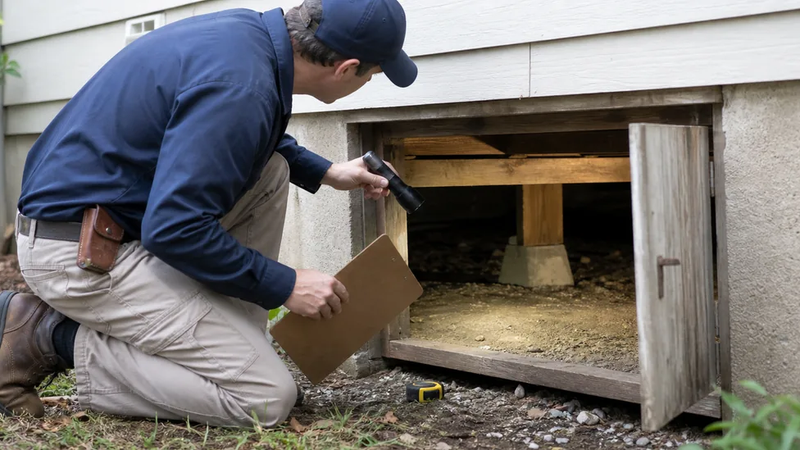
A standard home inspection is visual and limited to readily accessible areas. Under the ASHI Standard of Practice, inspectors examine readily accessible, visually observable systems and report conditions present at the inspection. They are not required to enter inaccessible or dangerous attics, move insulation, dismantle finishes, or determine concealed conditions.
An inspector can record visible pellets, their location and distribution, nearby staining, accessible openings, odors, and visible contamination. The report may reasonably identify “suspected bat droppings” and recommend confirmation. It cannot determine from appearance alone whether every pellet came from a bat, how many bats are involved, or whether contamination extends inside closed cavities.
Respond without disturbing dusty deposits
Do not sweep, vacuum, or crush a suspected accumulation merely to identify it. CDC guidance notes that disturbing bird or bat droppings can create airborne dust associated with Histoplasma exposure and advises controlling dust when removal is necessary.
Urgency depends on context:
- Prompt evaluation: fresh-looking deposits, recurring pellets, visible bats, occupied-room exposure, or an accessible entry point.
- Specialized cleanup planning: a large, dry, dusty accumulation or material that would be disturbed during renovation.
- Document and confirm: a small, old-looking deposit with no other evidence of current activity.
A qualified wildlife professional can confirm activity and plan exclusion at an appropriate time. Significant accumulations may also warrant a cleanup professional familiar with bat-dropping hazards. The inspection finding is a reason to verify the source and extent—not proof of a severe infestation.