On this page
The most likely meaning
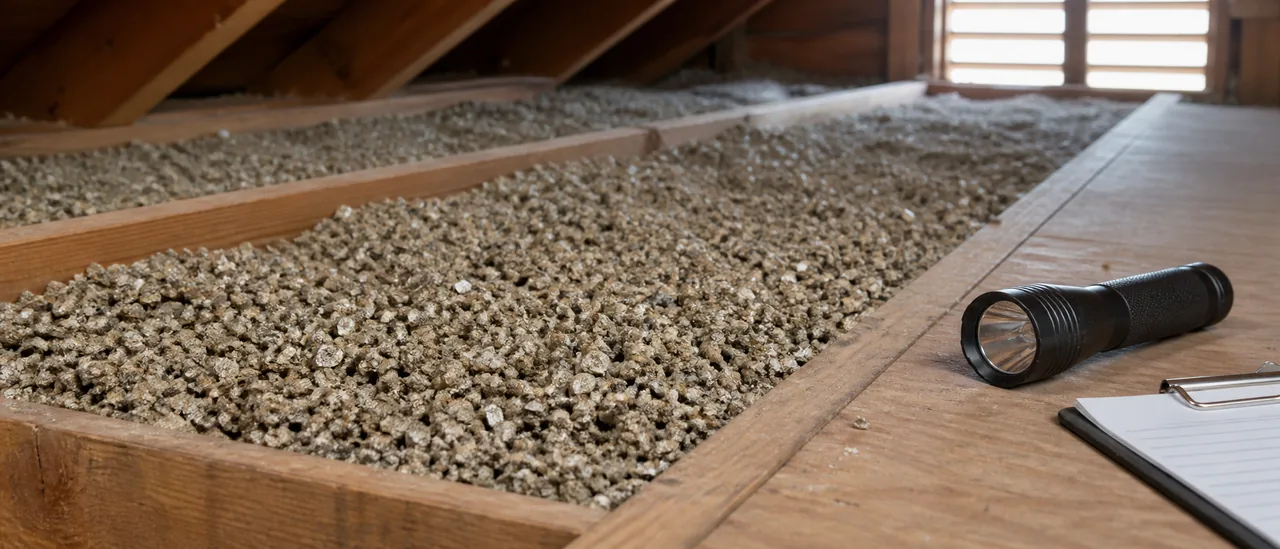
Vermiculite insulation on a home inspection usually means the inspector saw loose-fill material that resembles expanded vermiculite. It often appears as lightweight, pebble-like or accordion-shaped pieces, commonly brown, gold, or gray.
The observation matters because vermiculite insulation may contain asbestos. EPA advises homeowners to assume the material may be contaminated, but appearance alone cannot confirm it.
Appearance identifies a possibility, not asbestos
A visual inspection may support describing insulation as apparent vermiculite. It cannot determine the mine source, prove asbestos is present, or calculate an exposure risk.
What the inspection does—and does not—confirm
A standard home inspection reports visible insulation in readily accessible unfinished spaces. Under the American Society of Home Inspectors standard, the inspector describes insulation and is not required to disturb it.
That limit is especially important here. Moving the material to inspect beneath it could release dust and is outside the standard inspection requirement. Finished cavities, obstructed areas, and other inaccessible locations may also conceal insulation.
The report may therefore recommend treating the material cautiously rather than declaring it asbestos-containing. It also cannot determine from appearance alone whether fibers became airborne or whether previous occupants experienced exposure.
How the concern is evaluated
Do not collect a sample yourself. EPA recommends against do-it-yourself sampling and says a trained, accredited asbestos professional should take samples for analysis. That professional can assess whether sampling is appropriate and arrange qualified laboratory analysis when needed.
Testing also requires careful interpretation. A result applies to the material sampled and the analytical method used; it does not turn a home inspection’s visual observation into a laboratory finding.
Leave the insulation undisturbed
Do not sweep, vacuum, move, or remove vermiculite insulation to investigate it. EPA recommends assuming it may be contaminated with asbestos and leaving it undisturbed.
Urgency and the practical next step
Finding vermiculite is not automatically an emergency or a removal order. Material that remains confined and undisturbed presents a different situation from insulation that is spilling into occupied rooms or lies in the path of planned wiring, remodeling, or attic work.
Read the inspector’s exact observation and limitations first. If upcoming work could disturb the insulation, or if it is damaged or entering living space, arrange evaluation by a trained and accredited asbestos professional before work begins. EPA recommends that any chosen removal be performed by a trained, accredited abatement contractor independent from the assessment provider.