On this page
Current GFCI installation cost
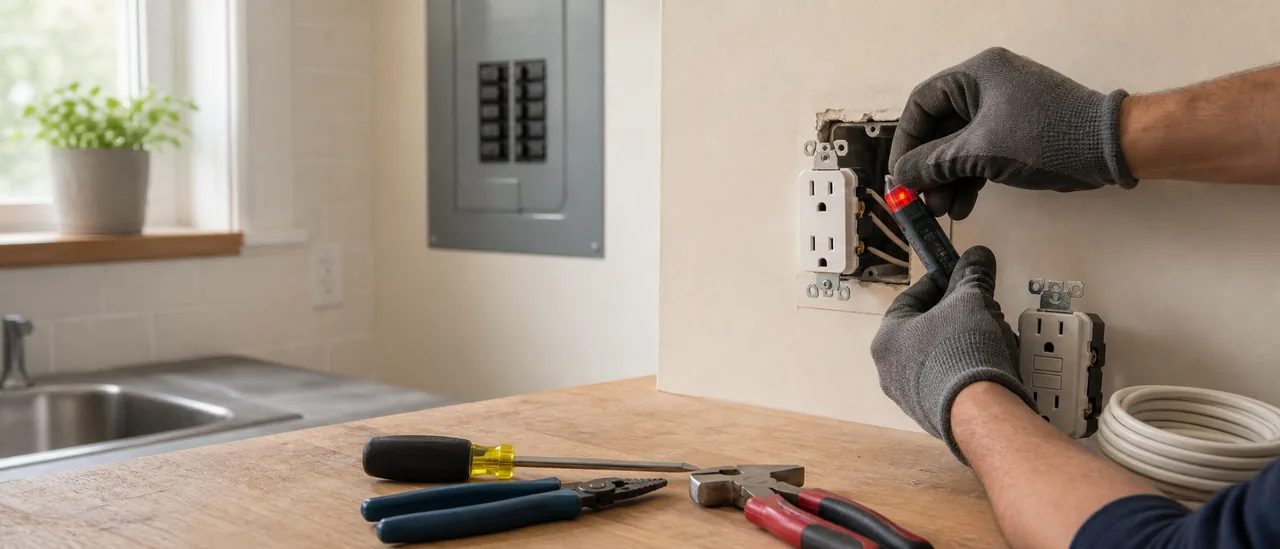
As of July 2026, budget about $130 to $300 for one professionally installed indoor GFCI receptacle. A straightforward replacement may cost $100 to $200, while a new outlet usually runs $150 to $300. The biggest variables are whether wiring already exists, how easily the electrician can reach it, and how many locations share the service call.
These are national planning ranges, not a quote. Labor rates, permits, travel, and the condition of the existing circuit vary by region and property.
| Scenario | Planning range | What usually changes the total |
|---|---|---|
| Low: simple replacement | $100–$200 | Existing box and usable wiring; one device swapped |
| Typical: new indoor GFCI outlet | $150–$300 | New location, short wire run, ordinary access |
| High: outdoor installation | $300–$1,400 | Weatherproof enclosure, drilling, trenching, or new wiring |
What the price includes
An installed price generally covers the GFCI device, small supplies, labor, and functional testing. The device itself is only part of the bill. A minimum service or trip charge can dominate the cost of a single, quick replacement.
“GFCI protection” does not always mean installing a test-and-reset receptacle at every location. The U.S. Consumer Product Safety Commission explains that ground-fault protection can be integrated into a receptacle or a circuit breaker. One correctly placed device may also protect downstream outlets, depending on the circuit design.
That distinction matters for estimates. A receptacle replacement, a panel-installed GFCI breaker, and a new branch-circuit run are different jobs even if the safety goal sounds identical.
Compare the scope, not just the total
Ask each estimate to identify the protection method, number of devices or circuits, wiring repairs, permit allowance, testing, and wall repair. A lower total may simply cover less work.
What moves the estimate
The existing wiring is usually the first cost question. A usable grounded circuit and roomy electrical box simplify a receptacle change. Damaged conductors, crowded boxes, missing grounding, or incompatible panel equipment can require diagnosis or corrective work before protection is added.
Access is next. Open basement framing and a nearby panel are generally easier than finished walls, tile, masonry, attic routes, or buried outdoor runs. Drywall, paint, or landscape restoration may be separate from the electrician’s price.
Project size can work both ways. More protected locations raise the total, but bundling several straightforward replacements may reduce the cost per location because one service minimum is spread across the job. Conversely, several outlets may be downstream from one protective device, so counting faceplates alone can overstate the needed work.
Location also changes pricing. Local electrician wages, travel distance, permit rules, inspection fees, and demand affect bids. Outdoor work may add weather-resistant equipment and a more difficult route. Ask whether permit and inspection costs are included rather than assuming either way.
When an on-site estimate is worthwhile
Get a qualified electrician’s evaluation when the project involves a panel-installed breaker, new wiring, an outdoor location, two-prong receptacles, recurring trips, visible damage, or uncertain downstream connections. An on-site check can identify the correct protection method and separate required electrical work from optional repairs.
For a simple existing-outlet replacement, photographs and circuit details may support an initial estimate. Still, the final price can change after the box is opened and the wiring condition is confirmed.