On this page
Start with a cautious $170 to $670 repair budget
As of June 2026, about $170 to $670 is a cautious starting budget for a failed furnace component. This is an inflation-only update of a January 2023 expert estimate of $150 to $600, rounded to the nearest $10.
The range covers component repair, not full furnace replacement, and it may not include a separate diagnostic charge. The failed component changes the total most; the equipment model and regional labor market are the next major variables.
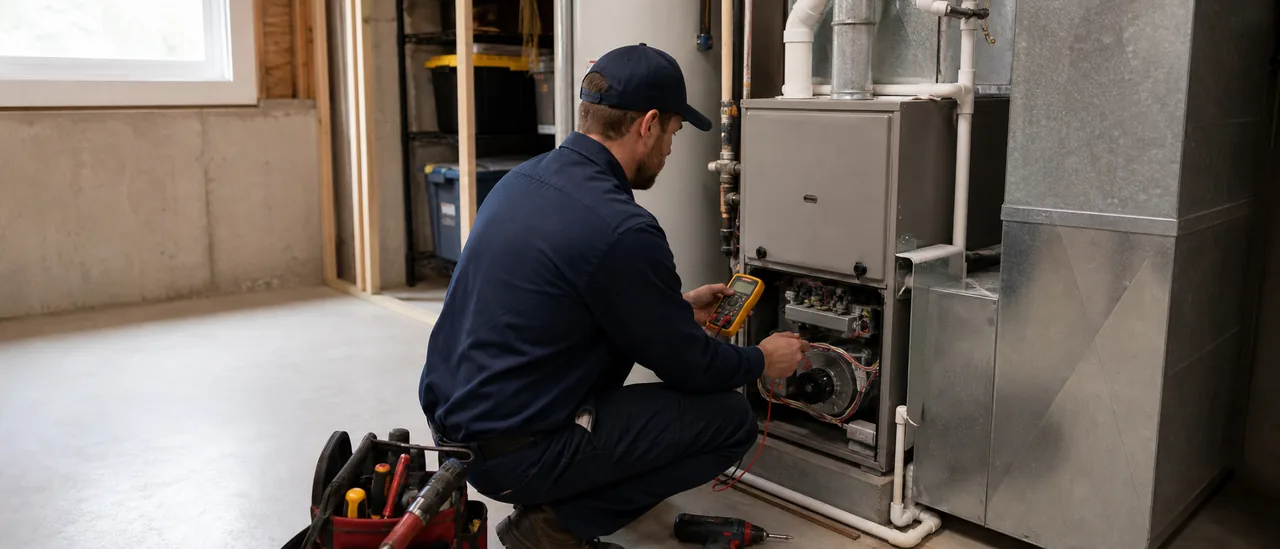
“Will not turn on” describes a symptom, not a repair. A thermostat, ignition component, safety switch, control board, or motor can all prevent heat, but they require different parts and labor.
What different repair levels may cost
The adjustment uses the national CPI-U, which rose from 299.170 in January 2023 to 333.952 in June 2026. It updates the older dollars for general inflation; it is not a new contractor-price survey or a guaranteed local range.
| Scenario | Illustrative total | What it may include |
|---|---|---|
| Low planning point | About $170 | Inflation-adjusted lower bound of the published range |
| Typical no-start call | Not established | Diagnosis must identify the failed component |
| High planning point | About $670 | Inflation-adjusted upper bound of the published range |
The original range came from an editorial article quoting a mechanical engineer, so treat it as a planning aid rather than a neutral market average. A local diagnosis and written scope matter more than a national-looking number.
The variables that move the estimate
The diagnosis determines both part cost and labor time. A technician may also need to trace an intermittent fault before quoting the final repair. Ask for the minimum charge, labor rate, and whether the diagnostic fee is separate or credited toward authorized work.
Other important price drivers include:
- Failed component and equipment design. An ignition repair does not price a control, switch, wiring, or motor fault. The exact model also determines which replacement part fits.
- Diagnostic and labor structure. Some companies use a minimum charge; others quote time and materials or a flat repair price. Confirm what the quoted total includes.
- Part availability. A model-specific part that is not readily available can change the proposed scope or require another visit.
- Location. Labor is only one part of a contractor’s rate, but it is not uniform. Federal furnace-fan cost modeling specifically accounts for regional differences in labor costs.
Compare the same scope
A useful written estimate identifies the diagnosed fault, part, labor, diagnostic charge, warranty treatment, and any work excluded. A low quote that omits one of those items is not directly comparable.
When to obtain specialist estimates
One qualified HVAC estimate may be enough for a clearly diagnosed, modest repair. Consider additional written quotes when the diagnosis is uncertain, the estimate approaches or exceeds the planning range, or the proposed scope changes after work begins.
The exact cost cannot be established from the no-start symptom alone. A qualified evaluation should first identify the failure; then compare itemized estimates using the same repair scope.