On this page
Typical repair cost in 2026
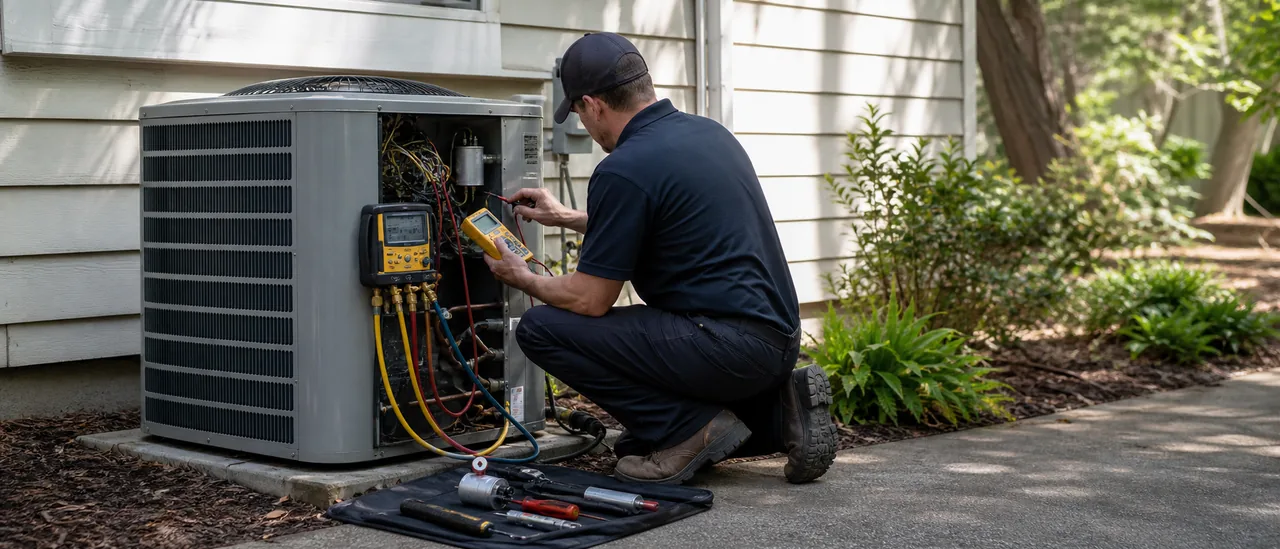
As of July 2026, fixing a heat pump that does not cool typically costs $150 to $650, including diagnosis, labor, and a minor replacement part. A capacitor replacement may cost about $100 to $250, while major coil or compressor work can reach $650 to $2,500 or more.
The diagnosed failure changes the price most. System type and size, followed by local labor and parts availability, create the next-largest differences.
| Scenario | Planning range | Possible scope |
|---|---|---|
| Low | $100–$250 | Capacitor replacement after diagnosis |
| Typical | $150–$650 | Diagnostic visit, labor, and a common minor heat-pump repair |
| High | $650–$2,500+ | Refrigerant-leak repair, coil work, compressor replacement, or multiple faults |
These national figures are budgeting ranges, not a diagnosis or guaranteed quote. “Does not cool” describes a symptom; it does not identify the failed part.
What the price generally includes
A repair estimate commonly includes a service call or diagnostic charge, troubleshooting time, labor, and the installed part. HomeGuide reports diagnostic fees of $75 to $200 and notes that some companies apply the fee toward an approved repair.
Ask whether the quote also includes refrigerant recovery and recharge, leak testing, a return trip, disposal, taxes, and post-repair performance testing. Those items can be separate, especially when the first visit only identifies the fault.
Cooling mode, briefly explained
A heat pump cools by moving heat from the home to the outdoors. Weak or absent cooling can involve airflow, controls, fans, coils, refrigerant, or the compressor, so the indoor symptom alone cannot establish repair scope.
What changes the estimate most
Component and labor requirements produce the widest cost swing. HomeGuide’s January 2025 market guide places minor repairs at $150 to $650 and major compressor, condenser, or coil work at $650 to $2,500 or more. Fixr’s 2026 guide reports an overall average of about $400, which aligns with the middle of the broader ranges.
System design matters too. Air-source, ductless, and ground-source equipment use different components and service procedures. Larger equipment may require costlier parts or more refrigerant. Older or less common systems can also involve harder-to-find components.
Access and location affect labor. An air handler in a tight attic usually takes longer to service than readily accessible equipment. Travel, after-hours scheduling, regional wage levels, and local demand can also move two otherwise similar estimates apart.
Warranty terms may cover a replacement part while leaving diagnosis, labor, refrigerant, or shipping to the homeowner. An itemized estimate should separate those amounts rather than presenting one unexplained total.
When to obtain specialist estimates
A general home inspection is a limited visual examination, not invasive HVAC diagnosis. ASHI’s current standard includes inspection of central and permanently installed cooling equipment but does not require determining cooling-supply adequacy or distribution balance.
Obtain a qualified HVAC technician’s evaluation when the system runs without cooling, trips a breaker repeatedly, shows ice or leakage, or needs sealed-refrigerant or major electrical work. For a high-side repair, compare two written estimates based on the same diagnosis. Each should identify the failed component, labor, refrigerant, warranty treatment, testing, and exclusions.