On this page
Published cost range in 2026
For a 2026 planning reference, one contractor guide lists $250 to $950 to reroute a bathroom exhaust duct from the attic to the exterior. A separate construction guide lists $250 to $500 for a broader bathroom-fan installation. The exit location, attic access, and whether the fan or existing duct needs replacement change an address-specific quote most.
The rerouting source does not itemize what its range includes. A written estimate should specify the exterior termination, new duct and connection materials, labor, testing, permits, and any patching. Mold treatment, wet-insulation removal, structural repairs, and electrical upgrades should be identified separately rather than assumed to be included.
The April 2026 contractor figure is the closer match to this repair. The June 2026 construction guide says its price depends on the fan and estimates two to four hours of work. Neither source is a binding national price schedule, so use the figures as comparison points rather than a guaranteed local price.
How to read the published ranges
| Published reference | 2026 stated range | What the figure describes |
|---|---|---|
| Attic duct rerouting guide | $250–$950 | Rerouting the duct to the exterior |
| Broader fan-installation guide | $250–$500 | Installation cost depending on the fan model |
| Address-specific estimate | No sourced national ceiling | The selected route, access, component condition, permits, and separate repairs |
The $950 figure is the upper end of the cited rerouting guide, not a national ceiling. Difficult roof access, masonry, concealed routing, multiple trades, or attic damage can create work outside that guide's stated range. Conversely, reconnecting a sound duct to an existing exterior cap is a different scope from a complete reroute.
What the repair should accomplish
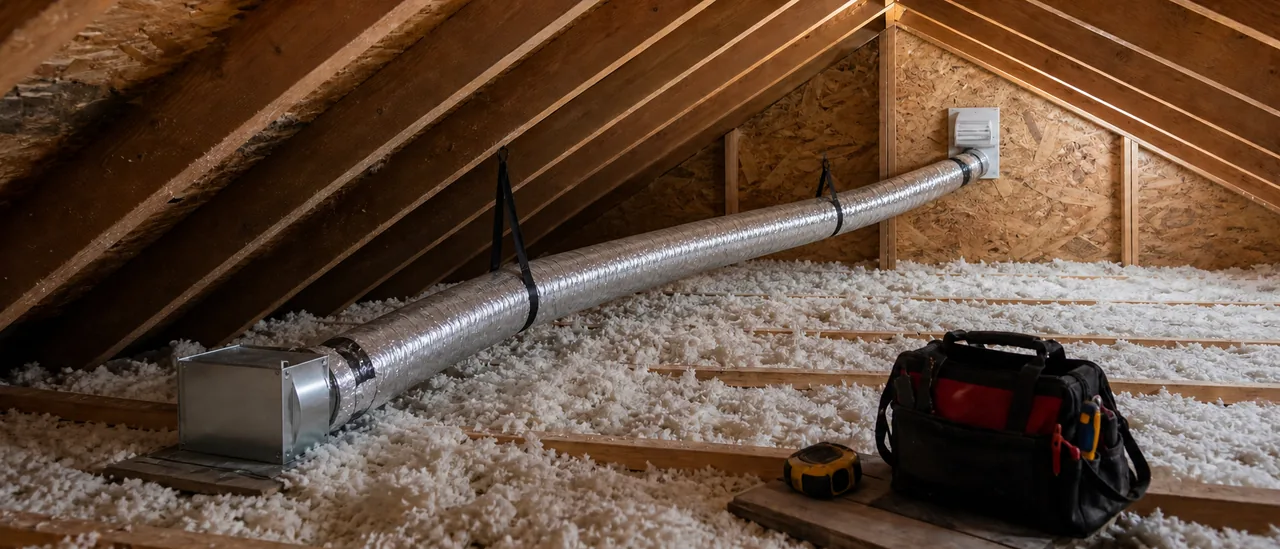
“Fixing” the defect means creating a continuous exhaust path that ends outside the building—not simply pointing the duct toward an attic vent. The U.S. Environmental Protection Agency says bathroom air should discharge directly outdoors rather than into an attic or another interior space.
Requirements vary by jurisdiction and code edition. For one local example, Chicago’s 2022 energy-code provisions require mechanical exhaust to discharge outdoors and prohibit discharge into an attic or crawlspace. The local rules for outlet location, duct material, insulation, dampers, permits, and inspection can change the proposed route and price.
Keep damage assessment separate from the venting quote
A duct contractor can price the exhaust route without determining whether staining, wet insulation, or suspected microbial growth needs separate work. Ask each estimator to identify what was observed, what is excluded, and which condition would trigger another specialist.
Why estimates differ
Termination location: A sidewall or gable exit is often simpler than cutting and weatherproofing a roof penetration. The best route still depends on the house and local clearance rules.
Access and duct length: A tall, open attic allows easier movement than a low-slope area near the eaves. Longer runs, turns, obstructions, and difficult attachment points add labor.
Condition of existing components: The lowest scope reuses a serviceable fan and some sound duct. A crushed, disconnected, undersized, or deteriorated run may need full replacement. Electrical or ceiling repairs add a different trade or task.
Region and permitting: Labor rates, service minimums, permit fees, roof type, season, and travel distance vary. That is why a national range cannot predict an address-specific quote.
When to obtain specialist estimates
Get an on-site evaluation when the termination cannot be traced, attic access is unsafe, a roof opening is proposed, or moisture-related damage may already exist. For comparable bids, ask each contractor to state the exit location, duct length and type, insulation, exterior-cap work, air-sealing, permits, testing, and exclusions.
Electrical changes should be evaluated by a qualified electrician. Roof penetrations and flashing may require a roofing specialist, while suspected moisture damage may need an appropriately qualified inspector or remediation professional. The right evaluator depends on what the initial inspection actually finds.