On this page
The 2026 cost range
In 2026, use $350–$900 as a preliminary planning allowance for a typical manual residential generator transfer-switch problem. This band comes from published manual-switch installation estimates, not repair-specific price data or a property quote. Actual diagnosis and repair may fall below or above it. The failed component, switch type and capacity, and access to the panel and wiring change the price most.
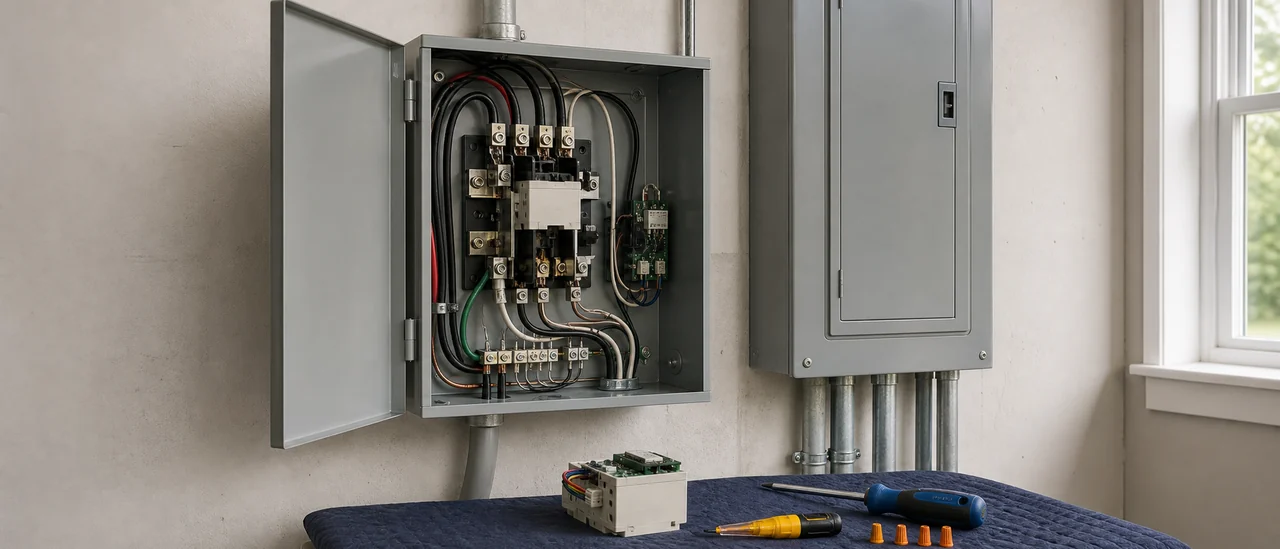
A transfer switch moves selected household circuits between utility and generator power while keeping the sources separated. “Fixing” one can mean correcting a loose connection, replacing a control component, or replacing the switch assembly. Those scopes are not cost-equivalent.
Published figures support a planning range, not a quote. A current independent consumer guide recommends allowing about $500–$900 for licensed-electrician installation. A separate April 2026 editorial guide estimates $350–$700 for manual transfer-switch installation. Automatic service-entrance equipment, obsolete parts, or related panel work can exceed the range substantially.
What the price should include
A useful estimate identifies the diagnostic charge, labor, replacement parts, and controlled operational testing. It should also say whether the service call is credited toward approved work and whether permits, inspection fees, disposal, or a return visit are separate.
The electrician should distinguish a switch fault from a generator-control, breaker, or feeder-wiring problem. Otherwise, a low repair allowance may become an expensive change order after testing begins.
| Scenario | Likely scope | Published installation benchmark used for planning |
|---|---|---|
| Low | Accessible manual switch; limited wiring correction or like-for-like work | About $350–$700 |
| Typical | Diagnosis plus component or common manual-switch replacement | About $500–$900 |
| High | Large automatic switch, obsolete equipment, difficult access, panel changes, or new conductors | No supported fixed range; obtain an itemized quote |
What changes the total
Repair versus replacement. A replaceable control part or connection can keep the job small. Burned contacts, mechanical failure, water damage, or unavailable parts may make complete replacement more practical.
Manual versus automatic operation. Manual switches are generally simpler. Automatic switches add sensing, controls, and a transfer mechanism, so diagnosis and compatible parts can cost more.
Capacity and service arrangement. A small switch serving selected circuits differs from service-entrance equipment carrying a larger residential load. Capacity, conductor size, grounding and bonding, and the number of controlled circuits affect materials and labor.
Access and related electrical work. Tight working space, long conductor runs, corrosion, damaged wiring, or a crowded panel can expand the scope. A replacement may also trigger permit or inspection requirements that a limited repair does not. Rules and fees vary by jurisdiction.
Local labor and timing. Electrician wages vary by state and metropolitan area, according to federal occupational data. Contractor overhead, travel, minimum service charges, and emergency scheduling can widen the difference between two otherwise similar estimates.
Do not bypass a questionable transfer switch
Do not connect a generator directly to household wiring while waiting for repairs. Federal safety guidance warns that a generator connected without a properly installed transfer switch can energize wiring and expose utility workers and others to electrocution.
When to obtain specialist estimates
Arrange a qualified evaluation before budgeting from symptoms alone. Failure to transfer may originate in the switch, generator controls, a breaker, or connecting conductors. Burning odor, arcing, heat damage, exposed conductors, or water inside the enclosure warrants prompt attention and no further operation.
For a clearly diagnosed, accessible repair, one itemized estimate may be enough. Compare two or more estimates when replacement involves automatic service-entrance equipment, panel alterations, new wiring, or obsolete parts. Ask each bidder to price the same capacity, testing, permit assumptions, and restoration work so the totals are genuinely comparable.