On this page
The 2026 cost range
In 2026, budget about $70–$150 per alarm for professional installation when existing wiring is sound. A 2025 national survey places one hardwired installation near $112, while a separate guide updated in 2026 says new wiring can push one location to $500 or more. Alarm count, wiring condition, and ceiling access change the price most.
“Hardwired” means the smoke alarm receives power from the home’s electrical system, usually with a backup battery. An issue may be confined to one expired or failed alarm, or it may involve the interconnect wire, electrical box, circuit, or several incompatible alarms.
Published estimates do not measure identical jobs. Treat these figures as planning benchmarks until an electrician identifies whether the job is a device replacement, electrical troubleshooting, or new installation.
What the price includes
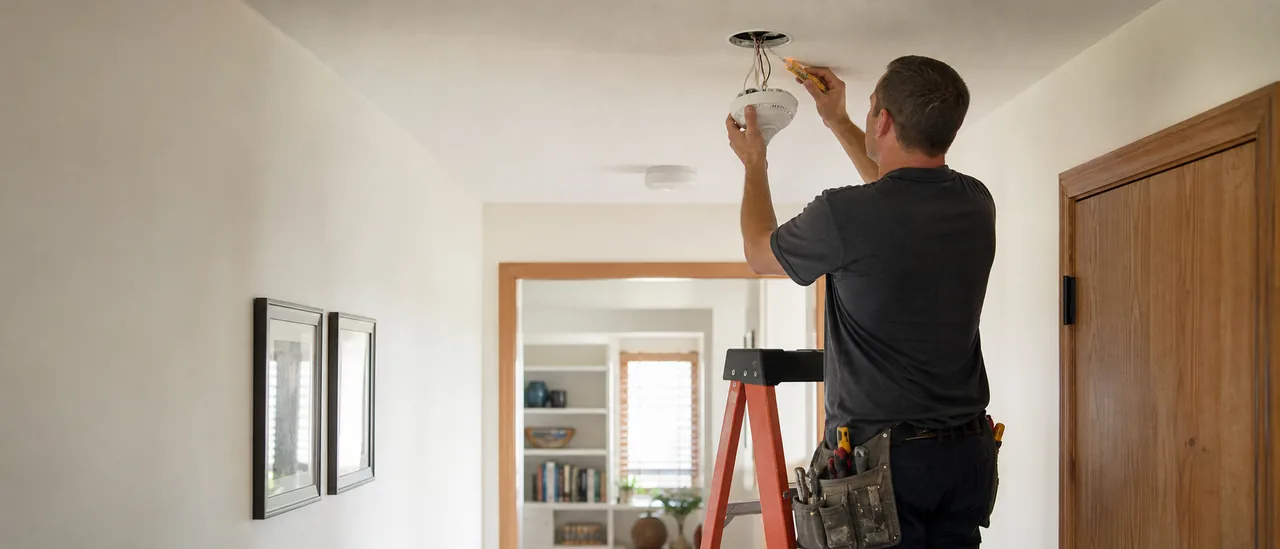
A straightforward replacement estimate usually covers a service visit, shutting off and verifying power, removing one alarm, connecting a compatible replacement to the existing box, restoring power, and testing the alarm. Confirm whether the new unit, disposal, and testing of the interconnection are included.
Troubleshooting is a different scope. The electrician may need to identify which alarm initiated a fault, check the circuit and interconnect conductor, or open a box to find a loose or damaged connection. Ask whether diagnostic time is included and how additional work will be priced.
| Scenario | Likely scope | Confirm before comparing estimates |
|---|---|---|
| Simple replacement | Remove and connect one alarm on sound, accessible wiring | Device, disposal, and interconnection testing |
| Fault diagnosis | Trace a chirp, intermittent fault, or failed interconnection | Included diagnostic time and the rate for added work |
| New wiring or difficult access | Add cable or a box, reach a high ceiling, or open finished surfaces | Permit assumptions, access equipment, and finish repairs |
The published figures do not include unrelated fire damage, a monitored alarm panel, or broad electrical upgrades.
Main cost drivers
Number of alarms. More units increase materials and testing time, although the cost per alarm may fall when several are handled during one visit.
Existing wiring. Reusing a sound electrical box and compatible conductors is the least disruptive case. Tracing an intermittent fault, adding cable, or modifying a circuit takes longer.
Access and restoration. High or sloped ceilings may require extra equipment. Finished ceilings, insulation, masonry, and limited attic access can complicate cable routing. Drywall or paint repair may be a separate trade and line item.
Alarm type and compatibility. Device features affect material cost. Interconnected alarms also need to operate together as intended, so replacing one unit may require checking the rest of the group.
Location and job minimums. Electrician rates, travel, permit rules, and minimum service charges vary by market. Emergency or after-hours scheduling can also increase labor charges.
Do not price every chirp as a wiring repair
A hardwired alarm can still chirp because of its backup battery or because the unit has reached replacement age. The National Fire Protection Association says hardwired alarms should be tested monthly and replaced by a qualified contractor; alarms should be replaced at 10 years or sooner if they fail testing after a battery change.
When to obtain a specialist estimate
Request an on-site electrician’s estimate when multiple alarms behave unpredictably, a breaker trips, wiring appears damaged, no electrical box is present, or new cable must cross finished areas. The written scope should identify the alarms being replaced, diagnostic allowance, interconnection test, permit assumptions, and responsibility for finish repairs.
For a whole-home correction or concealed wiring work, compare estimates using the same alarm count and restoration assumptions. That is more useful than comparing totals that cover different work.