On this page
Budget $150 to $500 for a typical minor repair
As of August 2026, $150 to $500 is a reasonable planning range for a qualified diagnosis, light surface-rust treatment, and correction of a small, accessible moisture source. The biggest variables are corrosion depth, the source of the water, and whether a cabinet panel or an internal component must be replaced.
This is not a published flat rate for “cabinet rust.” National cost surveys place ordinary furnace repair around $133 to $505 and typical HVAC repair around $150 to $450. Contractors usually price the diagnosed cause and required labor—not the orange stain itself.
| Planning scenario | Approximate cost | What may be included |
|---|---|---|
| Low | $75–$200 | Service-call minimum or diagnosis when no repair is needed |
| Typical | $150–$500 | Diagnosis, minor surface preparation, protective touch-up, and a simple moisture-source correction |
| High | $500+ | Extensive preparation, difficult access, panel work, or replacement of affected parts; obtain an itemized quote |
These are U.S. budgeting figures, not bids. Local labor rates, travel charges, after-hours service, and parts availability can move any scenario outside the table.
What the price should include
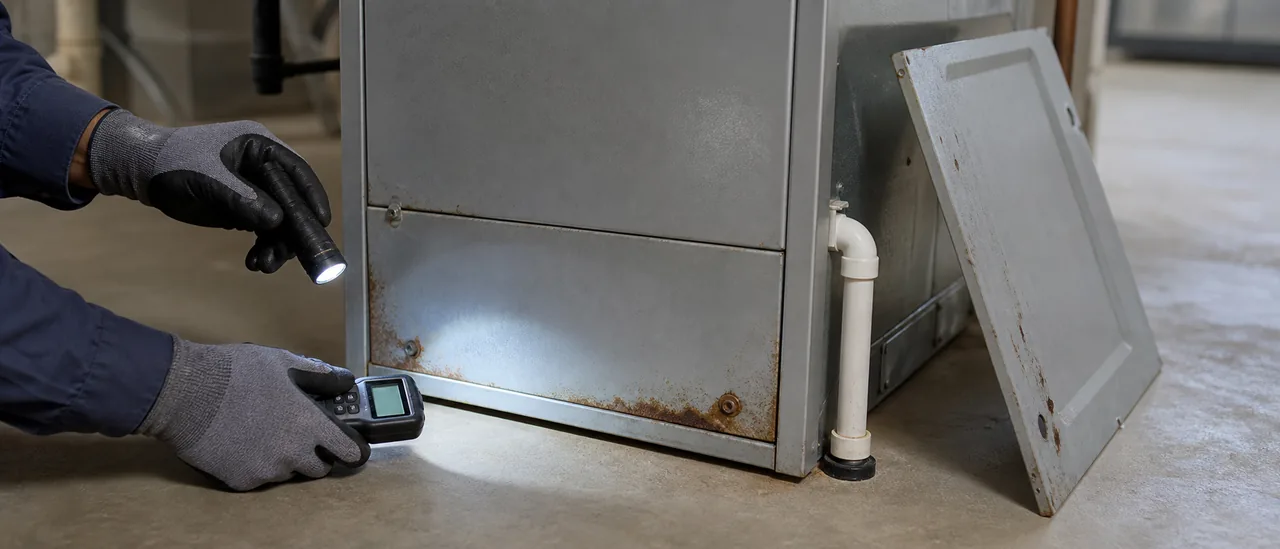
“Furnace cabinet” means the outer sheet-metal housing and its removable access panels. It is different from the heat exchanger, burners, vent connector, evaporator coil, drain pan, and other equipment housed in or above it.
A useful estimate should separate four tasks:
- locating and stopping the moisture source;
- checking whether the corrosion is only on the cabinet;
- removing loose rust and preparing sound metal; and
- applying a compatible protective finish or replacing a serviceable panel.
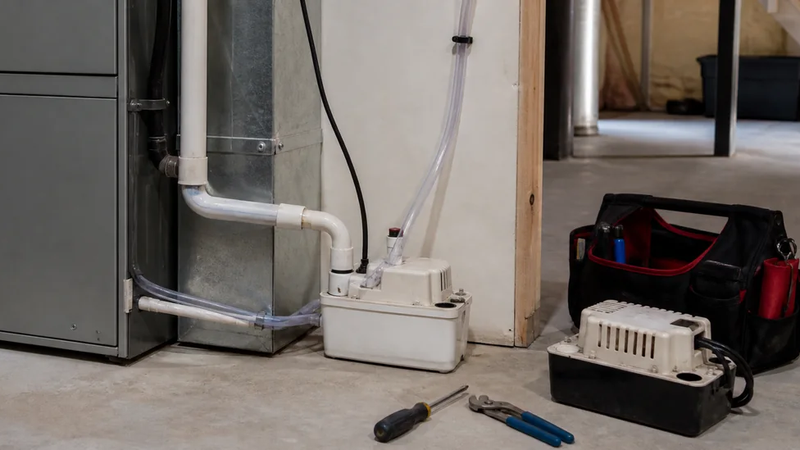
Paying only to cover visible rust can leave the cause active. High-efficiency furnaces intentionally produce condensate and require a suitable gravity drain or condensate pump, according to U.S. Department of Energy installation guidance. Air-conditioning coils, humidifiers, nearby plumbing, damp floors, and venting problems can create different repair scopes.
Cabinet rust is not a heat-exchanger diagnosis
Surface corrosion on the outer housing does not prove that the heat exchanger is damaged. It also cannot rule internal corrosion out. The location, metal loss, water path, and condition of adjacent components determine what must be evaluated.
What makes the estimate rise
Light oxidation on an accessible removable panel may need little beyond diagnosis and surface treatment. Flaking metal, holes, seized fasteners, rust beneath mounted controls, or a discontinued panel can require more labor or make a cabinet-only repair impractical.
The moisture repair may cost more than the rust treatment. A blocked drain is a different job from a failed pump, cracked pan, leaking coil connection, or venting defect. Attic and crawlspace access, emergency scheduling, and higher metropolitan labor rates also increase the quote.
Age matters mainly because compatible panels and assemblies can become difficult to obtain. Ask whether the estimate includes the service call, moisture-source repair, rust treatment, replacement parts, disposal, and any return visit.
When to obtain a specialist estimate
A home inspection can document visible rust and open readily accessible panels, but it is not a complete furnace teardown. ASHI’s standard specifically excludes a required heat-exchanger inspection. A qualified HVAC technician should evaluate rust that is perforated, repeatedly wet, near burners or electrical controls, or accompanied by vent corrosion, abnormal operation, or a carbon-monoxide alarm.
For a quote above the ordinary repair range, request an itemized explanation of what failed and why cabinet treatment alone is insufficient. That makes regional bids easier to compare without assuming every rusty cabinet needs a new furnace.