On this page
A published planning range in 2026
As of July 2026, one home-services marketplace's figures produce a rough $12,700 to $27,100 planning range for removing asbestos-containing attic insulation from 1,000 square feet and installing new insulation. Treated area, access and containment difficulty, and post-removal scope can change a local quote substantially.
The calculation combines Angi's published $11 to $25 per square foot for asbestos attic-insulation removal with its $1,700 to $2,100 figure for replacement insulation. These are one marketplace's reported figures—not an independent national dataset, a vermiculite-specific bid average, or a substitute for local estimates.
| Area scenario | Marketplace-based illustration | Assumed scope |
|---|---|---|
| Low | $7,200–$14,600 | 500 sq. ft. removal plus replacement insulation |
| Typical | $12,700–$27,100 | 1,000 sq. ft. removal plus replacement insulation |
| High | $18,200–$39,600 | 1,500 sq. ft. removal plus replacement insulation |
The low, typical, and high labels describe area only; they do not predict a project's price tier. All three rows use the same marketplace inputs, not contractor bids. Validate the model with itemized local estimates, which may be lower or higher and may include repairs, temporary lodging, unusual disposal charges, or other work omitted here.
What “fixing” vermiculite means
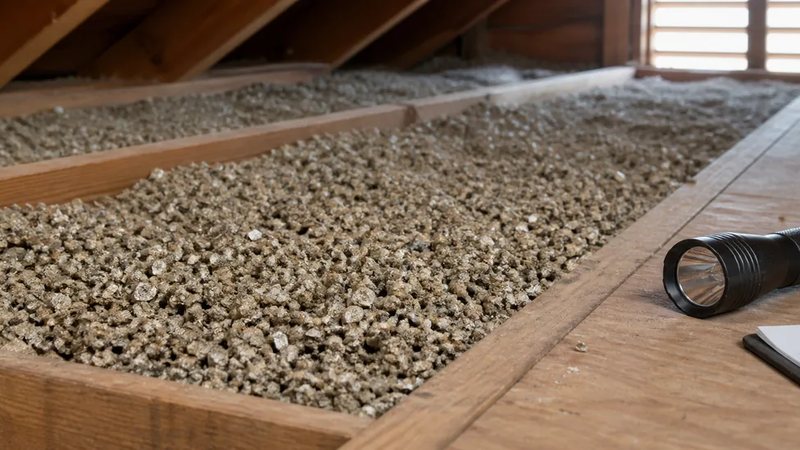
Vermiculite is a loose-fill insulation material. Its presence does not establish that asbestos is present, but the U.S. Environmental Protection Agency advises homeowners to assume vermiculite insulation may be contaminated and leave it undisturbed.
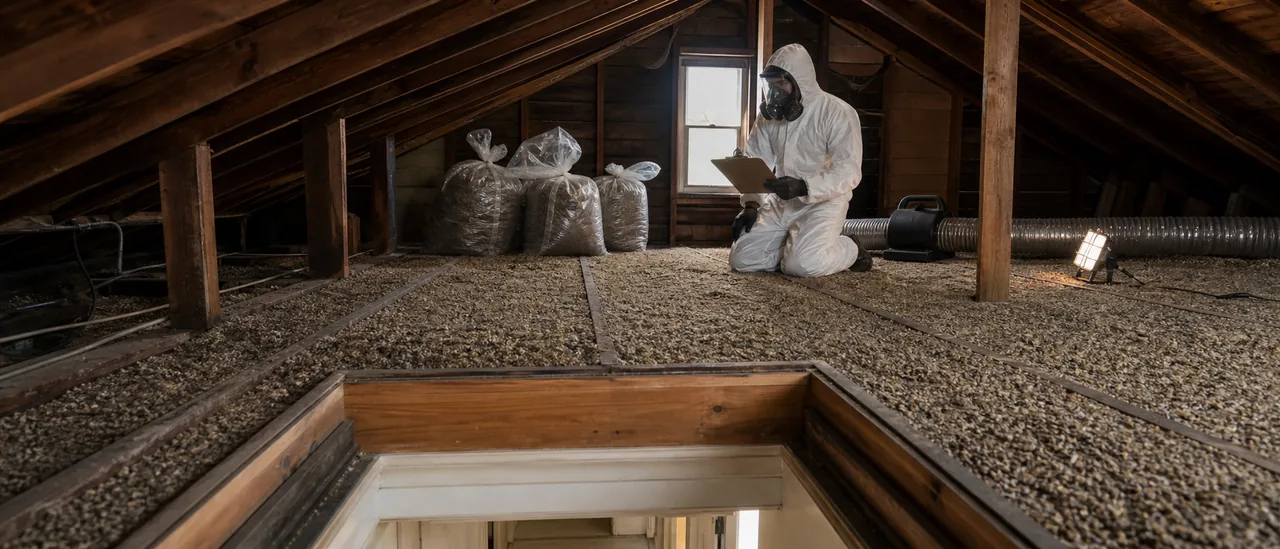
“Fix” may therefore mean leaving confined material alone, managing it so future work will not disturb it, or professionally removing it and installing new insulation. EPA does not recommend removal merely because vermiculite exists. If removal is chosen, EPA says a trained, accredited asbestos-abatement contractor should perform it.
Do not disturb it to measure the job
Do not rake, vacuum, bag, or move vermiculite to calculate depth or area. Give an accredited asbestos professional safe access and let that person determine the appropriate evaluation and scope.
What an estimate should include
A comparable removal quote should state the measured work area, material and location covered, containment method, labor, equipment, waste packaging, transportation, disposal, and required permits or notifications. It should also identify cleaning, visual inspection, air-clearance testing, and documentation when those items apply locally.
Replacement insulation is often a separate line. Confirm whether the price includes air sealing, baffles, attic-hatch work, and the specified insulation type and installed R-value. Also ask who handles stored belongings, contaminated dust beyond the attic, damaged ceilings, electrical access, or other repairs.
Avoid comparing a removal-only number with a complete removal-and-reinsulation proposal. A low total can simply have more exclusions.
What changes the price most
Area has the clearest mathematical effect because removal is commonly expressed per square foot. Depth and total material volume also affect labor, bags, hauling, and disposal.
Access can matter just as much. A roomy attic with a direct hatch is different from low eaves, restricted paths, finished areas, or an attic that requires equipment routing through occupied rooms. Complex containment and hard-to-reach material add time.
Location changes labor rates, licensing rules, notifications, permit fees, disposal options, and replacement-insulation requirements. Additional contamination outside the original work area can also expand the scope. These variables are why a national range cannot predict a property-specific total.
When to obtain specialist estimates
Start with an asbestos professional when the material may be disturbed by renovation, wiring, air sealing, storage, or repairs. EPA recommends that the company assessing vermiculite be separate and independent from the abatement contractor, avoiding a conflict of interest.
Use the written assessment to request two or more itemized local estimates built around the same area and scope. Compare qualifications, containment, clearance, disposal, replacement insulation, exclusions, and total cost—not price alone.