On this page
Typical cost in 2026
As of August 2026, replacing a cracked furnace heat exchanger typically costs $1,250 to $3,000, with a national average near $1,750. Replacing the entire furnace commonly costs $3,500 to $7,500 or more. Furnace size and efficiency, installation access, and warranty coverage usually change the price most.
In this context, “repair” generally means replacing the heat-exchanger assembly. A cracked or rusted exchanger is not normally patched and returned to service.
| Planning scenario | 2026 budget | Likely scope |
|---|---|---|
| Low | $1,000–$1,250 | Accessible standard furnace; an active parts warranty may reduce the homeowner’s total |
| Typical | $1,250–$3,000 | Installed heat-exchanger replacement, with most projects near $1,750 |
| High | $3,500–$7,500+ | Complete standard-efficiency furnace replacement instead of exchanger work |
These are national planning ranges, not quotes. A high-efficiency furnace replacement can reach $11,500, while an unusual custom part, difficult access, or emergency service can push exchanger work above the typical range.
What the price usually includes
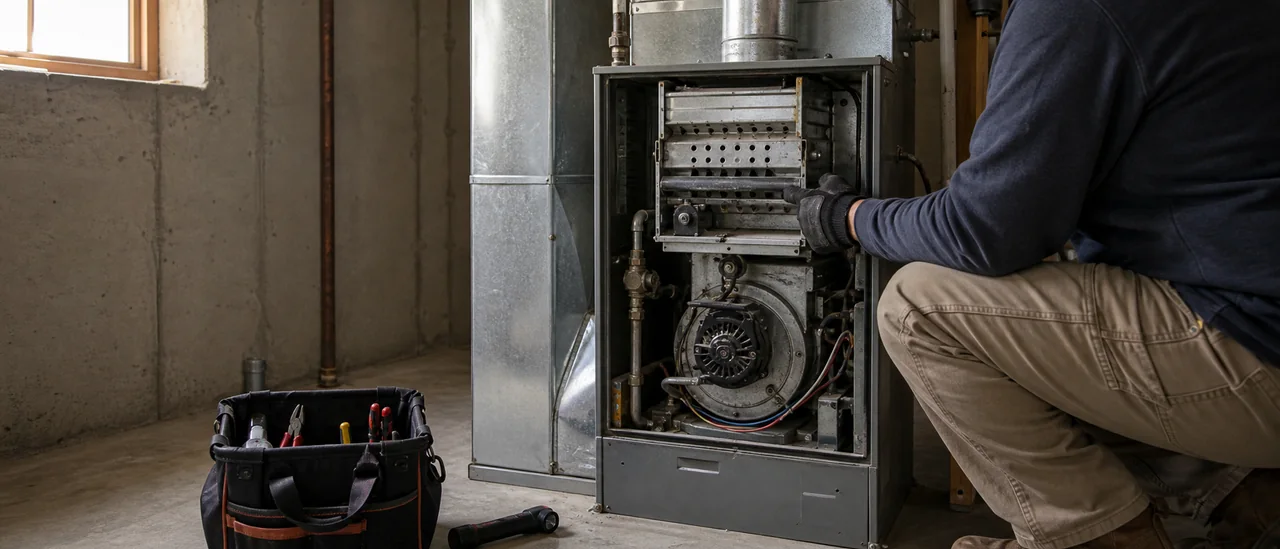
One current cost breakdown assigns $350 to $850 to the main exchanger and $650 to $2,150 to labor. Labor is substantial because the technician must disassemble and reassemble the furnace interior.
Confirm whether the quote includes diagnosis, the replacement assembly, reassembly, system testing, disposal, permits, inspection fees, after-hours charges, shipping, and related repairs. An equipment warranty may cover the part but leave labor, travel, and disposal to the homeowner.
For a full-furnace bid, look for the equipment and installation labor, removal of the old furnace, required connections, startup testing, permits, and disposal. Duct modifications, vent changes, electrical work, condensate drainage, or finish repairs may be separate.
A carbon-monoxide alarm changes the priority
A cost guide cannot determine whether carbon monoxide is present. If a carbon-monoxide alarm sounds, move outside immediately and call emergency services. Do not restart an appliance identified as the source until trained personnel have serviced it.
What changes the cost most
Furnace size and design affect both the part and the work. Larger-capacity and high-efficiency furnaces can use more complex or secondary exchangers. The correct assembly must match the existing system.
Access and labor matter because exchanger replacement requires dismantling and reassembling much of the furnace. Tight utility rooms, crawl spaces, attics, custom-fit parts, and after-hours work add time or fees.
Warranty and furnace condition can shift the decision. Parts coverage may make exchanger replacement economical, although labor often remains excluded. Without coverage, compare that repair with a complete-furnace bid, especially when other major components also need work.
Location changes labor rates, permit requirements, material prices, and seasonal availability. Published national figures should therefore be replaced with local, itemized estimates.
When to obtain specialist estimates
A standard home inspection may identify heating-system concerns, but the ASHI standard does not require inspection of heat exchangers. A qualified heating specialist should confirm the defect and define the repair before the homeowner compares costs.
Ask for separate, written prices for exchanger replacement and furnace replacement when both are feasible. Each estimate should identify warranty credits, model and capacity, included testing, permits, disposal, related corrections, and exclusions. Matching scopes make the cost comparison meaningful.