On this page
Begin when conditions are safe
Start an interior and ground-level roof check as soon as the hurricane has passed, local officials permit reentry, and daylight and surroundings make the check safe. If the property appears damaged, arrange a qualified inspection promptly rather than waiting for a leak. A homeowner’s first look and a roof-level inspection are different steps.
No universal hourly deadline applies. Evacuation orders, flooding, downed utilities, continuing wind, darkness, and structural damage can make an immediate check unsafe. The National Weather Service advises returning after an evacuation only when officials say it is safe.
Keep the first check off the roof
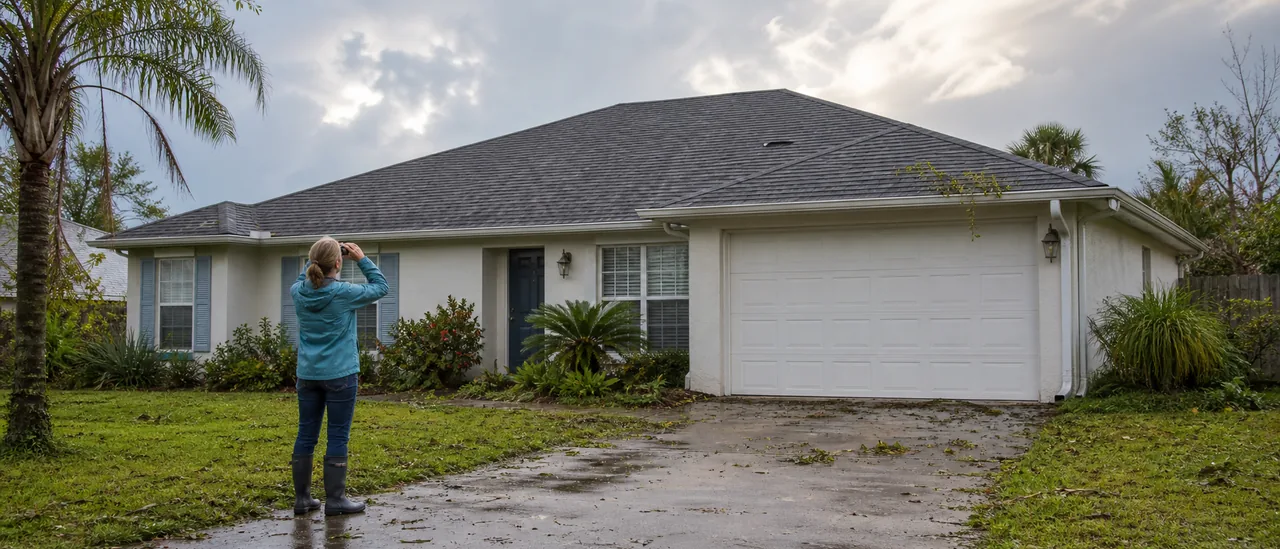
Inspect from the ground and from safe indoor areas. Do not climb a ladder or walk on a roof that may be wet, loose, debris-covered, or structurally damaged. NRCA hurricane guidance limits an owner’s roof-system inspection to ground level because roof access without proper safety systems creates a serious fall risk.
Why prompt inspection matters
Strong wind and windborne debris can disturb roof components, and some changes are not visible from the yard. The National Roofing Contractors Association recommends professional inspection as quickly as possible after hurricane damage and, in the affected storm path, recommends inspection regardless of outward appearance.
That distinction matters because “no leak yet” is not the same as “no damage.” A timely check can identify an opening or loose component before later rain sends water farther into the roof assembly or interior.
For the first safe check, work in a simple sequence:
- Scan the site for fallen power lines, broken gas lines, large limbs, and visibly shifted structural sections before approaching.
- From the ground, look for displaced materials, loose metal, punctures, lodged branches, and an uneven roofline.
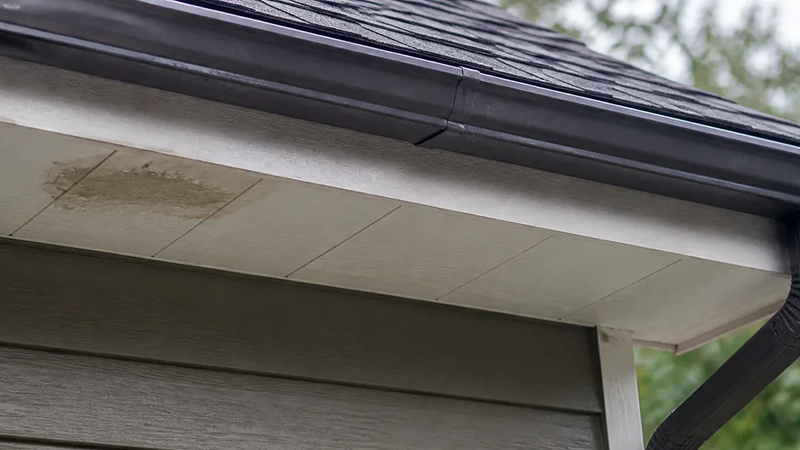
- Indoors, check ceilings and accessible attic areas for fresh stains, drips, damp insulation, unexpected daylight, or sagging.
Conditions that change the timing
Active dripping, a bulging or sagging ceiling, a tree impact, a changed roofline, or water near electrical fixtures makes the situation urgent. Keep people away from the affected area and seek qualified evaluation; do not stand beneath a swollen ceiling. The American Red Cross specifically includes loose utility lines, missing supports, and sagging ceilings among hazards to check after a disaster.
If none of those signs appears, “promptly” still does not mean “personally climb up today.” A closer evaluation can wait until access is safe, but it should not be postponed merely because the roof looks normal from below. Weather, access, roof slope, and suspected damage determine which inspection methods are appropriate.
Practical bottom line
Begin the safe visual check at the first reasonable opportunity after official reentry. Escalate urgent warning signs immediately, and arrange a qualified closer inspection as soon as conditions permit when the property was damaged or the roof was in the storm’s path.
Related reading: Can Storm Damage Exist Without a Roof Leak?