On this page
The direct answer
Yes, some regions show increasing large-hail risk, but hail is not becoming uniformly larger everywhere. The evidence depends on location, season, size threshold, and whether a study analyzes reports, storm environments, or future simulations.
A peer-reviewed analysis of 1950–2021 weather environments found comparatively small North American trends overall. It identified isolated modeled increases east of the Rocky Mountains and across the Canadian Plains—not a continent-wide jump.
“Bigger” can mean different things
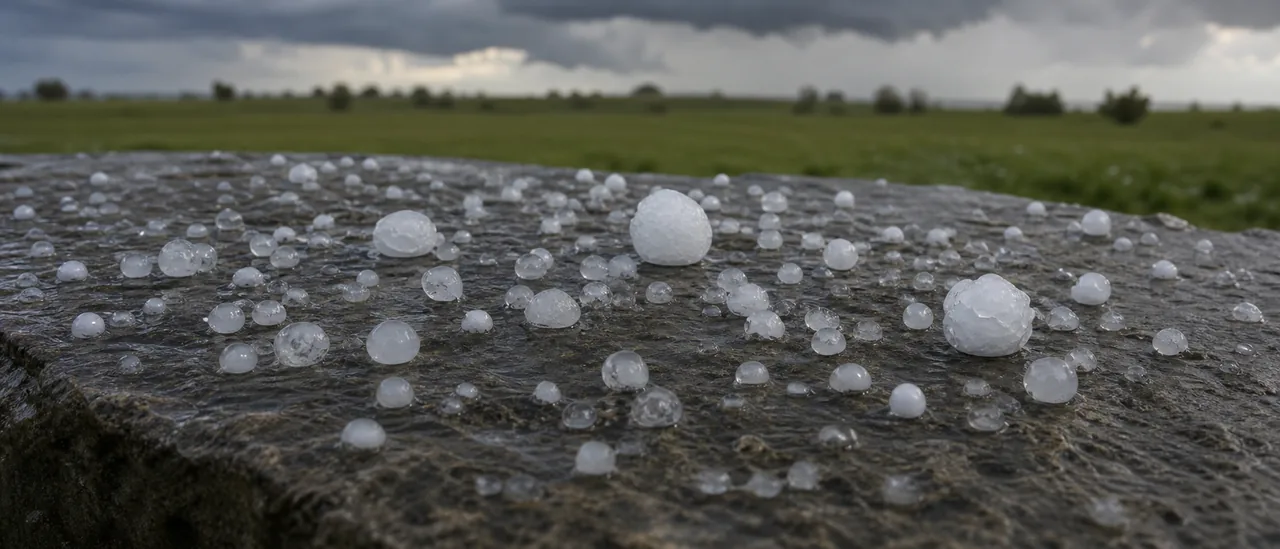
A trend may describe the largest stone, the share of large hail, or how often large-hail days occur. Those measures are related, but they are not interchangeable.
Why warming can push sizes in opposite directions
NOAA’s National Severe Storms Laboratory explains that hailstones grow as updrafts carry raindrops into cold air, where they freeze and collect liquid water. A stone falls once the updraft can no longer support its weight.
The seven-storm modeling study found moderately stronger updrafts in nearly all simulated future environments, but also deeper melting layers. Its authors noted that smaller hail aloft was more prone to melting. Those competing effects create a meteorological sorting trick with no tidy one-size-fits-all answer.
Why observations do not give one simple trend
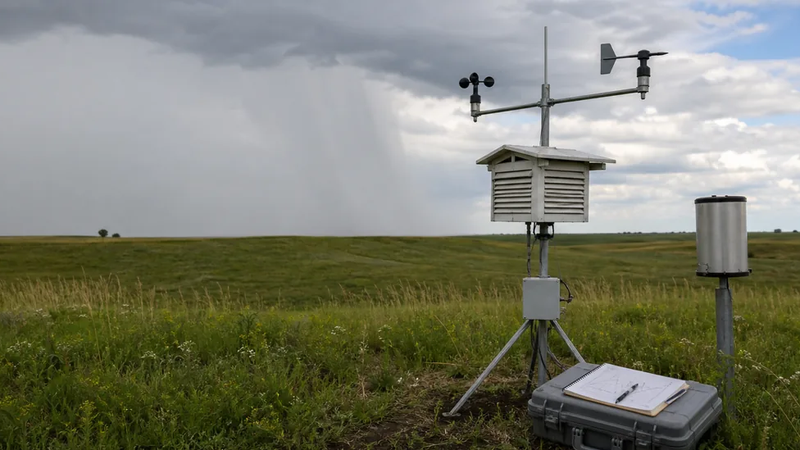
Hail records combine measurements, eyewitness estimates, and remote sensing. Each answers a different question:
- Observed hail is measured or estimated at the ground. NOAA notes that direct measurements with a ruler, calipers, or tape are preferable to object comparisons.
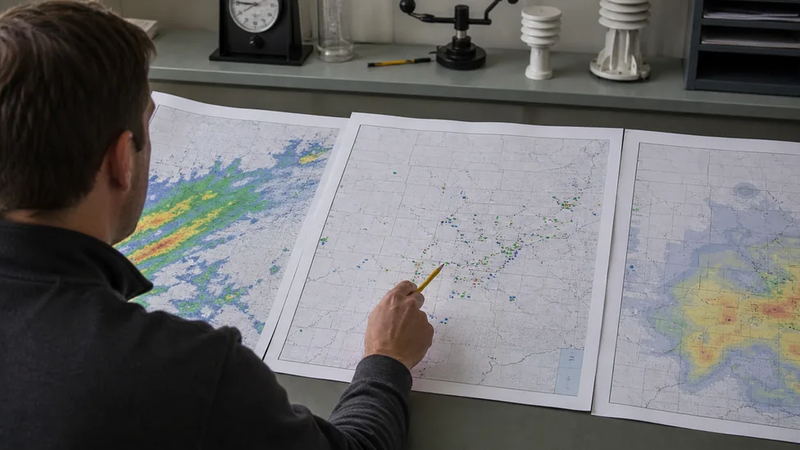
- Radar-derived hail indicates probable conditions and can estimate size or swath. It does not confirm that a particular stone reached a particular point.
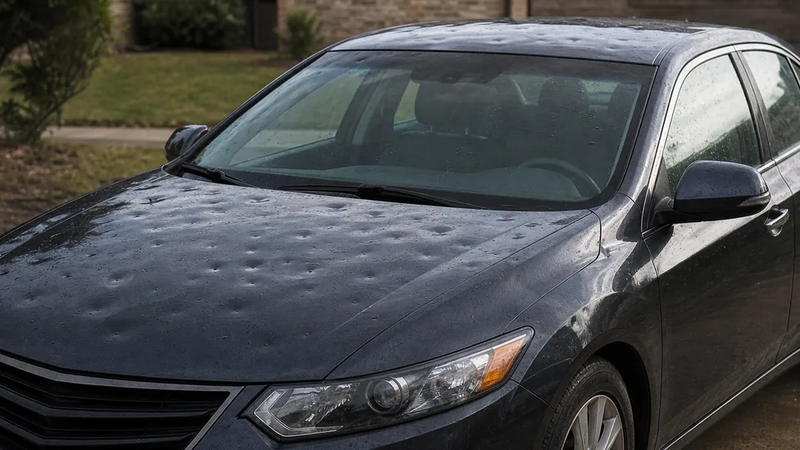
- Confirmed property damage requires evidence of damage at that property. Neither a radar signature nor a nearby hail report establishes it.
Long-term comparisons also inherit changes in reporting, population coverage, instruments, and data processing. NOAA’s Severe Weather Data Inventory warns that its sources do not completely cover every place and time. More reports, therefore, do not automatically mean bigger hail.
The practical bottom line
Research supports increasing large-hail potential in some settings, while other places or seasons may see little change or smaller hail. A study modeled seven historical hailstorms in several end-of-century environments. Hail sizes increased in its cold-season cases but decreased in its warm-season cases, underscoring how strongly the answer depends on the storm and season.
So the careful answer is conditional: some large-hail risks are increasing, but location, season, size threshold, and measurement method determine what “getting bigger” actually means.