On this page
The direct answer
No—not in the usual meteorological sense. Hail is solid ice that develops inside a thunderstorm updraft, while a raindrop that freezes during its fall is generally called sleet, or an ice pellet.
The distinction is about where and how the particle grows. Rain is liquid precipitation falling from a cloud. Hail spends part of its life moving within a thunderstorm, where it can collect more water and become much larger than a simply frozen raindrop.
How a hailstone forms
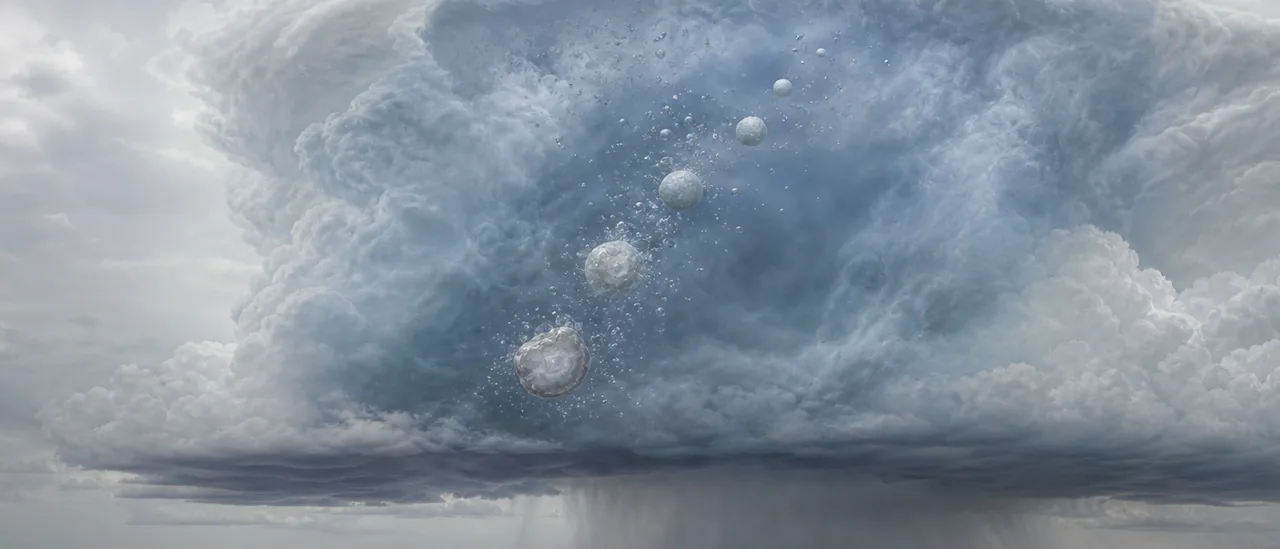
A hailstone begins with a small solid “embryo.” According to NOAA’s National Severe Storms Laboratory (NSSL), that starting particle may be graupel or sleet. A thunderstorm updraft carries it through a region containing supercooled liquid droplets—water that remains liquid even though its temperature is below freezing.
Those droplets collide with the embryo and freeze onto its surface. Repeated collisions add ice, sometimes creating alternating clear and cloudy layers as the freezing rate and liquid-water conditions change.
Three ingredients matter most:
- an ice embryo on which growth can begin;
- enough supercooled liquid water to add new ice; and
- an updraft strong enough to keep the growing stone aloft for a useful length of time.
Eventually, the hailstone becomes too heavy for the updraft, or the updraft weakens. Gravity then carries it toward the ground.
Why “frozen rain” is an incomplete shortcut
Some hail can begin with a lofted raindrop that freezes, so the phrase captures one possible first step. It misses the defining growth process: hail enlarges by collecting supercooled droplets inside a convective storm.
Sleet follows a different path. It forms when liquid drops, such as raindrops, freeze before reaching the ground. That process does not require the strong thunderstorm updraft central to hail growth.
Hail may also melt while descending through warmer air. A storm can therefore contain hail aloft even when no hailstone reaches a particular spot on the ground.
Radar detection is not a ground observation
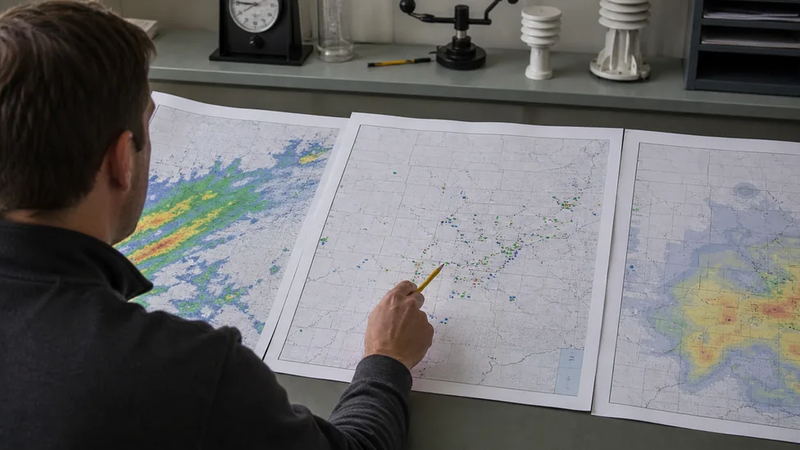
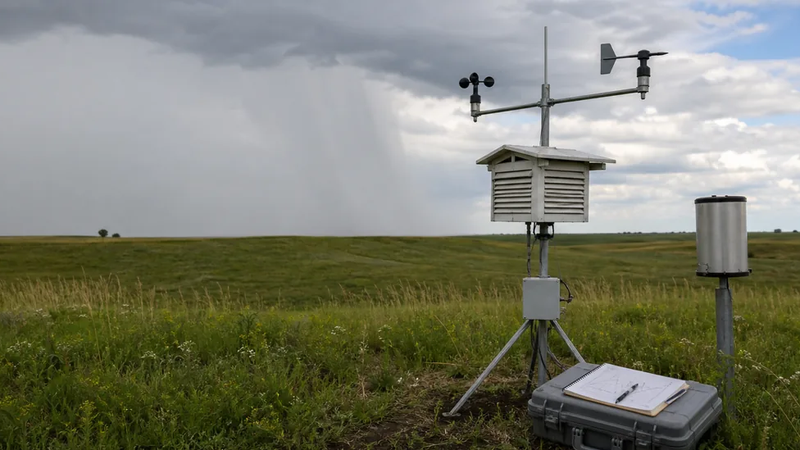
Dual-polarization radar can classify echoes that are consistent with hail inside a storm. A report from someone at the surface documents what actually fell there. Neither, by itself, confirms damage to a particular property.
The practical bottom line
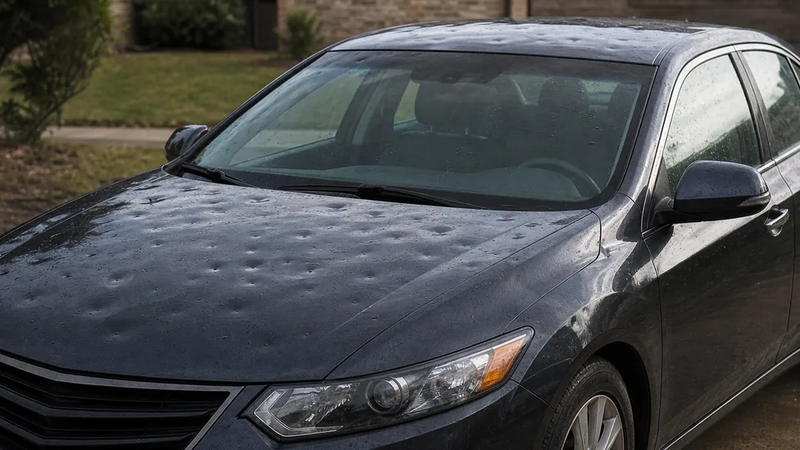
Calling hail “frozen rain” is understandable but scientifically imprecise. The better description is layered storm ice grown around a small frozen particle as supercooled droplets accumulate.
That distinction also explains why hail varies in size and may not reach the surface everywhere beneath a storm. Radar estimates, observed hail, and confirmed physical damage answer three separate questions and should not be treated as interchangeable.