On this page
The direct answer
No—neither NOAA nor AccuWeather is always more accurate; the result depends most on the forecast variable, location, and lead time. A provider can perform better for tomorrow’s high temperature yet worse for precipitation timing or wind at the same place.
That makes a single nationwide winner misleading. NOAA itself evaluates weather models across different variables, pressure levels, statistical measures, and forecast lead times. Older NOAA research on public forecasts likewise found that accuracy falls as lead time grows and that a forecast’s value depends on the user’s needs.
Why this is not a simple head-to-head test
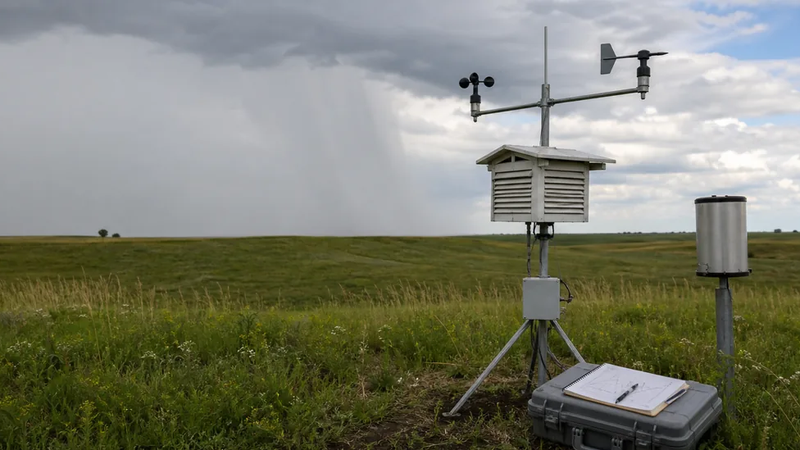
“NOAA” is also imprecise shorthand. NOAA includes the National Weather Service, which produces public forecasts and official U.S. watches and warnings, as well as numerical models and observation systems. NWS forecasters review radar, satellite, ground, and airborne observations, then use several forecast models and local expertise.
AccuWeather is a private forecast provider. It combines outside data with its own processing and forecast products. Its current data-source page identifies ECMWF material that AccuWeather says it modifies. That offers some source transparency, but it does not expose every proprietary adjustment needed to reproduce a forecast.
| Question | Better way to compare |
|---|---|
| Will it rain? | Score probability forecasts and timing separately |
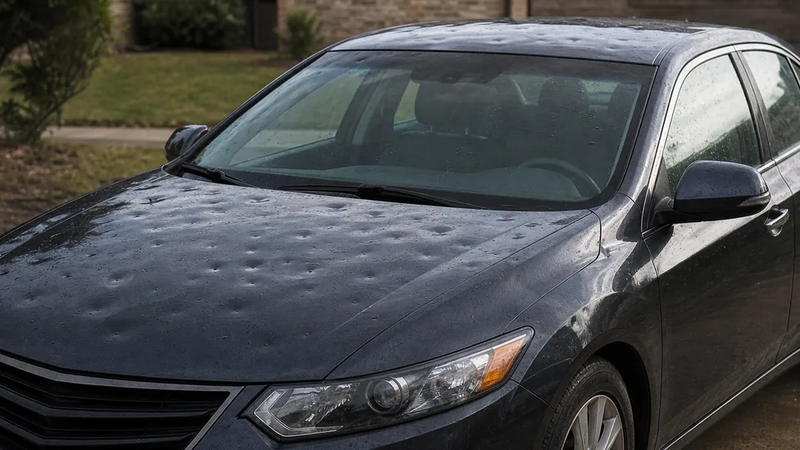
| Will hail occur? | Compare the predicted location and timing, then check NWS warnings |
| How hot will it get? | Compare absolute error for daily highs at one location |
| What happens next week? | Expect more uncertainty than for tomorrow |
| Is severe weather official? | Check the current NWS watch or warning |
The variables that change the answer
Location matters because terrain, coastlines, urban heat, and sparse observations can affect local forecasts differently. Lead time matters because uncertainty generally increases farther into the future. The metric matters too: temperature error, precipitation probability, onset time, and false-alarm rate answer different questions.
Consumer access differs as well. Weather.gov provides forecasts and NWS alerts without a subscription, while AccuWeather offers free consumer access alongside paid products. Features and prices can change, so subscription tiers should not be treated as evidence that one forecast is inherently more accurate.
Accuracy and authority are different
A commercial forecast may perform well for a specific everyday metric. For hazardous U.S. weather, however, use the National Weather Service alert as the official warning source, regardless of which app first drew your attention.
Practical bottom line
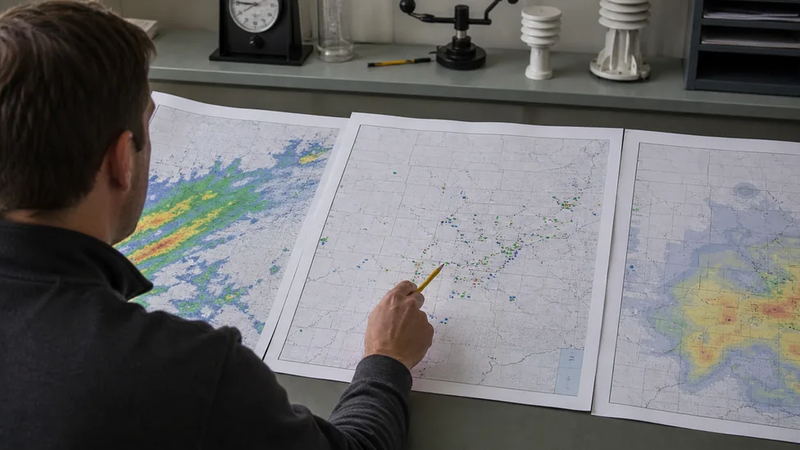
For routine planning, compare both providers at your exact location over several weeks, using the same forecast time and outcome. Judge temperature, precipitation, and wind separately rather than counting a vague “right” or “wrong.”
For severe weather, do not wait for a personal accuracy experiment. Follow current NWS watches and warnings, and treat every long-range forecast as a range of possibilities rather than a precise promise.