On this page
The practical decision
A roofing contractor should inspect its own work before calling the job complete. However, that inspection should not be the only basis for a “certification” when the homeowner needs an impartial acceptance decision, permit approval, or resolution of a disputed defect.
The installer’s inspection is quality control. It can catch unfinished details, confirm that a punch list was addressed, and create a useful project record. Independent review serves a different purpose: it adds knowledgeable eyes that do not belong to the installation team.
“Certify” is not precise enough by itself. A useful certificate should identify what was inspected, the criteria used, the inspection date, the signer’s role, and any exclusions. Without that scope, the document may be only a completion statement—not a guarantee that every concealed condition is sound.
Match the reviewer to the decision
| Review | Best use | Main limitation |
|---|---|---|
| Contractor final inspection | Workmanship checks, cleanup, punch-list completion | The installer is evaluating its own performance |
| Independent roof evaluation | Impartial comparison with plans, specifications, or stated installation requirements | Scope and access still limit what can be observed |
| Permit inspection | Required code or permit checkpoints | It is not a complete workmanship or warranty evaluation |
| Warranty-related inspection | Confirming the stated warranty process was followed | It answers only the warranty issuer’s defined requirements |
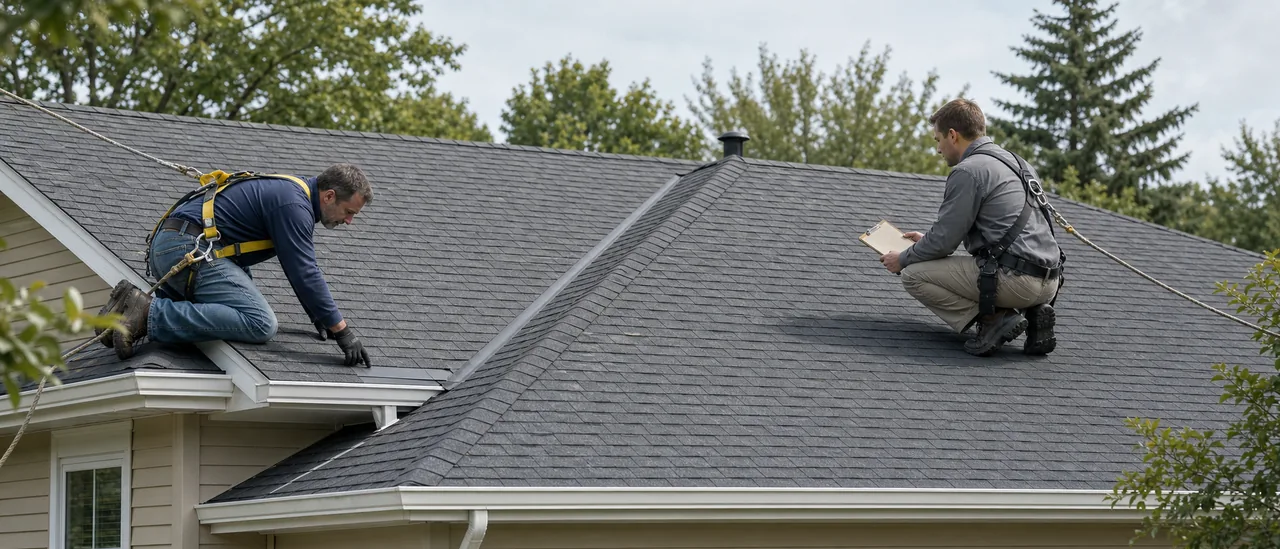
Roof quality observers commonly document construction and evaluate conformance with project details, specifications, and installation requirements. Industry guidance also describes third-party review as a way to supplement the project team with another set of knowledgeable eyes.
When the contractor’s sign-off may be enough
Installer sign-off may be reasonable when the requested document is simply proof of completion under the contract. That is more defensible when the homeowner receives a detailed final report, the work has no unresolved concerns, and any required permit inspections are already closed.
The contractor should still show what was checked. Depending on the job, that record might cover flashings, penetrations, edges, ventilation components, fastener or attachment details visible during installation, debris removal, and completed corrections. Photographs taken before concealed layers were covered can preserve information a final surface inspection cannot recover.
When another evaluator should inspect
Independent evaluation is the stronger choice when:
- the project specifications require third-party observation or testing;
- leaks, visible defects, or disputed corrections remain unresolved;
- the certificate will be relied upon as evidence of more than contract completion;
- important installation details were concealed before they were documented; or
- the contractor’s proposed certificate does not state its standard, scope, or limitations.
An independent review is not automatically a warranty, code approval, or promise of future performance. Its value comes from a defined assignment, appropriate roofing knowledge, clear documentation, and freedom from responsibility for the installation being evaluated.
A contractor certificate does not close every requirement
Permit approval remains with the authority that issued the permit. Local rules vary; for example, Miami-Dade County tells owners to obtain proof that department inspections received final approval or to obtain the department's completion or occupancy certificate. Verify the actual permit record rather than treating contractor sign-off as a substitute.
Documents to request before accepting the work
Ask for the contract and approved changes, the final punch list, dated installation photographs, permit inspection results, and applicable warranty documents. If a certificate is provided, it should name the roof area, inspection method, reference criteria, findings, limitations, and signer.
The bottom line is straightforward: the contractor should inspect its work, but self-inspection and independent acceptance are not interchangeable. Use contractor sign-off for documented completion. Use a qualified independent evaluator when neutrality, technical verification, or an unresolved condition materially affects the decision.